


Protecting public lands and wild outdoor spaces has been a hot topic in the outdoor industry and the U.S. government all year long, and while Bears Ears and Grand Staircase-Escalante have received the bulk of the attention, there are other places that need preservation too. In this clip, we travel to Oregon to visit Owyhee, a spectacular outdoor playground that is nearly the size of Yellowstone, and yet 95% of it remains unprotected and at risk to commercial development, including mining. This short documentary will introduce you to this extraordinary place and show you why it should be protected.
Showing posts with label Environmental. Show all posts
Showing posts with label Environmental. Show all posts
Two More Dire Warnings on Climate Change
/https%3A%2F%2Fblueprint-api-production.s3.amazonaws.com%2Fuploads%2Fcard%2Fimage%2F674681%2F42d17bcc-362a-4636-ba52-6530a2d723f8.jpg)
On Tuesday, the 2017 Arctic Report Card was released and amidst the various messages about the loss of pack ice in the Arctic was a clear warning. The 85 scientists from 12 different countries who compile the report on an annual basis say that the Arctic shows no signs of returning to the reliably frozen region of past decades. In other words, there is less and less ice in this part of the world, and that doesn't appear to be changing anytime soon.
The report goes on to say that that warming of ocean's surface and retreat of the sea ice extent is unprecedented in the past 1500 years. The researchers can determine this by examining such variables as tree rings, sediment cores, and air bubbles trapped in ice samples recovered from the arctic.
Data indicates that the Arctic had its second-warmest year on record in 2017 with an average air temperature that was nearly 3ºF above what it was on average between 1981 and 2010. The scientists are able to compare that data to temperatures recorded as far back as 1900 when measuring these trends.
As a result of this warm year, the sea ice extent didn't recover as it has in the past, leaving much of the Arctic free from ice altogether. Fortunately, a cooler than normal summer prevented more of it from melting off, or the situation might be drastically worse. Either way, things don't look great in the far north of our planet.
On Wednesday another report was released on the scholarly journal Earth's Future that calls into question our estimates of the increase in sea level across the planet as a result of melting ice sheets in the Antarctic. Data indicates that as those ice sheets continue to collapse – something we saw several times in 2017 – the rise in ocean levels will be faster and more severe than imagined. Just how fast and how severe? According to the report, we could see a major shift in water levels as soon as 2050, with oceans rising as much as 8 feet (2.4 meters). If that happens, it would have an impact on more than 236 million people across the globe.
But the same report says that it is not too late to avert this potential disaster. The researchers behind the paper say that we can still cut the emission of greenhouse gases like CO2 to try to turn things around. They do warn that time is running out however, with major changes needed in the next few years.
For me, climate change is the biggest challenge we currently face as a species. All of the indicators are there that things are happening around us, but whether or not we can still do anything about it remains to be seen. I remain optimistic, although I do think we need to get more serious about the situation. Hopefully this last report is right and that there is still time to change things for the better.
Video: Climate 101 - Nat Geo Educates Us on Glaciers
There as been a lot of talk all year long about the collapse of the ice shelfs in Antarctica and the impact that will have on the glaciers there. This phenomenon has the potential to have long and lasting consequences for hundreds of millions of people around the globe, but just what does this mean for climate change? In this video, National Geographic provides some insight into what is happening to the world's glaciers and how this could impact all of us in the future.
Receding Antarctic Glaciers Bring Cause for Concern
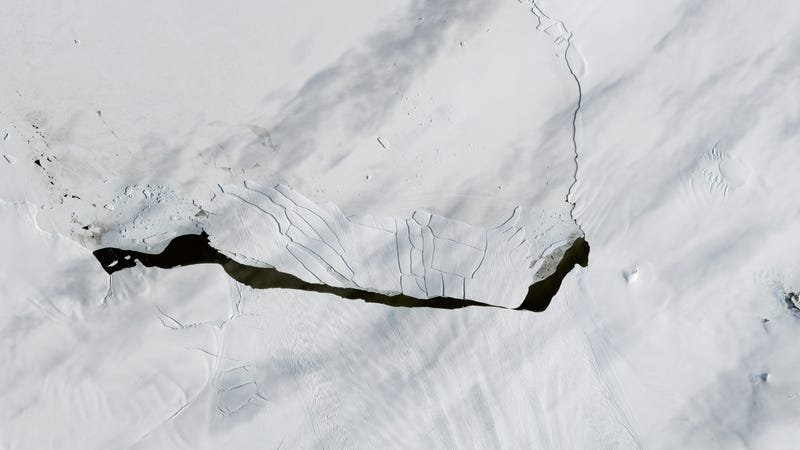
Typically when a large chunk of ice breaks away from the Antarctic, it tends to float north into the Southern Ocean, where the warming waters cause it to melt and break-up over a period of years. But, that isn't what happened with the piece from the Pine Glacier, which quickly broke up into 20 smaller pieces less than a month later. That means that the ice itself is already somewhat thin and fractured, and possibly that the water around it is starting to warm up as well.
Why is this such an issue? Because the Pine Glacier is already the fastest retreating glacier on the planet, and it contains about 10% of the water in the Western Antarctic Ice Sheet. When you combine that with the nearby Thwaites Glacier, which is also shrinking rapidly, you'll find that there is enough water to raise sea levels across the globe by 11 feet (3.3 meters). That would be disastrous to millions of people around the world.
The large sections of ice that broke off from Pine Glacier and the Larsen-C Ice Shelf actually serve as a buffer between the sea and the glacier itself. With those protective buffers gone, the melting of the glaciers is only expected to accelerate. While it will take decades for them to vanish altogether, resulting in that 11-foot rise in sea levels, it won't take long for them to begin brining those levels ups couple of feet. That alone would be devastating. Throw in the fact that there are plenty of other glaciers that are adding to the increase, and you start to understand why this is such a major concern.
Unfortunately, it may be too late to do anything about it. The Byrd Research Center in Antarctica reports that average temperatures near the Pine Glacier have already risen 2ºC or 3.6ºF. That may not seem like a lot, but in a fragile ecosystem like the Antarctic, it is enough to push things past the point of no return.
Antarctica 2017: Father-Son Team Skiing to the South Pole for Clean Energy

Rob and Barney Swan have embarked on what they call the South Pole Energy Challenge (SPEC) as part of their much larger 2041 Project. Over the course of the coming weeks, they'll travel on foot for more than 600 miles (965 km) in order to reach 90ºS. It appears they are following the usual route from Hercules Inlet to Pole, with an estimated time of about 8 weeks to finish the trip.
What makes this particular journey unique is that they plan to unveil some cutting edge technologies while en route and become the first team to ski to the South Pole using only clean energy sources. The duo are promoting the 2016 Paris Climate Accords and are hoping to use the expedition as a way to demonstrate clean energy technologies, while also acting to preserve the continent from the advances of global warming.
The father and son team have been skiing for about a week now, and are making solid progress for their first few days out on the ice. During the early part of the expedition it usually takes awhile for skiers to get their legs under them, and the sleds that they pull are at their heaviest. As time goes buy, they begin to find a rhythm and as they consume food and supplies, the sled gets a bit lighter, allowing them to travel further and faster. So far though, Rob and Barney have been chugging long at a nice pace, with mostly good weather and surface conditions.
This isn't Rob's first time skiing to the South Pole. In fact, he first followed in the footsteps of Robert Falcon Scott back in 1985-86. Then in 1989 he also marched to the North Pole, becoming one of just a handful of people to make both of those journeys by foot. Now, he's traveling across Antarctica once again, and finding it to be both a very different place than when he first visited, and yet often the same.
So why have they dubbed their expedition the 2041 Project? Because we have until the year 2041 to renew a treaty that bans mining and commercialization of Antarctica. In order to preserve this place, it is crucial that those agreements stand and are renewed. There are some indications that certain countries would like to mine or drill in Antarctica to claim precious resources, but those actions could be disastrous to the environment there. Rob and Barney are hoping to avert such a crisis.
Exactly how the SPEC squad distinguishes itself from other teams skiing to the South Pole remains a bit unclear. Most skiers use solar energy to power their gear while on the continent, although the fuel sources for their stoves vary a bit. On top of that, Rob and Barney flew to the Union Glacier camp from Punta Arenas, Chile, so I'm not certain how using a massive Ilyushin aircraft to get to Antarctica falls into their plan of using only clean energy. Still, I respect their message and mission and look forward to following them throughout the journey and learning more about the 2041 Project in general.
Video: The Boiling River of the Amazon
For decades explorers and researchers heard stories of a boiling river that existed deep within the Amazon, but no one was able to locate it to verify its existence. However, geothermal scientist Andrés Ruzo went in search of the place and found it. With waters hot enough to kill a human being, this place holds a mystical presence amongst the indigenous people that inhabit the area, and as you'll see in the video below, it is one of the most amazing natural wonders imaginable. It is also coming under increased threat from loggers and developers, so now Ruzo fights to protect it as well.
The Mystical Boiling River of the Amazon from Great Big Story on Vimeo.
Video: Meet the Heroes of Mountain Hardwear's Impact Initiative
Mountain Hardwear has launched a new project called the Impact Initiative in which its sponsored athletes aren't simply looking to bag some unclimbed peak or explore a remote region of the world. Instead, they are focused on ways to do those things, while also working to protect and preserve our planet as well. In this video, we'll meet some of those brand ambassadors, who include the likes of ecologist Charles Post, mountaineer Garret Madison, and polar explorer Vincent Colliard, whom we were already introduced to in this video. The hope is that these men and women will inspire us to do our part as well. At the moment, we only have one planet, and more and more of us are waking up to the idea that we had better start taking better care of it.
The Impact Initiative from Mountain Hardwear on Vimeo.
2016 Was Officially the Hottest Year on Record
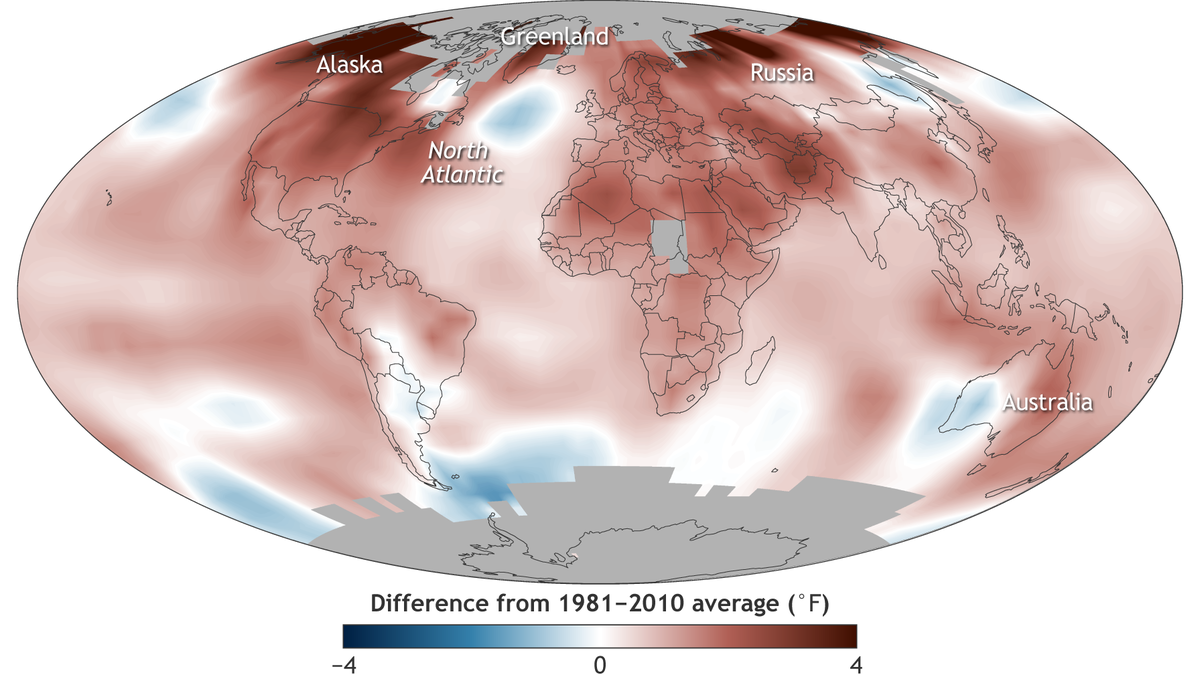
The biggest take away from the report, which is peer-reviewed for accuracy, is that carbon dioxide levels in the Earth's atmosphere were measured at 402.9 parts per million. That is also the highest on record, but perhaps most startling of all is that it is the first time in 800,000 years that CO2 levels have risen above the 400 parts per million mark.
El Nino played a significant role in driving surface temperatures higher, but there were a number of other records set as well. According to the report, the global average for sea surface temperature, sea level, and the temperature of the lower atmosphere all reached record highs. Meanwhile the Antarctic sea-ice extent dropped to record lows as the impact of our warming planet took its toll on the ice.
The news of the record warm temperatures for 2016 follows two successive record breaking years in 2014 and 2015 as well. While that is not enough scientific data to indicate a trend as of yet, it also seems like more than a coincidence too. Our planet is, without a doubt, warming. It doesn't matter whether it is manmade or a natural phenomenon at this point. Debate on that topic has long ago set sail. Now, we just need to start doing more to help reverse this tide of increasing heat and start looking at ways that we can protect ourselves against the changes it will bring.
Read more about the state of our climate here.
100 Practical Ways to Fight Climate Change (and Trump's Poor Decision)
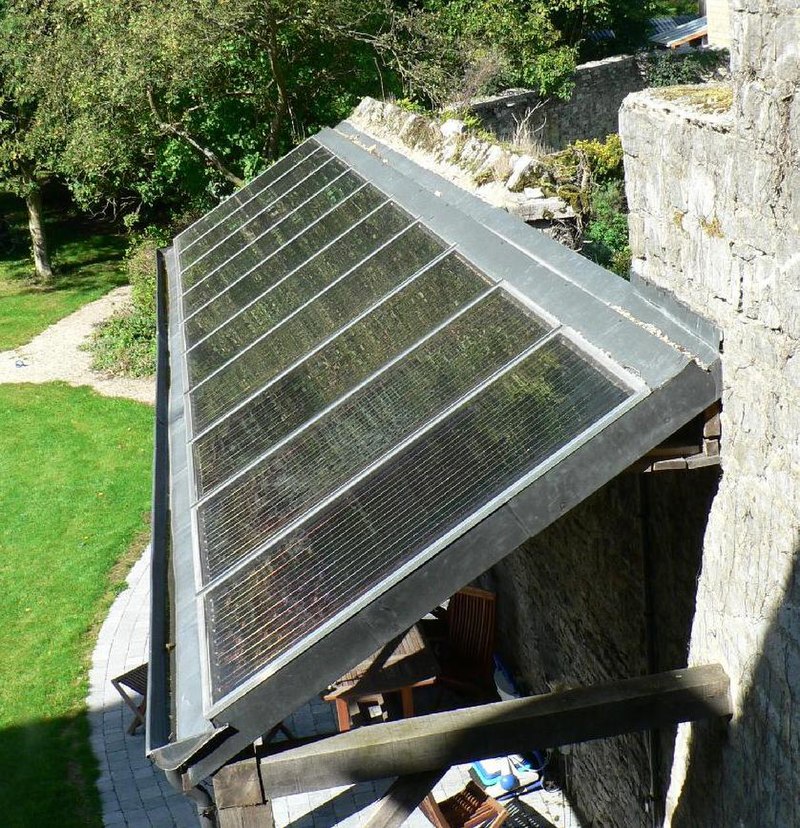
For me, climate change is one of biggest issues that we face at the moment, and it doesn't just impact one or two countries or regions, but the entire planet. Which is why I was so happy to see this map from National Geographic that shows all of the various cities and states in the U.S. that have already joined the "Climate Rebellion" against the President's decision. The map shows the places that have either already become part of the U.S. Climate Alliance or have taken a pledge to stick to the Paris accords.
But, Nat Geo has published yet another story that will be of interest to those of us who feel strongly about this topic. It is entitled 100 practical ways to reverse climate change and is an interview with Paul Hawken, the author of Drawdown: The Most Comprehensive Plan Ever Proposed to Reverse Global Warming. The book was a New York Times bestseller when it was released, and it offers the aforementioned 100 ways that we can all help to reverse climate change.
Some of those options are detailed in the article, although most are saved for the book itself, which examines in a highly analytical way how to have a positive impact on our planet's environment. Options like switching to electric cars, using solar energy, and preventing deforestation are examined in detail, with practical methods provide for the reader on how he or she can help on a personal level.
Those of us who love the outdoors also care about preserving it for future generations as well. But when it comes to climate change, we are on a course that could not only spell the end of our environment, but leave us with no future generations to see it. Everyone can do something to help out, no matter how big or small, and it can make a difference. More importantly, its nice to know that others feel the same way, and that while the President may have turned his back on this cause, there is a concerted effort in the U.S. by others to ensure that the country plays its part.
2016 Was The Hottest Year on Record
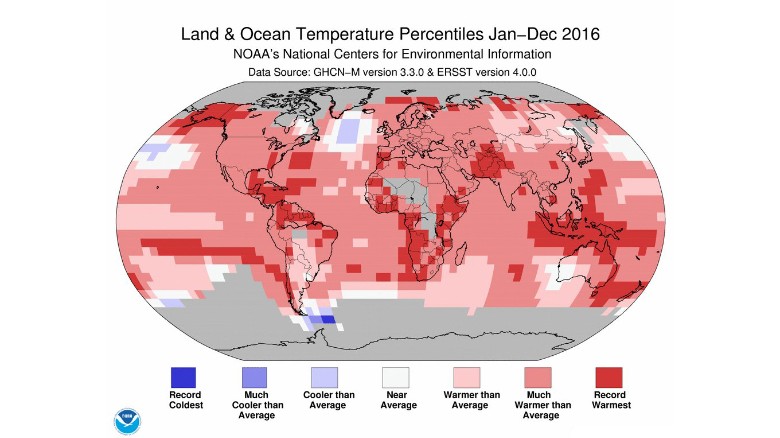
According to NASA and NOAA, 2016 was the hottest year on record, breaking the previous mark for the third consecutive year. And if that wasn't sobering enough news, the latest report on climate change also indicates that 16 of the 17 hottest years ever have taken place since 2000.
Studies indicate that the average temperature across the planet increased by 1.1ºC (1.98ºF) last year, which may not sound like much but it is enough to have a dramatic impact on large sections of the globe – especially in the polar regions. It also means that we're already well on our way towards surpassing the 1.5ºC goal set by the Paris Climate Agreement from 2015.
The cause for the increased temperature remains the same as it has for the past two decades, or longer. The burning of fossil fuels increases carbon dioxide emissions into the atmosphere, and the continued deforestation of rainforests – often referred to as the "lungs" of our planet. These harmful processes seem to be continuing to accelerate, despite efforts to reverse their effects.
Historical records of temperatures have been kept as far back as the 1880's, which means we have more than 130 years of data to compare the current trends to. It is also becoming increasingly more difficult to deny the impact of humans on the environment. As part of the report, Michael Mann, the director of the Earth Science Center at Pennsylvania State University, said "The effect of human activity on our climate is no longer subtle. It's plain as day, as are the impacts -- in the form of record floods, droughts, superstorms and wildfires -- that it is having on us and our planet."
To make matters worse, the Arctic seems to be warming at a faster rate than the rest of the planet, with temperatures now climbing to 3ºC (5.4ºF) higher than they were a decade ago. That means an increased rate of melting of the ice caps, which in turn leads to raising sea levels around the world. That will have a big impact on coastlines, eventually putting areas that are now inhabited potentially under water.
But, there is cause for some hope. Scientists believe that 2017 won't be warmer than the previous years thanks to El Nino keeping things a bit cooler. This is probably a temporary state of affairs however, even if it does buy us a brief respite.
How anyone can continue to deny climate change is beyond me. Whether or not humans are having an impact doesn't matter any longer. It's happening, and we need to do whatever we can to halt it. It's not too late, but time is running out.
Video: Meet The Snow Guardian
Meet billy barr (yes, that's how he spells it!), a man who has lived alone in a cabin near Gothic, Colorado for 40 years. Over that time, he has been keeping meticulous records of the weather, how much snow has fallen, what the temperature on any given day is, and so on. Those records are now proving invaluable to climate scientists, who view billy as an invaluable resource. This is his story, as told by National Geographic.
Himalayan Stove Project Offers Good Karma Through Carbon Credits
 If you've read my blog for awhile now you've probably heard me mention the Himalayan Stove Project on more than one occasion. The nonprofit organization is dedicated to improving the lives of poor families living in Nepal by replacing their old, inefficient, and dangerous cookstoves with new, clean burning versions that are much better for their health and welfare. What I've always loved about the HSP is that while some organizations talk a good game, this one has been making a world of difference for the people that it helps, delivering more than 3500 stoves to those in need.
Now, the Himalayan Stove Project has launched a new intuitive, giving donors the chance to purchase carbon offset credits to help both the environment and future recipients of their stoves at the same time. A new website called CarbonKarma.guru is now selling the credits for just $20, giving individuals and companies the chance to reduce their carbon footprint dramatically, with much of the proceeds going to help the HSP continue its great work in Nepal.
The stoves that the project distributes are made by a company called Envirofit and are said to be 90% more efficient than an open cook fire, which is a common method for preparing meals in many parts of the world. In addition to that, the stoves also use 75% less biomass fuel, which means they are better for our health and the environment in general. Envirofit is the organization that is supplying the Gold Standard carbon credits, which are recognized by more than 80 NGO's operating in 70 countries around the world.
Purchasing carbon credits is a real way to make a difference for the environment, and doing so through CarbonKarma.guru will help the Himalayan Stove Project too. But, if you just want to donate to the HSP, you can do that simply by clicking here. It is a great organization that is doing great things in Nepal, and every bit of assistance helps.
Himalayan Stove Project founder George Basch has set an ambitious goal of donating enough stoves that if they were stacked on top of one another they would reach from Everest Base Camp to the summit of the mountain. At the moment, the organization is about a third of the way towards that goal. To reach the top, the HSP will have to install 10,856 stoves, so more work has yet to be done. Let's help them get there!
Temperature at the North Pole Climbs 50º Higher Than Normal
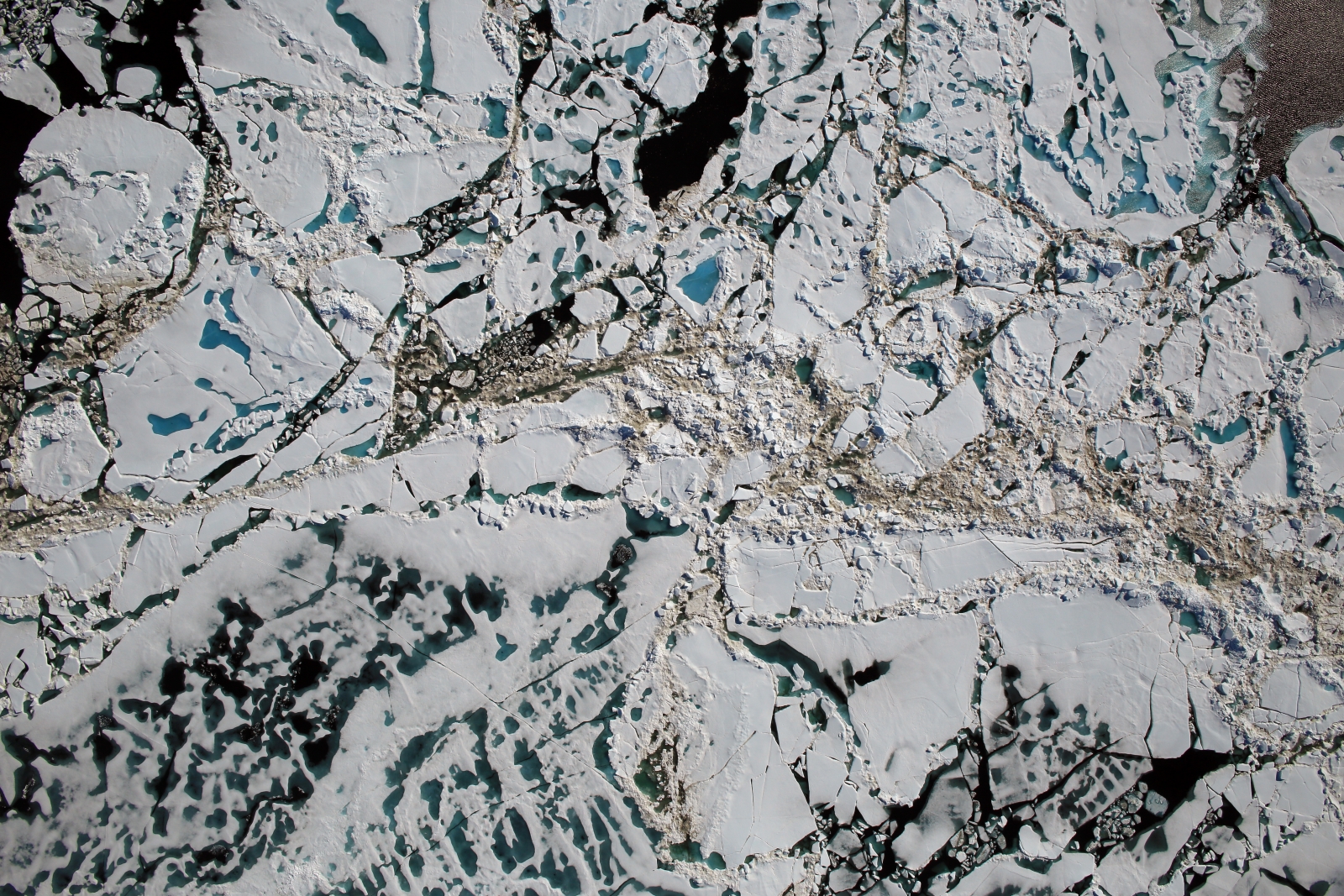
To put things into perspective, that means that temperatures were warm enough to melt snow and ice, even as winter is arriving in the Northern Hemisphere. That should set off alarm bells about the state of the polar ice caps, which seem to be already retreating at an alarming rate. We've had a lot of somber news from the Antarctic recently as well, but this is just another indicator that our planet is definitely in a state of flux right now, and we're running out of time to do anything about it.
It also doesn't bode well for any explorers hoping to make an expedition to the North Pole. If it is this warm in December, what will the conditions be like in March and April, or even into the summer. I know that there are a couple of expeditions planned for the Arctic next spring, but they could be dealing with unprecedented ice break up, and the largest leads of open water that have ever been seen at the top of the world.
Of course, we do have a long winter to go, and temperatures are sure to return to normal at some point. But so far, November and December have been unseasonably warm, and have climbed up close to the 0ºC mark once before as well. Worse yet, the long-range predictions are saying that 2017 could be another very warm year, with further melting of the ice caps.
I'm not sure how much longer climate deniers are going to keep their head buried in the sand. The signs are there, and we're mostly ignoring them at this point. Still, it isn't too late to try to make a change. Hopefully that will be the New Year's Resolution for some important people who are in a position to have an impact on policy and reform. Time will tell.
Are You the 2016 National Geographic Nature Photographer of the Year?

The contest website says "We’re looking for photos that showcase the awe-inspiring and diverse natural world around us. That could be a powerful wildlife shot, a stunning landscape, or a look at a complicated environmental issue—whatever nature means to you." In other words, there is a pretty broad interoperation out there of what exactly Nat Geo means by "nature." I'm sure more than a few have you have captured some great images over the past 12 months that you can submit to the contest. Entries are begin accepted until November 4, after which a panel of judges will decide which photos are worthy of making the cut.
Of course, there are some great prizes for those who win the contest. Each of the categories – Landscapes, Animals, Action and Environmental – will have three winners. First place will be awarded $2500 in case, while second place will get $750 and a signed National Geographic book. The third place winner goes home with $500. But best of all, the Grand Prize finisher will receive a 10-day trip for two to the Galapagos Islands courtesy of Natural Habitat Adventures. I can't think of a better place to take more photos of nature than that destination.
As you would expect, competition is sure to be tough in this contest, but you just might have the wining photo sitting on your hard drive right now. Pick out your best and submit them for consideration. Who knows, you just might be on your way to the Galapagos in the near future.
Massive Reef Discovered at the Mouth of the Amazon River
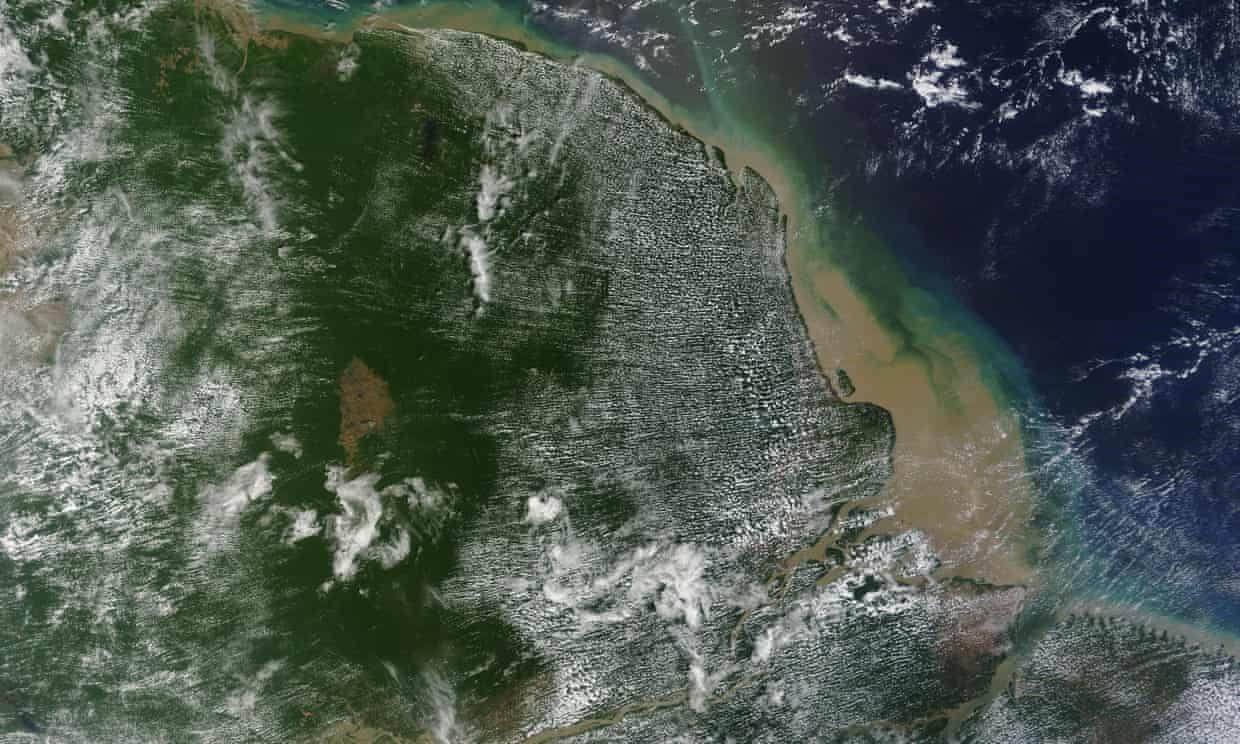
Indications that the reef might exist first appeared back in the 1970's when fishermen began catching fish that were more commonly found on and around reefs in other parts of the world. But confirmation of the existence of this particular reef didn't come until recently, when researchers were finally able to prove that against all our knowledge and understanding of the ocean that it was hidden away along the coast of Brazil.
The reef stretches for nearly 700 miles (1126 km), and is more than 3600 sq. miles (9300 sq. km) in size. It is also said to be home to at least 60 species of sponges and 73 species of fish. Even more surprising is the fact that unlike other reefs found around the world, this one appears to be very healthy, and even growing. Climate change has begun to warm the oceans, which is causing coral reefs to die at an alarming rate. But this one is not displaying those same symptoms.
What makes this new reef so amazing is that it exists in a place that it was previously believed one shouldn't be able to survive. While it is submerged in ocean waters, the surface of the Atlantic is covered in fresh water that is dumped in from the might Amazon River. The river also deposits plenty of mud and sentiment into the water, which is typically not conducive to the growth of coral either. On top of that, oceanographers typically find reefs in shallower waters that are warmer and clearer than where this one exists. This has left some scientists to wonder if other reefs are out there in our oceans, just waiting to be found.
But the good news over the discovery of this reef – and the fact that it is thriving – is tempered somewhat due to the fact that it is already being threatened by man. It seems that the Brazilian government has already sold 80 parcels of ocean to oil companies to start drilling at the mouth of the Amazon. 20 of those blocks are already in operation, some of which are believed to be right on top of the reef itself. How that will impact the life of the reef moving forward remains to be seen.
Coral reefs play an important role in the keeping the ocean healthy as they often form protective barriers for ecosystems both along the coast line and living within the waters themselves. As those reefs recede, ocean storms, hurricanes, and typhoons could have a larger impact on certain regions of the planet. The Earth's coral reefs are also seen as the canary in the coal mine in terms of indicating the impact of climate change on an area too.
Still, finding this particular reef is amazing, especially since it shouldn't exist at all. Hopefully it will be well protected moving forward.
Movement Afoot to Reclaim Glen Canyon in Utah

The gist of the story is laid out in an article written by Tim Gibbins on a post to the O.A.R.S. blog. Essentially, the Glen Canyon Dam was built in a time period when a lot of other dams were being built in the west as a way to control the flow of the river as a method to help create environments suitable for farming and provide water to areas that were typically very arid. But when the dam was completed, it also created Lake Powell, which filled in a landscape that is spectacular enough to be considered on the same level as many national parks. The Glen Canyon has sat mostly under water – and unappreciated – ever since.
As Tim points out in his article, Lake Powell reached its hight point back on July 15, 1983. Today, it sits at just 50% capacity, and the dam that created it may be doing more harm than good. Worse yet, climatologists believe that neither Powell, nor Lake Mead, will ever fill to their capacities again.
This has led to a movement to decommission the Glen Canyon Dam, which could help to fill Mead, and restore the Glen Canyon region to its former glory. Beneath all of that water is a natural landscape filled with twisting gorges, rock spires, and other natural wonders just waiting to be rediscovered. Removing the dam would allow that to happen, and would have a positive impact downstream as well.
We are a long way from the dam being dismantled, but there is at least a conversation brewing about the positive side effects it could bring. As more people pick up on this story, it could gain enough momentum to being the process at long last.
July Was the Hottest Month Ever According to Researchers

Scientists are blaming global climate change and the El Nino phenomenon for the spike in temperatures, and sadly July wasn't the only month to see a bump. In fact, the seven previous months for 2015 have also set records for the warmest period recorded as well, with official records dating back to 1880.
Jake Crouch, a scientist at NOAA, says "Now that we are fairly certain that 2015 will be the warmest year on record, it is time to start looking at what are the impacts of that? What does that mean for people on the ground?"
In other words, there is definitely a trend forming, and it is not a good one. The Earth is getting warmer and it will have consequences for how we live within our lifetimes. As the polar caps melt, and the oceans rise, coastlines will be altered dramatically. Droughts will become more frequent and severe, and powerful storms are likely to become more common in their ferocity and duration. Looking around, it is easy to see some of these things already starting to happen, and chances are it is only going to get worse.
Much of this isn't new of course. We've been hearing the warnings from climatologists for some time. And yet despite those warnings, we still have people who refuse to believe what the environmental data is telling us, even as glaciers recede, less snow falls in winter, and rivers and lakes begin to dry up. How these people can bury their heads in the sand and ignore what is happening is beyond me, but since climate change has been turned into a political issue, it seems to be a more common response.
As the debate rages over whether or not climate change is a natural phenomenon or is manmade, I have to wonder if it really matters. Is the cause of these changes really that important? What matters most is what can we do to avoid worldwide catastrophe, and what measures can we take to ensure that we have a future on this planet?
I'll get off my soapbox now. I mostly wanted to share this story that confirms what many of us already know. Climate change is happening, and it will impact the outdoor spaces that we love so much. Hopefully it isn't too late to make meaningful changes that can have a positive impact instead.
Melting Ice in Antarctica "Unstoppable" According to New Climate Report

The new study stitched together data collected by satellite and flyovers by aircraft, to get a comprehensive look at how the Antarctic ice sheets are changing. After analyzing the findings, glaciologist Eric Rignot, co-author of the report, described the melting as "unstoppable" at this point.
While the paper says it will still take several centuries for the melt-off to occur, the ice located in the glaciers in question contain enough water to raise sea levels by as much as 4 feet (1.2 meters). That is enough to have a substantial impact on coastlines across the globe, and the cities that sit along the waters edge. That impact will most likely be felt in this century however, as estimates see a 1-3 foot rise in water levels by the year 2100. That is enough to displace tens of millions of people across the globe.
This particular area of Antarctica is hit harder by climate change than other regions due to the fact that the ice sheets sit on a shelf that actually rests below sea level. As the ocean currents have warmed, the increased temperatures are brought directly to the ice itself, causing them to melt at a substantially higher rate. That rate has increased by as much as 77% since 1973, when the data used in the study was first conducted.
Obviously, I write a lot about Antarctica, and the adventurous endeavors that take place there. It is one of the last great wildernesses on our planet, with vast regions that are still unexplored. These kinds of reports make it clear that the frozen continent is undergoing drastic changes at the moment, just like those that we've seen taking place at the top of the world in the Arctic. The fact that some people still question climate change is baffling to me. The consequences of what are happening to our planet have now moved past the point of whether or not it is man-made, and to the point where it doesn't really matter what is causing it, we need to figure out how to adapt to the changes, and have as little impact on the environment as possible.
I geography professor I had in college routinely use to say, "we're not destroying the planet, we're destroying ourselves." This seems to be the case here. In the greater scheme of things, the Earth will heal itself over time. It may take millions of years, but it will correct any impact that man has had on it. Those millions of years are just a blink of an eye in terms of geologic history, but that is plenty of time to completely wipe out all semblance of man. The Earth will go on without us, especially if we don't start thinking about ways to treat it better, and accept the changes that it is going through. It isn't too late for the planet, I just hope it isn't too late for us.
North Pole 2014: Mission Accomplished! Eric and Ryan at the Pole!
According to the audio dispatches that were released yesterday and today, the final push to the top of the world was incredibly grueling, with the explorers facing everything from rough ice, to large open leads, with whiteout conditions thrown in for good measure. In one of the dispatches, Eric says that it took them more than 8 hours just to cover a 3.5 mile stretch of ground. During that phase, they were skiing when they could, but had to resort to crawling, and swimming at times.
Eventually, they came across a section of flat, relatively smooth ice, that stretched before them unbroken. They knew that they were close to the Pole, with Eric remarking that for the first time since the start of the journey, there were no major obstacles in their way. It took a bit of navigating to locate 90ºN, but once they did, they celebrated briefly, took some pictures, and then crawled into their tent for a rest. In his dispatch, Eric said that they are utterly spent. The amount of effort it took, particularly in the final days when they were racing the clock, has left them completely exhausted.
The expedition was originally scheduled to last 45 days, but knowing that traveling in the Arctic is a difficult, unpredictable affair, they packed food and fuel for 55 days. That meant that they were able to complete the journey completely self supported, and didn't have to call in a resupply. With two days food left to spare, they can now rest for a bit before a flight can be arranged to pick them up. Extraction will come as the weather permits. A few days ago, the forecasts indicated that storms were possible in the area, so while they boys have reached their goal, they are not on their way home just yet.
Both Eric and Ryan are veterans of travel in the colder regions of our planet. In his last dispatch, Eric mentioned that things are changing dramatically in the Arctic, and the ice there is now unlike anything he has ever seen before. Climate change is having a dramatic effect on the Poles, and soon it may be impossible for anyone to complete this journey to the top of the world. In my opinion, it is already the toughest undertaking in the world of outdoor adventure, and considering the fact that no one has done it since 2010, I think it is only getting more difficult. It may not be too many more years before it is simply impossible to travel on foot the full distance to the North Pole.
Congratulations to Ryan and Eric on the successful completion of their expedition. Their efforts in the Arctic are an inspiration to many of us who have been following their progress for weeks. Hopefully they'll be on their way back home soon. I think they've earned themselves some much deserved rest, and perhaps a little time on a warm beach somewhere.
Video: The Dramatic Effects of Wind and Water on the American Southwest
We all know that wind and water can have a dramatic impact on the environment, particularly after millions of years of being able to relentlessly attack the stone over which they flow. There are few places where that is more evident than in the American southwest, where canyons and gorges are common. The video below gives us a glimpse of those places, showing us just how beautifully they have been carved by these forces of nature.
EROSION from Brett Lyon on Vimeo.