Showing posts with label Arctic. Show all posts

Where Are the North Pole Skiers for 2018?

Typically about this time of year we begin to turn our attention north to the Arctic and the North Pole. Late February and early March are usually the time of year when skiers are preparing to set out on expeditions to the top of the world, a long and arduous journey that requires a great deal of strength, determination, and focus. But this season I have yet to hear of any expeditions undertaking such an excursion, which leaves me to wonder whether or not we have indeed seen the last of such ventures.

The Antarctic and Arctic expedition seasons use to be staples on the adventure calendar, with a few intrepid explorers setting off in both directions each year. But while the Antarctic has probably seen increased numbers of skiers in recent years, the Arctic has seen its numbers dwindle, and for good reason. Skiing to the South Pole remains a great challenge, although it is manageable for anyone who prepares properly, has the right gear, and doesn't mind spending a month and a half out on the ice.

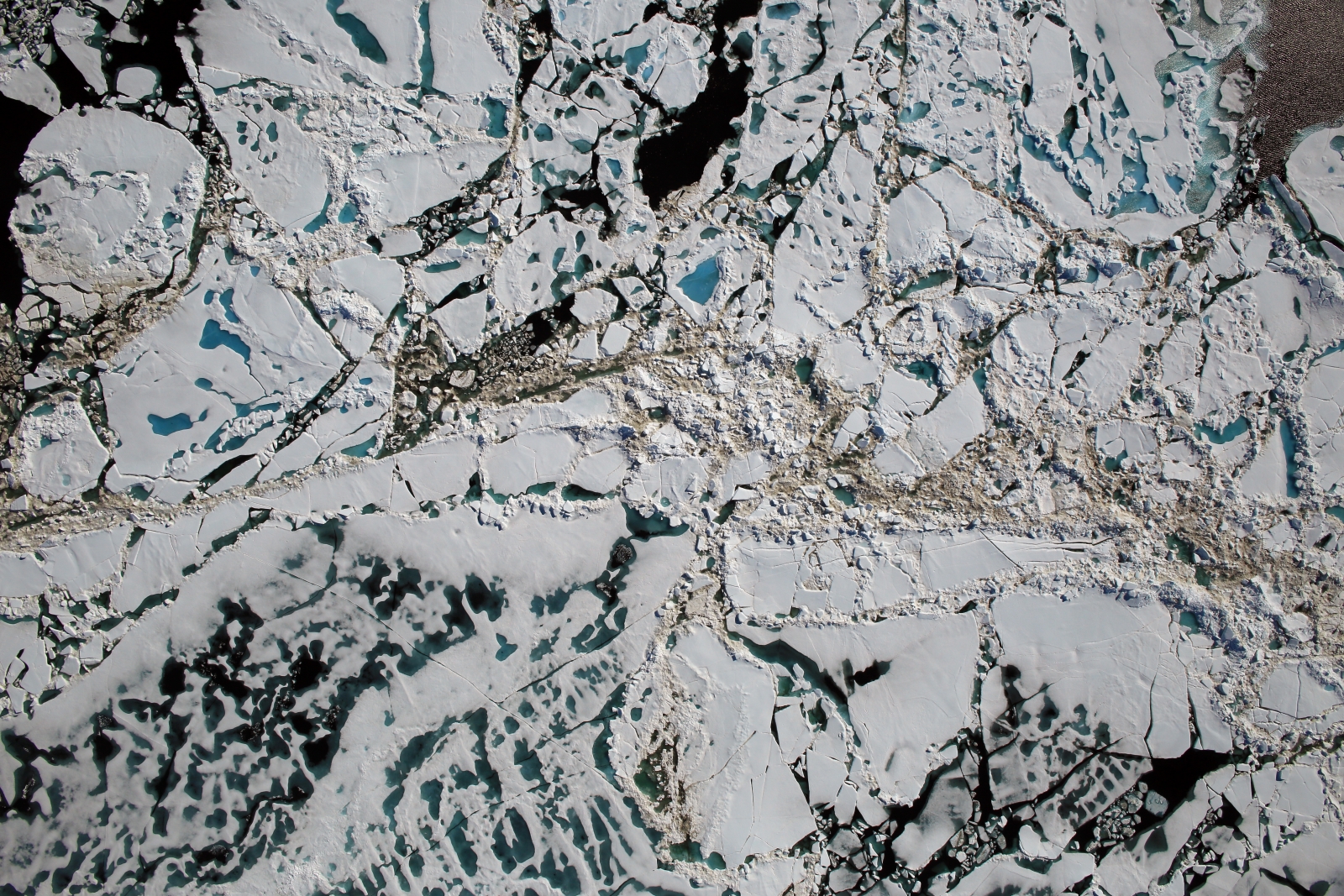
Going to the North Pole is a completely different beast though, with much bigger challenges to overcome. Since skiers are actually traveling over a frozen ocean, there is a measure of instability involved that often leads to massive rubble fields that can take days to cross. Climate change has also caused the ice to thin, and created wide sections of open water as well. What was once frozen pack ice is now liquid, forcing skiers to go around or swim across instead.

Because of these changes, we haven't seen a successful full distance expedition to the North Pole since 2014, when Eric Larsen and Ryan Waters completed that journey. Over the course of the ensuing years, a number of people have tried, but most have had to give up very early in the expedition. Massive storms have become the norm this time of year, bringing fierce winds and frigid temperatures to the Arctic. Worse yet, those conditions have made it difficult for aircraft to operate in this part of the world, which forced Kenn Borek Air – a company whose motto is "anytime, anywhere" – to stop supporting expeditions to the North Pole.

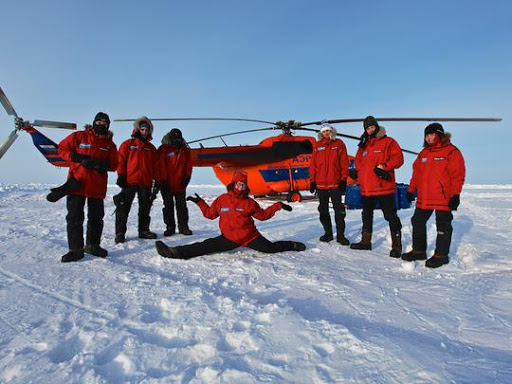
That isn't to say that there haven't been people who have skied to 90ºN. On the contrary, each year there are "Last Degree" skiers who cover a partial distance to the top of the world. Most of them operate out of the Barneo Ice Camp, a temporary base created near the 88ºN mark on the Russian side of the ice each season. That base facilities scientific and exploratory missions, as well as adventure travelers, coming and going from the Arctic each year, and it is a point of exit for full distance skiers, but it isn't a launching point for those longer-distance expeditions.

One explorer that I thought we'd be following to the North Pole this season was Mike Horn. Last year, he skied across Antarctica as part of his Pole2Pole Expedition, which was to include a journey across the Arctic this year, which would continue down through Greenland before returning to his starting point back in Monaco. But, I haven't seen any indication that Mike is headed to the Arctic to attempt this crossing and the latest updates on his website were posted back in October when he was sailing the Great Barrier Reef off the coast of Australia. There have been some vague mentions of him having already competed this stage of the Pole2Pole, but I am unaware of this actually happening.

So all of this begs the question: wither the North Pole explorers? Have they all abandoned attempt on the Arctic with climate change making things extremely difficult? Is there someone making the attempt this year that I haven't been able to uncover? Is the age of Arctic exploration on foot truly over?

At this point, only time will tell. I can say however, that I am aware of at least two expeditions scheduled for next year, which is a long way off and provides plenty of time for cancellations, delays, and so on. Hopefully that won't be the case, but until these expeditions are truly underway, I remain a bit skeptical.

Do you know of an expedition to the North Pole that I should be following this year? If so, send the details my way please.


More Travel Destinations for 2018

With the start of the new year, many of us are looking ahead at 2018 to decide where we want to go and what we want to do. After all, its a long 12 months ahead and there is plenty to accomplish before the year is through. Yesterday, I shared The New York Times selection of 52 places to go in 2018, and today I have a few more suggestions from two other publications worth looking at.

First up, Luxury Travel Magazine has produced its list of recommendation destinations for the New Year as well, and while most of them don't fall under the "adventure" category, they do have a top ten list dedicated specifically to our favorite type of travel. In fact, the editors have picked 10 Adventure Experiences You Can't Miss in 2018, with some very nice options for those looking to do something a little different this year.

A few of the items that make the cut include sailing on an Arctic safari, trekking through the hidden valleys of Dolpa in Nepal, and exploring the Atacama Desert in Chile, which happens to be amongst my favorite destinations. Other items include visits to a rhino sanctuary and staying in a lodge in the Amazon Basin.

Not to be outdone, Men's Journal has also produced a list of recommended destinations for 2018, and while it is a bit more modest in size, it offers some great options nevertheless. The five places that earned a mention with the magazine include Malta, the Republic of Georgia, Zambia, Kalimantan (in Indonesia), and The Arctic. Each of which would make a fine place to go on an adventure.

It is interesting to see the Arctic pop up on these lists. As climate change makes these places more accessible, more and more adventure travel companies are offering opportunities to go there. I've been sharing it on similar list that I've written for the past few years, but in my case it was usually last-degree ski journeys to the North Pole or something similar. But, the Arctic is opening up for more tourists, for good or ill, and that will no doubt have an impact on the region to some degree.

So, after reading all of these suggestions in recent days, have you started making your travel plans yet?

French Explorer Sets Sights on Northwest Passage

Last week I shared a story about an adventurous family that will sail the Northwest Passage this summer, but unsurprisingly they won't be alone up there in the Arctic. We've also learned that French explorer Alban Michon will also head to that mythical waterway with plans to help raise awareness of what is happening in that part of the world as climate change alters it forever.

As we've mentioned before on The Adventure Blog, the Northwest Passage is a section of the Arctic Ocean that remained largely frozen shut for centuries due to permanent pack ice. For hundreds of years, explorers searched for a safe way through, in the process creating a faster trade route between the Atlantic and Pacific Oceans. This wasn't possible until recently, when increasing temperatures due to climate change have melted the ice and made the Passage navigable my ships for several months each year. It is now believed that by 2050, the route will be almost completely ice free, creating the trade route long sought, but bringing a number of other challenges along with it.

Michon plans to cross the Northwest Passage on skis, pulling an 180 kg (396 lbs.) sled behind him with gear, supplies, and equipment. When the weather permits, he'll use a kite to propel him along across the ice. He'll embark on the journey in March of this year, and expects it to take about two months for him to travel from Resolute Bay in Canada to the Atlantic Ocean in the west, covering some 1240 miles (1995 km) along the way. He'll be following the same route pioneered by Roald Amundsen, who was the first to complete this crossing back in 1906. It took him and his team three years to make the journey.

Along the way, the French explorer will take video and photos of the fragile Arctic environment in its current state. This will document the impact of warming temperatures on the Northwest Passage. He'll also take samples of the ground, measure the level of aerosols in the atmosphere, and study his own brain activity while traveling in an extreme environment. He'll also analyze plankton living in the area to register the impact of changing conditions on them as well. Michon will even dive into the Arctic water to get a look at the passage from underneath the sea too.

You'll be able to follow Michon's expedition when he gets underway in early March on his websiteFacebook page, and Twitter. It should certainly be an interesting adventure to watch unfold.

Adventurous Family Will Sail the Northwest Passage in 2018

One adventurous family has quite a journey scheduled for 2018. On June 1, Graeme and Janna Esarey, along with their daughters Talia and Savai, will set out from Seattle on a sailing expedition that will take them through the Canadian Arctic as they travel the Northwest Passage.

Graeme and Janna are experienced sailors who spent their honeymoon crossing the Pacific Ocean. They say that the plan has always been to sail with their children when it was age appropriate, and now they are ready to begin those adventures. The plan is to navigate through the Northwest Passage and continue on to Europe, making a journey that few have been fortunate enough to undertake until this century.

The fabled Northwest Passage was long sought by sailors and explorers looking to travel faster from the Atlantic and the Pacific. But due to thick ice and inhospitable conditions, it was closed for centuries. Modern ice breakers made it a more viable option, but the cost of operating those ships is prohibitively expensive. Now, climate change has made sailing the route a real option as it is typically completely navigable by August of each year.

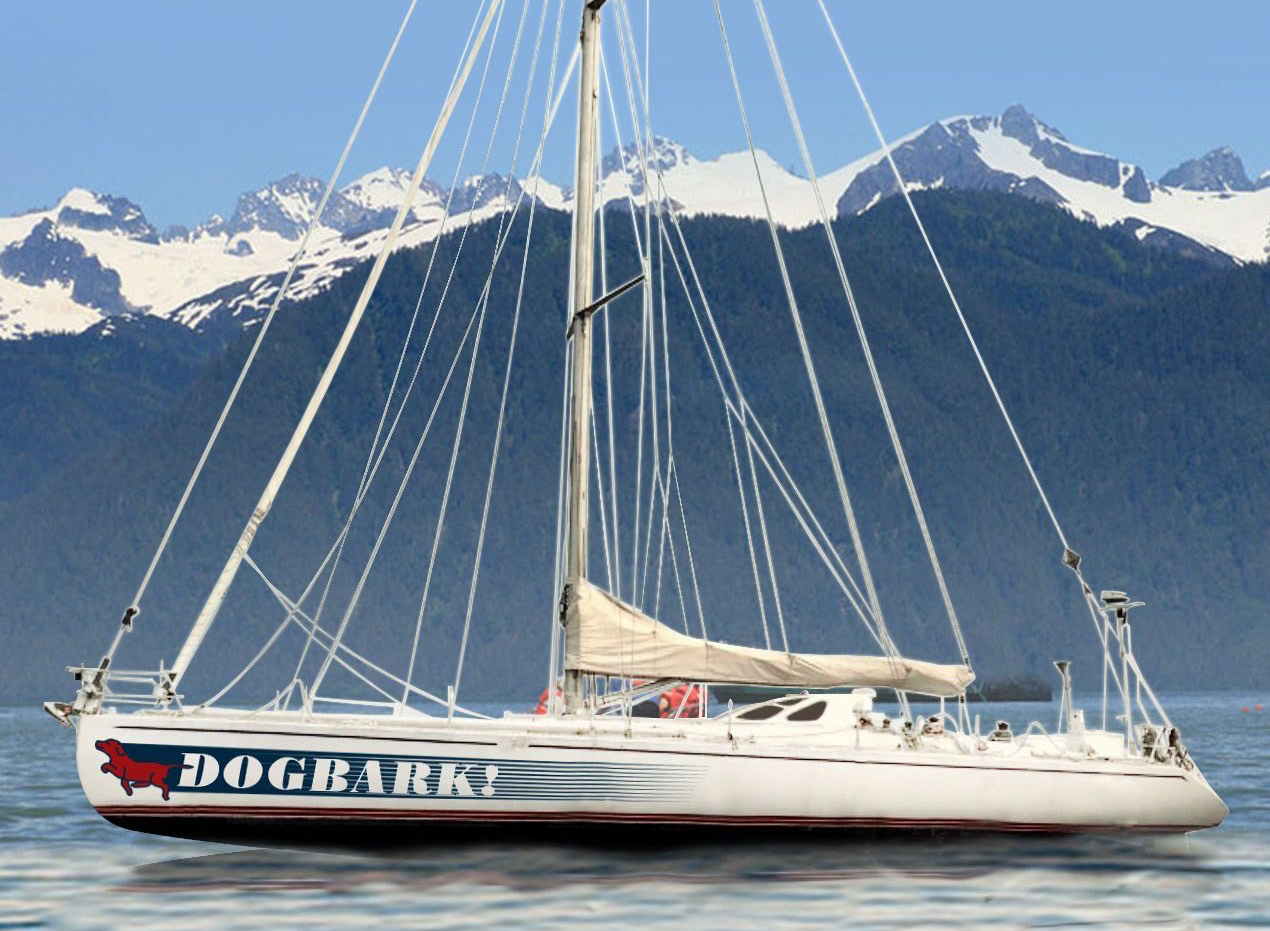
Graeme says the idea for making this sailing expedition came about after speaking to polar explorer Eric Larsen at Outdoor Retailer. The father of two has served as the CEO of gear manufacturer Industrial Revolution since 2011, and Larsen has been a brand ambassador for the company. After speaking to Eric, Graeme headed home with the germ of an idea for taking his family on a major adventure, which they'll undertake on a ship called the Dogbark – a 60-foot racing vessel with plenty of room to spread out, including separate cabins for each of the girls.

Currently the Esarey family is in planning and preparation mode prior to the start of the voyage in June. You can read all about their plans, and why they are undertaking this adventure, on their website saildogbark.com. The site is being updated regularly with blog posts about their progress and should be a great way to follow along with their journey once they embark in a few months.

Two More Dire Warnings on Climate Change

It seems 2017 has been a year filled with dire warnings about the future of our planet and the impact climate change will have on our lives. This week, two different reports were released indicating that things are changing more rapidly than we imagined and we could be on the brink of catastrophe.

On Tuesday, the 2017 Arctic Report Card was released and amidst the various messages about the loss of pack ice in the Arctic was a clear warning. The 85 scientists from 12 different countries who compile the report on an annual basis say that the Arctic shows no signs of returning to the reliably frozen region of past decades. In other words, there is less and less ice in this part of the world, and that doesn't appear to be changing anytime soon.

The report goes on to say that that warming of ocean's surface and retreat of the sea ice extent is unprecedented in the past 1500 years. The researchers can determine this by examining such variables as tree rings, sediment cores, and air bubbles trapped in ice samples recovered from the arctic.

Data indicates that the Arctic had its second-warmest year on record in 2017 with an average air temperature that was nearly 3ºF above what it was on average between 1981 and 2010. The scientists are able to compare that data to temperatures recorded as far back as 1900 when measuring these trends.


As a result of this warm year, the sea ice extent didn't recover as it has in the past, leaving much of the Arctic free from ice altogether. Fortunately, a cooler than normal summer prevented more of it from melting off, or the situation might be drastically worse. Either way, things don't look great in the far north of our planet.

On Wednesday another report was released on the scholarly journal Earth's Future that calls into question our estimates of the increase in sea level across the planet as a result of melting ice sheets in the Antarctic. Data indicates that as those ice sheets continue to collapse – something we saw several times in 2017 – the rise in ocean levels will be faster and more severe than imagined. Just how fast and how severe? According to the report, we could see a major shift in water levels as soon as 2050, with oceans rising as much as 8 feet (2.4 meters). If that happens, it would have an impact on more than 236 million people across the globe.

But the same report says that it is not too late to avert this potential disaster. The researchers behind the paper say that we can still cut the emission of greenhouse gases like CO2 to try to turn things around. They do warn that time is running out however, with major changes needed in the next few years.

For me, climate change is the biggest challenge we currently face as a species. All of the indicators are there that things are happening around us, but whether or not we can still do anything about it remains to be seen. I remain optimistic, although I do think we need to get more serious about the situation. Hopefully this last report is right and that there is still time to change things for the better.

Want to Become a Polar Explorer? Apply for this Scholarship to Learn From Eric Larsen!

Over the past month or so, I've been writing extensively about the unfolding expedition season down in Antarctica. As I write this, adventurous men and women are making their way across the frozen continent on skis while pulling sleds filled with supplies and gear behind them as they go. Some are headed to the South Pole, other are traversing to different places, but they are all crossing one of the most dramatic, demanding, and spectacular wildernesses on the planet. If you've ever dreamed of doing that same thing, then I definitely have a tip for you.

In January of 2018, polar explorer Eric Larsen will be conducting a Level 1 Polar Training course to help others follow in his footsteps. The course will be held on Lake Winnipeg in Canada and will consist of a week of intense training that will help you to become more adept at winter travel or even prepare you for your own journey to the North or South Pole.

The course will consist of three days of indoor training, which in turn leads to four days of practical experience out in the field. Students will actually embark on a traverse around Lake Winnipeg in conditions that will replicate those found near the poles. They'll travel on skis, pull their sleds, sleep in tents, and learn every aspect of what it is like to survive in arctic conditions.

If this sounds like your kind of adventure, you can actually apply for a scholarship to attend the program. Allied Feather & Down and Helly Hansen have teamed up to give one lucky recipient the chance to travel to Lake Winnipeg to take part in the course, which is taught by Eric himself. The scholarship covers all the costs, including required gear, travel expenses, course fees, and more.

You can find out a lot more about the training program – including a full itinerary – by clicking here. And if this sounds like something you'd like to take part in, you can apply for the scholarship by clicking here.

If you've ever had dreams of skiing to the South Pole but weren't sure how to get your expedition off the ground, this course will certainly put you on track. You'll not only come away with some valuable skills for use in polar conditions, you'll also get the chance to learn from a guy who has spent a lot of time in very cold places. This will be the chance of a lifetime for some lucky adventurer and I'll definitely be jealous of whomever gets the opportunity.

Find out more here.

Video: North of Nightfall Teaser Trailer - Mountain Biking in the Arctic

It isn't all that often that I get excited about a new outdoor adventure film before I've even had a chance to see it. But the teaser for North of Nightfall looks amazing, and I'm already looking forward to a full release. The film follows a team of mountain bikers as they travel more than 900 miles north of the Arctic Circle to explore some amazing landscapes from the seat of their bikes. Based on the teaser video below, it looks like it was quite the expedition.

Norwegian Explorer Fridtjof Nansen Honored with a Google Doogle

If you've got Google set as your browser's homepage as I do, you may have been surprised to find a new Doodle in place today when you opened the page. The Internet search giant posts these little works of art with increasing frequency these days, but they are often used to turn the spotlight on lesser known historical figures and events. That just happens to be the case today, as the subject of the Doodle is none other than Fridtof Nansen, a Norwegian explorer who became an activist for refugees later in life.

Amongst Nansen's long list of accomplishments is the first ski expedition across Greenland's remote interior in 1888. He also famously led an expedition to reach the North Pole aboard his ship the Fram, from 1893-1896, and although that journey ultimately wasn't successful the team set a record for the furthest anyone had traveled north by reaching a latitude of 86°14′.

Following that epic adventure, Nansen retired from exploration, but was a major influence on all who followed in his footsteps. He had set the logistical path for exploration in the Arctic, and his methods of transportation, use of gear and supplies, and techniques became the blueprint for others to follow, not only in the Arctic but the Antarctic as well.

Later, Nansen would go on to study zoology and earn himself a doctorate as he studied the nervous system of sea creatures. But, perhaps his biggest accomplishment came in the wake of WWI, when he became the Commissioner of Refugees for the League of Nations. While manning that post, he helped thousands of people who had been displaced by the war find new homes, earning the Noble Peace Prize for his efforts in 1922. To help with those efforts he created what became known as the "Nansen Passport," which was recognized by more than 50 countries, allowing refugees to move about more easily in their effort to find a place to settle.

Today is the 156 anniversary of Nansen's birthday, hence the reason Google is honoring him with a Doodle. Considering everything he accomplished in his lifetime, it is great to see him receive this honor. In some ways, he is a forgotten explorer with men like Amundsen, Shackleton, and Scott earning more notoriety. But without Nansen, those men may not have gotten very far at all.

Team of Explorers Set Out to Map Little Known Siberian Islands

An international team of explorers has embarked on an expedition into the Arctic to go in search of a set of almost-mythical islands located north of Siberia. The team hopes to not only fill in some blank spots on the map regarding this seldom visited place, but will also examine the impact of climate change on the environment north of the Arctic Circle.

The Pax Arctica Expedition was created to not only create awareness of threats to the Arctic but also to help usher in new ecological regulations governing that part of the world. To that end, a squad of French, Russian, and American explorers and researchers have begun sailing north through the treacherous Arctic Ocean in an attempt to reach New Siberia and the De Long Islands, which are generally only accessible in the late summer and early fall, prior to the arrival of the ice pack.

The team consists of expedition leader Luc Hardy, who is joined by a well-rounded research team that features the likes of paleozoologist Alexei Tikhonov and the anthropobiologist Eric Crubezy. They are being guided by veteran polar explorer Victor Boyarsky, who has had numerous expeditions into the cold places of our planet, including Antarctica and Greenland.

The group set out aboard a 437-ft. Russian Arctic research vessel called the Mikhail Somov from the port city of Tiksi a few days back. The ship will make a few stops en route to New Siberia and De Long, delivering meteorologists to remote weather stations throughout the area, and resupplying others. Those stations will generally be cut off from the outside for months at a time due to the arrival of winter, so the Somov is their lifeline.

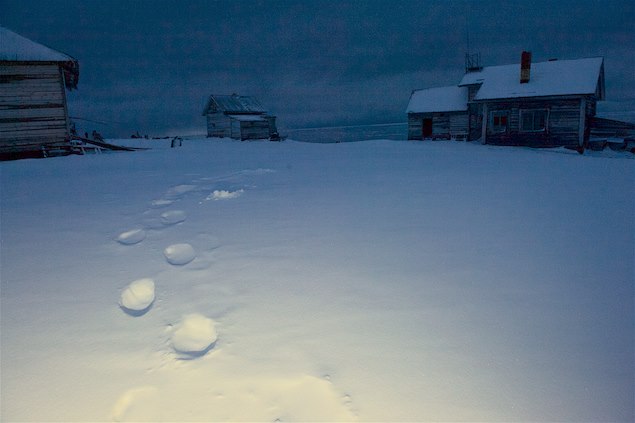
The ship reached remote Henrietta Island yesterday, which is part of the De Long island chain. They found very little indication that it had ever been visited by man in the past, although polar bear tracks were discovered in the snow. It is likely that as they proceed north, they'll encounter more of those creatures, and yet fewer signs of man.

Ultimately the team hopes to reach their main objective, which is New Siberia. Relatively low-lying  in terms of altitude, the island is covered in vegetation hardy enough to survive in the tundra. The place is renowned for having preserved mammoth bones and tusks, as well as other megafauna, in it permafrost, but it also serves as a good indicator of a place that could be deeply impacted by climate change.

You can follow the progress of the expedition via its blog, Facebook page, and live tracker.

Lonnie Dupre Announces Next Adventure - Exploring Greenland in 2019

Mountaineer and polar explorer Lonnie Dupre has announced plans for his next major expedition, and as usual it will be a tough, cold journey. The man who once made a solo ascent of Denali in January has set his sights on Greenland, where he and a team of fellow adventurers will explore history, culture, and the impact of climate change.

Dubbed the Pulling for the Planet expedition, the project isn't set to get underway until January of 2019. The team's objective is to travel more than 1000 miles (1609 km) by dogsled starting in the northernmost community of the world – Qaanaaq. From there, the squad will head north, traveling across the legendary Warming Lands, which consist of a series of fjords which remain mostly unexplored and unvisited by man. They'll also go in search of a cairn reportedly built by Robert Peary himself back in the early 1900's, before pressing on further into the unknown.

Additionally, the Dupre and his team will use the expedition as an opportunity to test new gear in some of the harshest and coldest conditions on the planet, while also collecting samples of the ice and snow, as well as local fauna, to search for pollutants and to research the impact of climate change. They'll even take samples from the local inhabitants to determine if they remain healthy and fit.

The expedition is expected to take 100 days to complete, with the group traveling through Greenland during the most difficult time of year. January in this part of the world is incredibly cold and demanding, and should push their equipment and resolve to the limit.

The start of the journey is still more than a year off at this point, but it should certainly be an interesting one to follow. Find out more at Lonnie Dupre's official website.

North Pole 2017: Two Teams Prepare for the Challenge

The sun has still to set on the 2016-2017 Antarctic expedition season, and it is already time to begin looking north toward the Arctic. According to ExWeb, this year there are two teams preparing to make a full-distance attempt on the North Pole, despite the fact that such a journey is now more challenging than ever before. So much so, that while numerous people ski to the South Pole each year, no on has reached the North Pole in almost three seasons.

In an effort to change that this year, Sebastian Copeland and Mark George have joined forces to ski 480 miles (772 km) from Ellesmere Island on the Canadian side of the ice to the top of the world at 90ºN. The duo are looking to set out at the end of February or very early in March, with the exit start dictated by the weather of course. Copeland and George will be traveling unassisted and unsupported once they get underway. 

The other team that will be attempting the journey is Martin Murry, while will be joined by his dog Sky. They intend to travel in a supported fashion, receiving occasional resupplies along the way. They'll also set out from the Canadian side of the ice, although their exact departure point isn't know just yet, although ExWeb says that the two teams will share a pilot and departure window.

And of course, we're expecting Mike Horn to attempt a traverse of the Arctic ice cap too, once he wraps up in the Antarctic and sails north. His current plan is to meet his ship after finishing his crossing of the frozen continent, and then sail to Australia and New Zealand to complete a few side adventures. But, it is a long way to sail to the Arctic, and I'm not sure he'll have the time to do that if he intends to make another traverse this year. We'll be watching him closely, as he should rejoin his sailing ship the Pangaea in the next few days, provided the weather cooperates. 

As ExWeb points out, these expeditions face some serious challenges if they hope to be successful. For instance, Kenn Borek Air no long supports North Pole skiers, so the teams had to find an experienced pilot that they could pay to not only deliver them to the start of the expedition, be on standby for 60 days, and pick them up at the North Pole if they reach that point. They found such a man in Dave Mathieson, who will be stationed in Resolute Bay for the duration of the journey. 

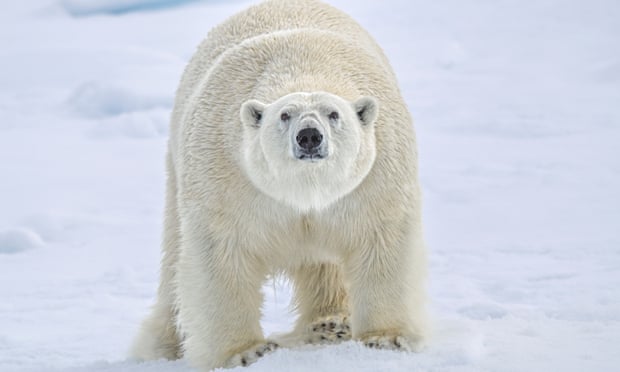
These explores will also face a shifting landscape of snow and ice that has most certainly been impacted by climate change. The ice on the way to the North Pole is as unstable as ever, especially considering that 2016 is the warmest year on record. That makes challenge in the Arctic extremely difficult, because unlike in the Antarctic, there is no landmass under all of that ice. The skiers will have to cross open leads of water, traverse massive ice fields with rubble the size of a house, and even potentially face hungry polar bears along the way. Skiing to the South Pole is a relative walk in the woods compared to what it is like to head north. 

We'll be watching the progress of these teams closely once they get underway. As always, it will be interesting to see how they proceed. 

Video: Under an Arctic Sky - Surfing Iceland in Winter

When you think of great surf spots, Iceland is not a place that typically comes to mind. But, when a team of adventurers – led by photographer Chris Burkard and filmmaker Ben Weiland – traveled to that beautiful and wild country, they discovered that there was indeed some terrific waves to ride along the north coast. This was especially true when one of the most brutal storms of the past 25 years made landfall there, creating a surreal environment for an arctic adventure. As you'll see in this video, they got everything they were looking for, and more.

Under An Arctic Sky - Official Trailer #1 from Chris Burkard on Vimeo.

Temperature at the North Pole Climbs 50º Higher Than Normal

It has been a record breaking year for temperatures all across the globe, as climate change seems to be wreaking havoc with our atmosphere. We got a reminder of this yesterday, when temperatures at the North Pole soared by as much as 50º above normal, reaching 0ºC/32ºF on the surface. That's the same temperature as the Arctic usually encounters during the summer months, but it is highly unusual for it get so warm at this time of year.

To put things into perspective, that means that temperatures were warm enough to melt snow and ice, even as winter is arriving in the Northern Hemisphere. That should set off alarm bells about the state of the polar ice caps, which seem to be already retreating at an alarming rate. We've had a lot of somber news from the Antarctic recently as well, but this is just another indicator that our planet is definitely in a state of flux right now, and we're running out of time to do anything about it.

It also doesn't bode well for any explorers hoping to make an expedition to the North Pole. If it is this warm in December, what will the conditions be like in March and April, or even into the summer. I know that there are a couple of expeditions planned for the Arctic next spring, but they could be dealing with unprecedented ice break up, and the largest leads of open water that have ever been seen at the top of the world.

Of course, we do have a long winter to go, and temperatures are sure to return to normal at some point. But so far, November and December have been unseasonably warm, and have climbed up close to the 0ºC mark once before as well. Worse yet, the long-range predictions are saying that 2017 could be another very warm year, with further melting of the ice caps.

I'm not sure how much longer climate deniers are going to keep their head buried in the sand. The signs are there, and we're mostly ignoring them at this point. Still, it isn't too late to try to make a change. Hopefully that will be the New Year's Resolution for some important people who are in a position to have an impact on policy and reform. Time will tell.

Quiz: How Much Do You Know Bout Polar Exploration?

If you're a fan of polar exploration like I am, and enjoy the history that surrounds the famous expeditions that ventured into those remote places, we have a real treat for you today. National Geographic has posted a fun quiz designed to test your knowledge, and perhaps teach you a thing or two at the same time. As someone who writes about the history of polar exploration from time to time, I still picked up a couple of nuggets of information along the way. There are ten questions in total, and I managed to score an 8. Not bad, but still room for improvement. Take the quiz below and see how you fare.


Polar Bears Trap Russian Research Team Inside Arctic Base

Think your job is rough? Consider the challenges that a team of five Russian scientists have been facing as they conduct weather research on the remote island of Troynoy in the Arctic Ocean. According to a report from TASS the group had become trapped inside its meteorological observation center by a group of ten polar bears who have taken up residence just outside the base.

Normally, in order to keep the bears at bay, the scientists use flares and have dogs at the base to scare off the animals. But, the team had run out of flares, and according to Mashable the bears even killed one of the dogs. Because of this aggressive nature, the researchers have had to abandon some of their projects, and had been instructed to only leave the base when absolutely necessary.

It was originally reported that it would take weeks to deliver new flares and dogs to the station, but apparently relief came earlier today when a passing research vessel made a detour to lend a hand. The ship resupplied the team with flares, which were used immediately to scare off the bears. The next resupply ship wasn't scheduled to arrive for another month, but this should help buy the team some time.

Apparently, the bears gather near the base to wait for the Arctic Ocean to freeze. That typically occurs in late October or early November, at which time they'll depart the area and head north. Considering the current state of the arctic sea ice, it may take longer than usual before the bears begin their migration, and it is possible that they'll return to that location again in the days ahead.

In the past only about 4-6 bears have spent their summers on Troynoy, but apparently this year there are at least 10, including some large female with small cubs as well. One of the females has even been spending her nights just below one of the windows of the weather station, making it even more difficult for the team to sneak outside to record readings for their research.

Hopefully there will be some relief for these scientists soon. While watching polar bears up close sounds like an amazing experience, being locked inside and unable to go out doesn't seem like a lot of fun.

Video: Nat Geo Shares Earliest Archival Footage

Want to see the earliest archival video footage from National Geographic's extensive vault of films? The video below provides a glimpse of just that as it gives viewers a look at the 1903 Ziegler North Pole Expedition. The explorers that made up that team set out from Norway with plans to reach the North Pole. But, their ship got trapped in the ice and the group ended up stranded for a year. This video gives us a look at a bygone era in exploration and a sense of what it was like for that team as they set off into the unknown. Interesting stuff to be sure.

Russian Teens Skied to the North Pole in Just 5 Days

The 2016 Arctic Season may be over, but there are still a few interesting stories to share. For instance, ExWeb has posted an article about a team of Russian teens who skied to the North Pole (last degree) in just 5 days following a host of delays that cut into their planned time out on the ice.

The group of seven teens had planned to make a last-degree ski expedition to the North Pole via the Barneo Ice Camp. Their original schedule gave them 7-10 days to complete the journey, which covered roughly 125 km (77.6 miles) over the frozen Arctic Ocean. That means they were able to sustain a pace of about 25 km (15.5 miles) per day, which is an excellent pace considering the conditions they encountered on the ice.

The challenges of the Barneo Ice Camp have been well documented on this blog, and elsewhere, this year. The ice flows that the temporary base is built on were being buffeted by ocean currents throughout the season, causing the blue ice runway there to crack multiple times. That caused a lot of delays, causing the Russian teens, and a number of other teams, to back up while they waited for their chance to fly out to the camp. Eventually the runway was completed, and the flights started arriving, but it took awhile to catch up on the backlog of people who were waiting to arrive in the Arctic. This cut into the time that the skiers had to reach the Pole.

According to ExWeb, when the team was retrieved from their finish line at 90ºN, they did not look tired or exhausted. In fact, they still had a lot of energy and were so excited to have reached the North Pole. It was quite a journey for these young adventurers, many of whom have wanted to ski through the Arctic for the better part of their lives.

I know that this is "only" a last degree ski expedition, but it is still an impressive feat to see these teenagers make that journey in such a quick pace. Five days to cover a degree of latitude is quite a short time frame, and I know a few polar explorers who would be hard pressed to maintain that same pace themselves. Also, how cool is it to be a teenager and get to go to the North Pole. I clearly went to the wrong high school.

Video: Into the Arctic in Norway

We'll wrap up a busy week here at The Adventure Blog with this breathtaking video. It is nearly three minutes of some of the best landscapes on Earth. Shot in the Norwegian Arctic, it shows us just how stunningly beautiful that part of the world truly is, with vistas that were meant to inspire adventures. Simply wonderful.

Norway: Into the Arctic 4K from Raphael Rogers on Vimeo.

North Pole 2016: Barneo Ice Camp Begins Regular Operations

It has been a challenging season in the Arctic so far with lots of delays for the explorers, researchers, and adventurers who planned to travel their this year. The Barneo Ice Camp, a temporary base built at roughly 89ºN each spring has experienced its share of issues, which resulted in some unprecedented delays to the start of the season. But now, things are finally back on track and regular flights have resumed, as support teams race to complete a busy schedule as quickly as possible.

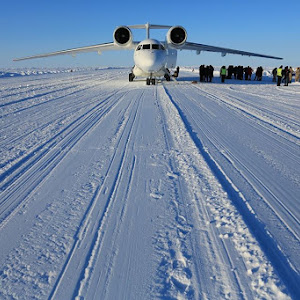
ExWeb is reporting that the runway at Barneo is complete and stable at long last, which is allowing the Russian built Antonov AN-74 aircraft to safely land and deliver important supplies and people to the Arctic. You may recall that the team of engineers who build the Barneo camp experienced issues with the blue ice landing strip, which cracked on four separate occasions, even forcing it to be relocated twice.

Amongst the groups that have now flown to Barneo so far are guided last degree ski teams that will spend the next ten days or so traveling across the frozen Arctic Ocean on their way to 90ºN. Several research teams are also out on the ice, as were Arctic marathon runners who were able to complete their race after several delays.

Because of the long delays to the start of the season, it looks like Barneo could stay open later than normal. Typically it begins to wind down operations by late April, but it is now looking like it could stay open into early May due to the backlog of people waiting to reach the ice.

Meanwhile, the Race Against Time team reports that ice conditions are now improving dramatically. They have moved away from open water and are now skiing over solid ice, which is allowing them to make better time, covering 10 nautical miles yesterday. But the continue to see foot prints from polar bears and even arctic foxes, reminding them that they are not alone out on the ice. The team is on its way to the North Pole and should arrive there late this week or early next.

North Pole 2016: Race Against Time Team Faces Big Challenges

After overcoming a series of challenges just to get to the starting line, the Race Against Time team is now out on the Arctic ice and making their way towards the North Pole. But as expected, this journey to the top of the world hasn't been an easy one so far as a number of natural obstacles force the team to earn every mile.

Last week, the team of Mark Wood, Paul Vicary, and Mark Langridge were finally dropped off on the ice after facing unprecedented delays to the start of their expedition due to issues with the runway at the Barneo Ice Camp that serves as the gateway to the Arctic each season from the Russian side of the ice. That caused the trio of explorers to rethink their journey for a second time, switching from the original plan of a full-distance ski journey to the North Pole to an expedition that actually began at 90ºN and would head south to Ward Hunt Island in Canada, before finally settling in on their current route, a two-degree ski expedition back to the Pole.

The squad has now been out on the ice for five days, and they've discovered that the Arctic is everything they had expected and more. In the first few days they faced rubble fields of disrupted ice, with many blocks the size of cars and even a few larger than a house. As they inched north however, other obstacles have begun to appear. For instance, yesterday the team only gained 4 nautical miles of distance thanks to a large lead of open water that they had to cross. The only way to do so is to don drysuits, enter the water and swim across while pulling their gear in inflatable rafts.

As if that wasn't enough, the men have also come across a set of footprints left behind by a polar bear. That means that one of these big carnivores is in the area, and they have been known to stalk polar explorers that pass through their domain. So far, no sight of the creature but they will remain wary and vigilant on the trail.

The hope is that the team can reach the North Pole sometime next week. When they originally set out, they thought it would take 12-15 days, and they are still on track to reach their goal. What else they'll find on the way north remains to be seen.