Showing posts with label North Pole. Show all posts

The Adventure Podcast Episode 9: The Logistics of Skiing to the North and South Pole

The latest episode of The Adventure Podcast is now live and available to download in all of the usual places, including iTunes, Google Play, and Stitcher. I've also embodied the episode below for those who prefer to listen on directly from their computers. This week we return to our usual format after taking a week off for some travel and following a pair of shorter episodes that focused only on the latest adventure news.

The main topic of discussion this week is the differences between skiing to the North and South Pole. On paper, the two expeditions seem very similar, but in reality they are about as far apart as the poles themselves. We delve deep into these differences as we discuss things like climate change, "negative drift," and being stalked by polar bears. Of course, we also share some thoughts on gear items we're currently using, and talk about the latest stories from the world outdoor exploration and adventure.

As always, thanks for listening and don't forget to follow us on Facebook and Twitter. If you have any feedback or would like to send us a question, don't hesitate to reach out by email either.


Where Are the North Pole Skiers for 2018?

Typically about this time of year we begin to turn our attention north to the Arctic and the North Pole. Late February and early March are usually the time of year when skiers are preparing to set out on expeditions to the top of the world, a long and arduous journey that requires a great deal of strength, determination, and focus. But this season I have yet to hear of any expeditions undertaking such an excursion, which leaves me to wonder whether or not we have indeed seen the last of such ventures.

The Antarctic and Arctic expedition seasons use to be staples on the adventure calendar, with a few intrepid explorers setting off in both directions each year. But while the Antarctic has probably seen increased numbers of skiers in recent years, the Arctic has seen its numbers dwindle, and for good reason. Skiing to the South Pole remains a great challenge, although it is manageable for anyone who prepares properly, has the right gear, and doesn't mind spending a month and a half out on the ice.

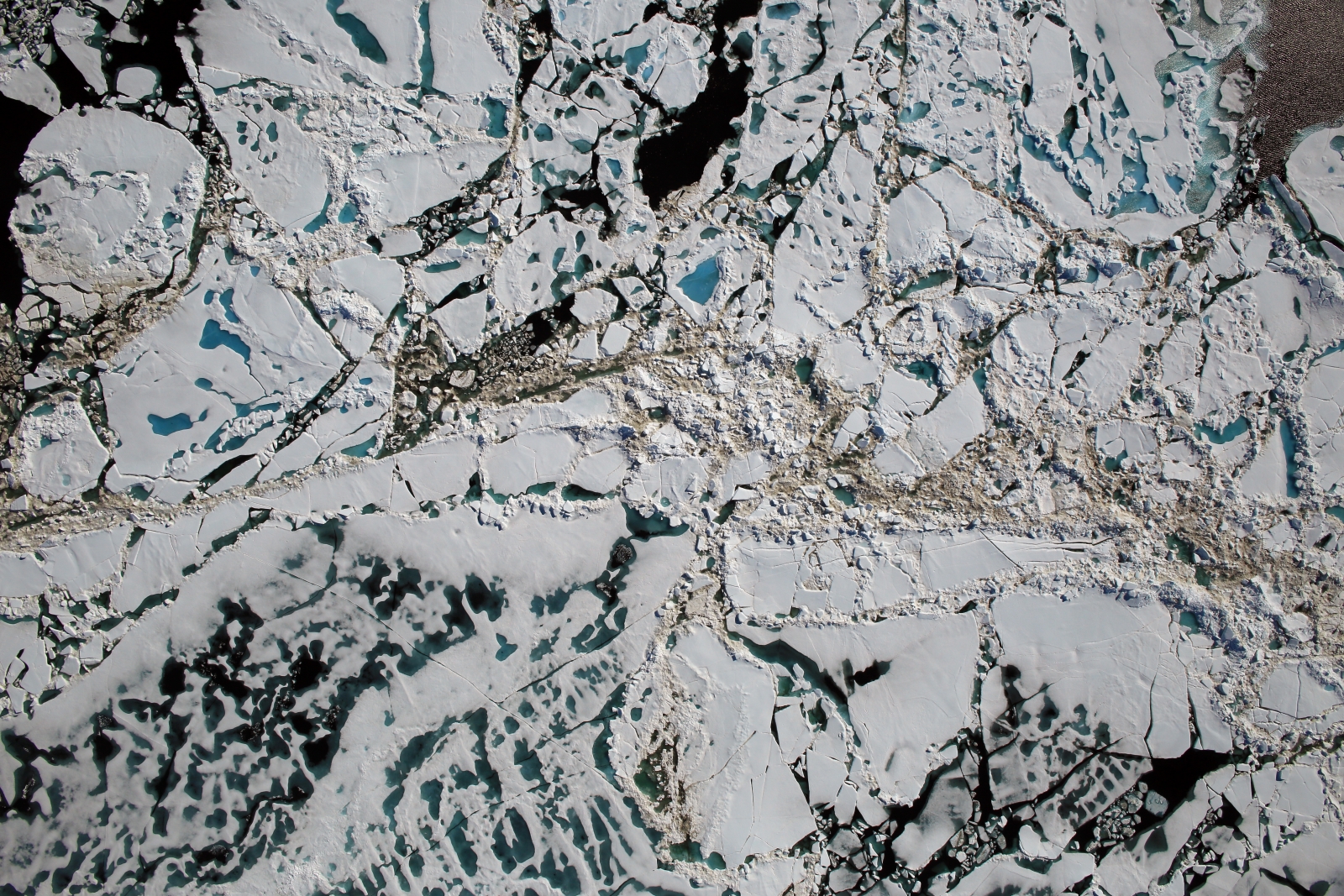
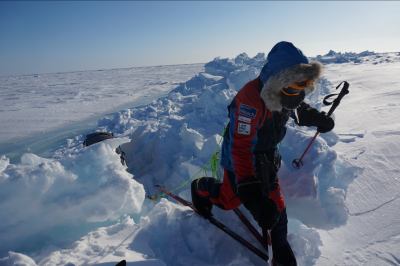
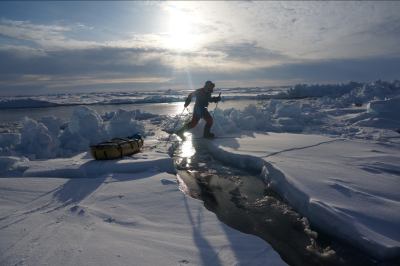
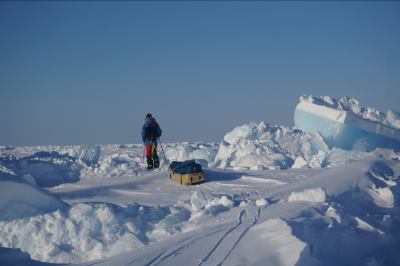
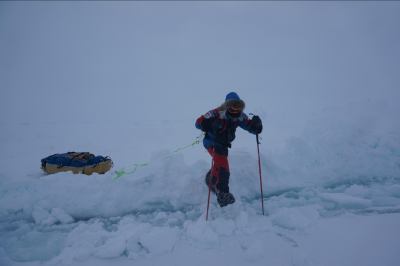
Going to the North Pole is a completely different beast though, with much bigger challenges to overcome. Since skiers are actually traveling over a frozen ocean, there is a measure of instability involved that often leads to massive rubble fields that can take days to cross. Climate change has also caused the ice to thin, and created wide sections of open water as well. What was once frozen pack ice is now liquid, forcing skiers to go around or swim across instead.

Because of these changes, we haven't seen a successful full distance expedition to the North Pole since 2014, when Eric Larsen and Ryan Waters completed that journey. Over the course of the ensuing years, a number of people have tried, but most have had to give up very early in the expedition. Massive storms have become the norm this time of year, bringing fierce winds and frigid temperatures to the Arctic. Worse yet, those conditions have made it difficult for aircraft to operate in this part of the world, which forced Kenn Borek Air – a company whose motto is "anytime, anywhere" – to stop supporting expeditions to the North Pole.

That isn't to say that there haven't been people who have skied to 90ºN. On the contrary, each year there are "Last Degree" skiers who cover a partial distance to the top of the world. Most of them operate out of the Barneo Ice Camp, a temporary base created near the 88ºN mark on the Russian side of the ice each season. That base facilities scientific and exploratory missions, as well as adventure travelers, coming and going from the Arctic each year, and it is a point of exit for full distance skiers, but it isn't a launching point for those longer-distance expeditions.

One explorer that I thought we'd be following to the North Pole this season was Mike Horn. Last year, he skied across Antarctica as part of his Pole2Pole Expedition, which was to include a journey across the Arctic this year, which would continue down through Greenland before returning to his starting point back in Monaco. But, I haven't seen any indication that Mike is headed to the Arctic to attempt this crossing and the latest updates on his website were posted back in October when he was sailing the Great Barrier Reef off the coast of Australia. There have been some vague mentions of him having already competed this stage of the Pole2Pole, but I am unaware of this actually happening.

So all of this begs the question: wither the North Pole explorers? Have they all abandoned attempt on the Arctic with climate change making things extremely difficult? Is there someone making the attempt this year that I haven't been able to uncover? Is the age of Arctic exploration on foot truly over?

At this point, only time will tell. I can say however, that I am aware of at least two expeditions scheduled for next year, which is a long way off and provides plenty of time for cancellations, delays, and so on. Hopefully that won't be the case, but until these expeditions are truly underway, I remain a bit skeptical.

Do you know of an expedition to the North Pole that I should be following this year? If so, send the details my way please.

Want to Become a Polar Explorer? Apply for this Scholarship to Learn From Eric Larsen!

Over the past month or so, I've been writing extensively about the unfolding expedition season down in Antarctica. As I write this, adventurous men and women are making their way across the frozen continent on skis while pulling sleds filled with supplies and gear behind them as they go. Some are headed to the South Pole, other are traversing to different places, but they are all crossing one of the most dramatic, demanding, and spectacular wildernesses on the planet. If you've ever dreamed of doing that same thing, then I definitely have a tip for you.

In January of 2018, polar explorer Eric Larsen will be conducting a Level 1 Polar Training course to help others follow in his footsteps. The course will be held on Lake Winnipeg in Canada and will consist of a week of intense training that will help you to become more adept at winter travel or even prepare you for your own journey to the North or South Pole.

The course will consist of three days of indoor training, which in turn leads to four days of practical experience out in the field. Students will actually embark on a traverse around Lake Winnipeg in conditions that will replicate those found near the poles. They'll travel on skis, pull their sleds, sleep in tents, and learn every aspect of what it is like to survive in arctic conditions.

If this sounds like your kind of adventure, you can actually apply for a scholarship to attend the program. Allied Feather & Down and Helly Hansen have teamed up to give one lucky recipient the chance to travel to Lake Winnipeg to take part in the course, which is taught by Eric himself. The scholarship covers all the costs, including required gear, travel expenses, course fees, and more.

You can find out a lot more about the training program – including a full itinerary – by clicking here. And if this sounds like something you'd like to take part in, you can apply for the scholarship by clicking here.

If you've ever had dreams of skiing to the South Pole but weren't sure how to get your expedition off the ground, this course will certainly put you on track. You'll not only come away with some valuable skills for use in polar conditions, you'll also get the chance to learn from a guy who has spent a lot of time in very cold places. This will be the chance of a lifetime for some lucky adventurer and I'll definitely be jealous of whomever gets the opportunity.

Find out more here.

North Pole 2017: Two Teams Prepare for the Challenge

The sun has still to set on the 2016-2017 Antarctic expedition season, and it is already time to begin looking north toward the Arctic. According to ExWeb, this year there are two teams preparing to make a full-distance attempt on the North Pole, despite the fact that such a journey is now more challenging than ever before. So much so, that while numerous people ski to the South Pole each year, no on has reached the North Pole in almost three seasons.

In an effort to change that this year, Sebastian Copeland and Mark George have joined forces to ski 480 miles (772 km) from Ellesmere Island on the Canadian side of the ice to the top of the world at 90ºN. The duo are looking to set out at the end of February or very early in March, with the exit start dictated by the weather of course. Copeland and George will be traveling unassisted and unsupported once they get underway. 

The other team that will be attempting the journey is Martin Murry, while will be joined by his dog Sky. They intend to travel in a supported fashion, receiving occasional resupplies along the way. They'll also set out from the Canadian side of the ice, although their exact departure point isn't know just yet, although ExWeb says that the two teams will share a pilot and departure window.

And of course, we're expecting Mike Horn to attempt a traverse of the Arctic ice cap too, once he wraps up in the Antarctic and sails north. His current plan is to meet his ship after finishing his crossing of the frozen continent, and then sail to Australia and New Zealand to complete a few side adventures. But, it is a long way to sail to the Arctic, and I'm not sure he'll have the time to do that if he intends to make another traverse this year. We'll be watching him closely, as he should rejoin his sailing ship the Pangaea in the next few days, provided the weather cooperates. 

As ExWeb points out, these expeditions face some serious challenges if they hope to be successful. For instance, Kenn Borek Air no long supports North Pole skiers, so the teams had to find an experienced pilot that they could pay to not only deliver them to the start of the expedition, be on standby for 60 days, and pick them up at the North Pole if they reach that point. They found such a man in Dave Mathieson, who will be stationed in Resolute Bay for the duration of the journey. 

These explores will also face a shifting landscape of snow and ice that has most certainly been impacted by climate change. The ice on the way to the North Pole is as unstable as ever, especially considering that 2016 is the warmest year on record. That makes challenge in the Arctic extremely difficult, because unlike in the Antarctic, there is no landmass under all of that ice. The skiers will have to cross open leads of water, traverse massive ice fields with rubble the size of a house, and even potentially face hungry polar bears along the way. Skiing to the South Pole is a relative walk in the woods compared to what it is like to head north. 

We'll be watching the progress of these teams closely once they get underway. As always, it will be interesting to see how they proceed. 

Temperature at the North Pole Climbs 50º Higher Than Normal

It has been a record breaking year for temperatures all across the globe, as climate change seems to be wreaking havoc with our atmosphere. We got a reminder of this yesterday, when temperatures at the North Pole soared by as much as 50º above normal, reaching 0ºC/32ºF on the surface. That's the same temperature as the Arctic usually encounters during the summer months, but it is highly unusual for it get so warm at this time of year.

To put things into perspective, that means that temperatures were warm enough to melt snow and ice, even as winter is arriving in the Northern Hemisphere. That should set off alarm bells about the state of the polar ice caps, which seem to be already retreating at an alarming rate. We've had a lot of somber news from the Antarctic recently as well, but this is just another indicator that our planet is definitely in a state of flux right now, and we're running out of time to do anything about it.

It also doesn't bode well for any explorers hoping to make an expedition to the North Pole. If it is this warm in December, what will the conditions be like in March and April, or even into the summer. I know that there are a couple of expeditions planned for the Arctic next spring, but they could be dealing with unprecedented ice break up, and the largest leads of open water that have ever been seen at the top of the world.

Of course, we do have a long winter to go, and temperatures are sure to return to normal at some point. But so far, November and December have been unseasonably warm, and have climbed up close to the 0ºC mark once before as well. Worse yet, the long-range predictions are saying that 2017 could be another very warm year, with further melting of the ice caps.

I'm not sure how much longer climate deniers are going to keep their head buried in the sand. The signs are there, and we're mostly ignoring them at this point. Still, it isn't too late to try to make a change. Hopefully that will be the New Year's Resolution for some important people who are in a position to have an impact on policy and reform. Time will tell.

Quiz: How Much Do You Know Bout Polar Exploration?

If you're a fan of polar exploration like I am, and enjoy the history that surrounds the famous expeditions that ventured into those remote places, we have a real treat for you today. National Geographic has posted a fun quiz designed to test your knowledge, and perhaps teach you a thing or two at the same time. As someone who writes about the history of polar exploration from time to time, I still picked up a couple of nuggets of information along the way. There are ten questions in total, and I managed to score an 8. Not bad, but still room for improvement. Take the quiz below and see how you fare.


Video: Nat Geo Shares Earliest Archival Footage

Want to see the earliest archival video footage from National Geographic's extensive vault of films? The video below provides a glimpse of just that as it gives viewers a look at the 1903 Ziegler North Pole Expedition. The explorers that made up that team set out from Norway with plans to reach the North Pole. But, their ship got trapped in the ice and the group ended up stranded for a year. This video gives us a look at a bygone era in exploration and a sense of what it was like for that team as they set off into the unknown. Interesting stuff to be sure.

Russian Teens Skied to the North Pole in Just 5 Days

The 2016 Arctic Season may be over, but there are still a few interesting stories to share. For instance, ExWeb has posted an article about a team of Russian teens who skied to the North Pole (last degree) in just 5 days following a host of delays that cut into their planned time out on the ice.

The group of seven teens had planned to make a last-degree ski expedition to the North Pole via the Barneo Ice Camp. Their original schedule gave them 7-10 days to complete the journey, which covered roughly 125 km (77.6 miles) over the frozen Arctic Ocean. That means they were able to sustain a pace of about 25 km (15.5 miles) per day, which is an excellent pace considering the conditions they encountered on the ice.

The challenges of the Barneo Ice Camp have been well documented on this blog, and elsewhere, this year. The ice flows that the temporary base is built on were being buffeted by ocean currents throughout the season, causing the blue ice runway there to crack multiple times. That caused a lot of delays, causing the Russian teens, and a number of other teams, to back up while they waited for their chance to fly out to the camp. Eventually the runway was completed, and the flights started arriving, but it took awhile to catch up on the backlog of people who were waiting to arrive in the Arctic. This cut into the time that the skiers had to reach the Pole.

According to ExWeb, when the team was retrieved from their finish line at 90ºN, they did not look tired or exhausted. In fact, they still had a lot of energy and were so excited to have reached the North Pole. It was quite a journey for these young adventurers, many of whom have wanted to ski through the Arctic for the better part of their lives.

I know that this is "only" a last degree ski expedition, but it is still an impressive feat to see these teenagers make that journey in such a quick pace. Five days to cover a degree of latitude is quite a short time frame, and I know a few polar explorers who would be hard pressed to maintain that same pace themselves. Also, how cool is it to be a teenager and get to go to the North Pole. I clearly went to the wrong high school.

North Pole 2016: Barneo Ice Camp Begins Regular Operations

It has been a challenging season in the Arctic so far with lots of delays for the explorers, researchers, and adventurers who planned to travel their this year. The Barneo Ice Camp, a temporary base built at roughly 89ºN each spring has experienced its share of issues, which resulted in some unprecedented delays to the start of the season. But now, things are finally back on track and regular flights have resumed, as support teams race to complete a busy schedule as quickly as possible.

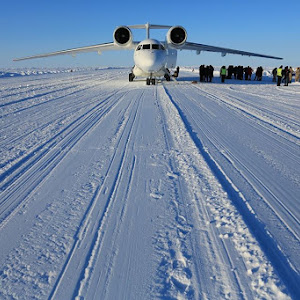
ExWeb is reporting that the runway at Barneo is complete and stable at long last, which is allowing the Russian built Antonov AN-74 aircraft to safely land and deliver important supplies and people to the Arctic. You may recall that the team of engineers who build the Barneo camp experienced issues with the blue ice landing strip, which cracked on four separate occasions, even forcing it to be relocated twice.

Amongst the groups that have now flown to Barneo so far are guided last degree ski teams that will spend the next ten days or so traveling across the frozen Arctic Ocean on their way to 90ºN. Several research teams are also out on the ice, as were Arctic marathon runners who were able to complete their race after several delays.

Because of the long delays to the start of the season, it looks like Barneo could stay open later than normal. Typically it begins to wind down operations by late April, but it is now looking like it could stay open into early May due to the backlog of people waiting to reach the ice.

Meanwhile, the Race Against Time team reports that ice conditions are now improving dramatically. They have moved away from open water and are now skiing over solid ice, which is allowing them to make better time, covering 10 nautical miles yesterday. But the continue to see foot prints from polar bears and even arctic foxes, reminding them that they are not alone out on the ice. The team is on its way to the North Pole and should arrive there late this week or early next.

North Pole 2016: Race Against Time Team Faces Big Challenges

After overcoming a series of challenges just to get to the starting line, the Race Against Time team is now out on the Arctic ice and making their way towards the North Pole. But as expected, this journey to the top of the world hasn't been an easy one so far as a number of natural obstacles force the team to earn every mile.

Last week, the team of Mark Wood, Paul Vicary, and Mark Langridge were finally dropped off on the ice after facing unprecedented delays to the start of their expedition due to issues with the runway at the Barneo Ice Camp that serves as the gateway to the Arctic each season from the Russian side of the ice. That caused the trio of explorers to rethink their journey for a second time, switching from the original plan of a full-distance ski journey to the North Pole to an expedition that actually began at 90ºN and would head south to Ward Hunt Island in Canada, before finally settling in on their current route, a two-degree ski expedition back to the Pole.

The squad has now been out on the ice for five days, and they've discovered that the Arctic is everything they had expected and more. In the first few days they faced rubble fields of disrupted ice, with many blocks the size of cars and even a few larger than a house. As they inched north however, other obstacles have begun to appear. For instance, yesterday the team only gained 4 nautical miles of distance thanks to a large lead of open water that they had to cross. The only way to do so is to don drysuits, enter the water and swim across while pulling their gear in inflatable rafts.

As if that wasn't enough, the men have also come across a set of footprints left behind by a polar bear. That means that one of these big carnivores is in the area, and they have been known to stalk polar explorers that pass through their domain. So far, no sight of the creature but they will remain wary and vigilant on the trail.

The hope is that the team can reach the North Pole sometime next week. When they originally set out, they thought it would take 12-15 days, and they are still on track to reach their goal. What else they'll find on the way north remains to be seen.

Trio of British Polar Explorers to Attempt North Pole Expedition in 2016

For some time now I've been saying that the most difficult expedition in the world of outdoor adventure and exploration is a journey on skis to the North Pole. Anyone who undertakes that challenge faces an incredibly hostile environment that includes harsh weather, subzero temperatures, and surface conditions that are nearly impassable. Throw in the occasional encounter with polar bears, and a phenomenon called negative drift that actually causes skiers to lose ground while they rest, and you start to see why it is such a difficult undertaking.

In recent years climate change has made that journey even more perilous, causing the ice to become more unstable, and opening large sections of open water in the Arctic Ocean that must be swam across or skied around. Additionally, those same climate forces have created storms that are more dangerous than ever.

The last team to complete a full expedition to the North Pole was Eric Larsen and Ryan Waters, who did so back in the early months of 2014. Their struggles have been well documented, and have prompted some to say that they might be the last two men to make the trek to the North Pole. But this year a team of three British adventurers will attempt to replicate that feat, albeit from the opposite side of the ice.

In February of 2016, Mark Wood, Paul Vicary and Mark Langridge will set out from Cape Arktichesky in Russia in an attempt to cross the Arctic Ocean and ski to the North Pole without resupply. The journey is expected to take 60 days to complete, covering more than 600 nautical miles (690 miles/1111 km). They're calling this expedition the Race Against Time, and their website can be found at NorthPole16.com.


The goals that the team has set for itself are many. In addition to attempting to raise funds for the Hire a Hero program in the U.K., the three men also hope to raise awareness and educate the public on the growing threat of climate change. To that end, they'll also be working with researchers at Warwick and Exeter Universities, as they collect data on their journey north. The trio also hopes to inspire a new generation of explorers to continue to search the planet for new discoveries as well.

All three of the members of this team have already completed full distance ski expeditions to the South Pole, but they'll find that the Arctic Ocean is a far different place than the Antarctic. For reasons already mentioned above, a ski journey to 90ºN is far more difficult and dangerous than one heading to 90ºS.

The expedition has picked up a couple of prominent patrons from the polar exploration world. Sir Ranulph Fiennes has given them his stamp of approval, as has Henry Worsley, who even now is working to complete his solo and unsupported traverse of Antarctica. The team also received some much needed support from British businessman Mark Tweddle, who stepped in to provide funds when it looked like the project could fall apart before it even got started. Without his aid, the explorers would have been forced to abandon their efforts altogether.

I was certainly amongst those who thought that a full-distance North Pole expedition probably wouldn't happen again in my lifetime. It remains to be seen if Wood, Vicary, and Langridge will be able to ski all the way to the Pole, but I definitely applaud their efforts. It will be interesting to follow their progress when they get underway on February 20. It could be history in the making for sure.

Video: A Polar Bear's View of the World

In April of this year, researchers attached video cameras to four polar bears in the Arctic. They have collected the first images from those cameras, and shared it with us online. The footage captures the world from the perspective of a polar bear, showing them swimming in the Arctic Ocean, finding a tasty meal, and encountering other bears. The project is designed to help us understand how the bears behave as their environment shrinks due to climate change, but mostly its just great footage of polar bears. That's worth it alone.

North Pole 2014: The North Pole Season is Over!

It has been a long, and difficult, season in the Arctic, where numerous teams attempted to reach the North Pole on foot once again this year. Of course, only one of those teams was successful, with Eric Larsen and Ryan Waters becoming the first to complete a full expedition to the top of the world in over four years. But now the season has come to an abrupt end, as the support squad at Kenn Borek Air have shut down operations in the Arctic for another year. This has forced several teams to cancel their expeditions early, sending them home without achieving the objectives they had originally set out for.

We'll start with an update on Eric and Ryan. After spending 53 days skiing to the North Pole, the boys were extracted from the ice about a day and half after their arrival. Poor weather delayed the flight sent to retrieve them, but not for long. It gave the two men a chance to rest in their tent at last, and from the sounds of things, it was a whirlwind couple of days flying back to Cape Discovery, then on to Resolute Bay, where they packed gear, and prepared to go home. That happened yesterday, and from the sounds of things, both men are happy to be back with friends and family, and getting some much deserved rest. For now, they are content. Eric promises a recap of their North Pole expedition soon, which should make for interesting reading.

Elsewhere, the Expedition Hope team, which consists of Arctic explorers Bernice Notenboom, Eric Phillips, and Marten Hartley, are amongst those who have seen their adventures come to an end thanks to Kenn Borek pulling the plug. Yesterday was the last day for flights, and the team wasn't sure they could complete their journey with the amount of fuel and food that they have left. So, with heavy hearts, they were forced to abandon their attempt to ski from the North Pole to Cape Discovery. They were closing in on the 84th latitude when the decision was made.


Norwegian solo-skier Bengt Rotmo was making the same journey, and he will now be picked up once the weather permits as well. His home team tells ExWeb that the decision by Kenn Borek Air was made after they surveyed the ice while picking up Eric and Ryan last week. That survey indicated that  it was becoming increasingly dangerous to attempt to land a plane on the frozen Arctic Ocean, and the company could no longer guarantee the safety of its clients should an emergency rescue need to take place. Yesterday, May 12, was set as the deadline for the final flights to retrieve the remaining explorers, weather permitting. They should all be picked up within a day or two.

Jumping across the Atlantic to Greenland, Dixie Dansercoer and Eric McNair-Landry have finally gotten the good weather they've been hoping for since the start of their expedition. They are attempting to circumnavigate the country by kite-ski, covering 5000 km (3100 miles) in the process. The expedition was expected to take 80 days to complete, but progress was greatly hampered for the first few weeks of the journey due to poor weather. Now, 34 days in, they have started to really pick up steam. Over the past few days, they've been able to over more than 150 km (93.2 miles) per day, which as you can guess, has left them elated. They're finally on the move, and the kites are proving effective. While they are still behind schedule, they are making up ground at the moment. Hopefully that will continue to be case.

I will continue to monitor the progress of the teams in Greenland, but the Arctic season is now over for another year. From the sounds of things, conditions up north are not good, and it'll be interesting to see how many teams can actually complete an expedition to the North Pole in the future. The latest climate reports don't paint a very rosy picture for things to come. Expeditions to our Poles are only going to continue to get more challenging.

Ryan Waters Becomes First American To Complete Unsupported "Explorers Grand Slam"

A foot note to last week's story about Eric Larsen and Ryan Waters becoming the first team to reach the North Pole on foot in more than four years. In the process, Ryan earned himself a unique distinction that is worth mentioning. He has become the first American to complete the "Explorers Grand Slam," aka the "Adventurers Grand Slam" completely unsupported, a feat that is certainly worth celebrating

In order to complete the Grand Slam, an explorer must summit each of the 7 Summits (tallest mountains on each of the seven continents), and visit both the North and South Pole. Ryan has previously climbed each of the mountains and skied to the South Pole, but he needed an unsupported expedition to the North Pole to fill out his resume. When he and Eric reached that point last week, he became the first American to complete the Grand Slam in unsupported fashion. He is also just the 39th person in the world to ever accomplish the Grand Slam as well.

If you followed Ryan and Eric's expedition over the past few months, you know the challenges they faced in going to the North Pole. It took them 53 days to travel from Ellesmere Island to 90ºN, with harsh weather, incredibly difficult surface conditions, and massive physical and mental challenges along the way. They boys have since been picked up from the Pole, and have made their way back home for some much deserved rest.

I'll post an update on news from the Arctic tomorrow, but I thought that this bit of information was worth sharing on its own. Ryan has been undertaking some incredibly tough adventures over the years, and I suspect that this North Pole expedition was the toughest of his career. We'll have to wait to see where he goes from here, but he has quite the impressive list of accomplishments to his name.

North Pole 2014: Mission Accomplished! Eric and Ryan at the Pole!

After 53 days out on the ice, Eric Larsen and Ryan Waters accomplished their goal at long last. The American duo reached the geographic North Pole last night, ending a four-year drought for anyone completing that journey on foot. The final push came in early evening, with the men arriving at 90ºN at about 7:50 PM Pacific Time. And while the final section to the actual Pole was smooth going, the last day of the expedition was anything but.

According to the audio dispatches that were released yesterday and today, the final push to the top of the world was incredibly grueling, with the explorers facing everything from rough ice, to large open leads, with whiteout conditions thrown in for good measure. In one of the dispatches, Eric says that it took them more than 8 hours just to cover a 3.5 mile stretch of ground. During that phase, they were skiing when they could, but had to resort to crawling, and swimming at times.

Eventually, they came across a section of flat, relatively smooth ice, that stretched before them unbroken. They knew that they were close to the Pole, with Eric remarking that for the first time since the start of the journey, there were no major obstacles in their way. It took a bit of navigating to locate 90ºN, but once they did, they celebrated briefly, took some pictures, and then crawled into their tent for a rest. In his dispatch, Eric said that they are utterly spent. The amount of effort it took, particularly in the final days when they were racing the clock, has left them completely exhausted.


The expedition was originally scheduled to last 45 days, but knowing that traveling in the Arctic is a difficult, unpredictable affair, they packed food and fuel for 55 days. That meant that they were able to complete the journey completely self supported, and didn't have to call in a resupply. With two days food left to spare, they can now rest for a bit before a flight can be arranged to pick them up. Extraction will come as the weather permits. A few days ago, the forecasts indicated that storms were possible in the area, so while they boys have reached their goal, they are not on their way home just yet.

Both Eric and Ryan are veterans of travel in the colder regions of our planet. In his last dispatch, Eric mentioned that things are changing dramatically in the Arctic, and the ice there is now unlike anything he has ever seen before. Climate change is having a dramatic effect on the Poles, and soon it may be impossible for anyone to complete this journey to the top of the world. In my opinion, it is already the toughest undertaking in the world of outdoor adventure, and considering the fact that no one has done it since 2010, I think it is only getting more difficult. It may not be too many more years before it is simply impossible to travel on foot the full distance to the North Pole.

Congratulations to Ryan and Eric on the successful completion of their expedition. Their efforts in the Arctic are an inspiration to many of us who have been following their progress for weeks. Hopefully they'll be on their way back home soon. I think they've earned themselves some much deserved rest, and perhaps a little time on a warm beach somewhere.

North Pole 2014: Pole in Sight For Eric and Ryan!

Eric Larsen and Ryan Waters are on the home stretch on their journey to the North Pole. Over the weekend, they were pushing the pace a bit more in an effort to reach the top of the world before they run out of food, and as such they have been putting in some very long days. But, as the new week begins, they are now poised to become the first team in four years to complete a full-distance expedition to Pole, although even in these final stages, the Arctic is finding ways to test them.

As of this writing, the boys are now 21.8 miles (35 km) from the finish line. That represents a hard day of skiing today, and tomorrow. Their current schedule has them skiing for six hours straight, then taking a break, resting, having a meal, and spending some time in the tent, before setting off again for another six hours. It's a fairly grueling pace when you've been on the ice for 50+ days, but they are determined to finish on schedule, and knowing that they are almost done is providing encouragement down the stretch.

Before they reach 90ºN however, there are some challenges to overcome. For starters, the weather forecasts say that a storm is moving into the area, which could impact their ability to travel, or potential get retrieved from the ice. That means they just might reach the Pole, only to discover no one can come pick them up, and return them to civilization. Worse yet, according to ExWeb, they've been warned about a large open lead that is in their line of travel, which they'll have to navigate around, or swim across, in order to reach their goal. It could be very frustrating to know that they are closing in on the end, but instead of being able to go north, they'll have to travel several miles east or west, before they can make the turn.

As if those weren't big enough concerns for the two explorers, they've also spotted the fresh tracks of a rather large polar bear that is on the same route as they are taking. That means a potential encounter with the animal within shouting distance of the Pole itself. Polar bears are wandering further and further afield these days in search of food. Lets hope this one isn't hungry enough to go looking for humans. Better yet, lets hope Ryan and Eric don't bump into the bear at all.

If everything goes as scheduled, the next update should be about the duo checking in from the North Pole. If they continue the pace that they've been setting over the past week or so, they should reach that point sometime tomorrow. We'll just have to wait for the update to come to know for sure. I will post the news as soon as it happens.

North Pole 2014: Across The 89th Degree!

We had another update from Eric Larsen and Ryan Waters yesterday, keeping us posted on their progress as they make their way toward the North Pole. It seems more and more likely that they will indeed succeed in their expedition, as the finish line is now in sight. They still have some miles to cross before they are through, but it appears as if they will become the first team in four years to actually reach the Pole, traveling the full distance on foot. 

The boys passed another important milestone yesterday be reaching the 89th degree. As I write this, they are just 67.3 miles (108.2 km) from the Pole. That should put them at roughly 4 days away from reaching the top of the world, which matches my previous prediction of them wrapping up their journey on Monday. It is important to note that they aren't quite finished yet however, and there is still a lot of tough ground to cover. But barring any unforeseen accidents, they should wrap things up early next week. I will, of course, keep you posted as they near the end of the expedition.

Meanwhile, ExWeb has heard from Yasu Ogita, who is now back in Japan and sharing his experiences from the ice. You may recall that the solo-skier was out on the ice for 42 days before he called for an evacuation. Yasu says that he is in fine condition. No issues with fatigue or frostbite, he simply ran out of time and didn't have enough supplies to keep pushing forward. He even indicated that he rationed his food when he encountered a storm day, during which he stayed tent-bound, not moving as intense blizzards raged around him. He had seven such days out of his 42 on the ice, and during those days he didn't eat any of his food in order to ensure he had plenty for the days he was on the move. Even still, that wasn't enough to allow him to reach the Pole. He simply encountered way to much rough ice, and was moving far slower than he had originally anticipated. 

The Expedition Hope team is back on track after receiving a resupply a few days back. Their sleds are heavy with food and fresh supplies once again, and they were successfully relocated to a new location on the ice in order to continue their journey south. This team began their adventure at the North Pole, and are on their way to Cape Discovery now, which is the exact opposite direction that Eric and Ryan took. As of this morning, the team is closing in on the 85th parallel, so they are making excellent progress towards their finish line as well. 

ExWeb reports that solo-skier Bengt Rotmo is making solid progress on his North Pole to Cape Discovery journey as well. After leading two separate clients across the last degree to the North Pole, he is now taking the time to enjoy a little adventure of his own. He is closing in on 89ºN, and by all accounts is feeling good and moving well. 

Over in Greenland, Dixie Dansercoer and Eric McNair-Landry are trying to remain upbeat, even though they continue to be battered by storms. They have once again spent the better part of the last three days in their tent, while they wait out the 4th or 5th (they say they've lost track!) storm to hit their area. The forecast says conditions should improve in the next few days, so they are hopeful that they can finally start to cover some decent mileage. So far, their progress has been greatly hampered by the conditions, and after 23 days on the ice, they have yet to find their groove. Originally, this 5000 km (3106 mile) expedition to circumnavigate Greenland was expected to take rough 80 days to complete. Whether or not they can still mange to finish in that timeframe remains to be seen.

More news from the Arctic as it becomes available. 

North Pole 2014: Closing In On 90ºN

Just a quick update from the Arctic today to give you a progress report on Eric Larsen and Ryan Waters. The two Americans have been out on the ice for 47 days now, and it is beginning to appear like they will accomplish their goal of reaching the North Pole, covering the full distance from Cape Discovery in Canada. If they do accomplish that, they'll be the first to do so in over 4 years, and while they still have some distance to go, their target is in sight, and it looks like it would take something catastrophic to prevent them from finishing now.

Updates have been sporadic over the past few days, mainly because they are skiing more hours in an effort to cover more ground. Right now, they're skiing 12 1-hour shifts per day, and sleeping just 4.5 hours. As you can imagine, this schedule is taking its toll on the explorers and their equipment. But, these extra hours are paying off, as they are now hitting 18 nautical miles (33 km) per day, which is what they need to cover in order to reach the Pole before they run out of supplies.

As of this writing, they are now 102 miles (163.9 km) from the North Pole. They have crossed the 88th degree, and are now rapidly closing in on 89. At their current pace, that would put them at 90ºN early next week. From the sounds of their audio dispatches, they'll be limping into the finish line. Much of their gear is being held together by makeshift repairs, following the abuse it has taken on the way to the Pole.

It is difficult to convey just how big of an accomplishment Eric and Ryan are about to complete. For my money, traveling to the North Pole remains the toughest challenge in the world of adventure today. The fact that no one has done it for so long underscores that. I also continue to believe that due to climate change, it'll only get more difficult to ski to the North Pole in the future.

I'll post more updates as they approach their end point. Hopefully there won't be any issues with extracting them from the ice. Only a few more days now.

North Pole 2014: Resupply and Relocation

With the clocking ticking on the 2014 Arctic season, there is still quite a bit to report from up north. While we're down to one team making its way to the North Pole, there are several heading in the opposite direction, or chasing other objectives in the Arctic at the moment. The conditions remain very difficult of course, but the potential remains for the completion of the first successful North Pole expedition in the past four years.

Eric Larsen and Ryan Waters continue to press ahead with their attempt to reach 90ºN. With time starting to become a precious commodity, they've now added an additional 2.5 hours of skiing to their day. After being out on the ice for 45 days, they still have 140 miles (225 km) to go, with approximately 10 days worth of food and fuel left. Simple math says they need to cover 14 miles (22.5 km) per day to reach the Pole. Preferably, they'd want to have a little extra time in there, just in case.

Fortunately, things seem to be improving for the duo. They have had better ice, and the leads that they have encountered have been frozen over as well. That has allowed them to pick up the pace some, hitting 17 nautical miles (31.4 km) in a single day. They have also passed the 87th parallel, which is a major milestone too. As they near the Pole, conditions should continue to stabilize, helping to increase their speed further. If everything comes together as it should, they have a legitimate chance of completing their expedition.

Japanese solo-skier Yasu Ogita was successfully retrieved from the ice last Wednesday. He had been traveling north for 48 days, but poor weather and ice conditions prevented him from covering the ground that he needed to in order to reach the Pole. He was tent bound on several occasions due to weather, and simple ran out of time. With food and fuel running low, he called for an extraction, and he is now back in Resolute Bay, waiting to go home.


The Expedition Hope team received a resupply over the weekend to help them on their expedition. The trio of skiers that includes Eric Phillips, Bernice Notenboom, and Martin Hartley, are traveling from the North Pole back to Cape Discovery, and have had their fair share of difficulty along the way as well. Bad weather has plagued the team as well, and negative drift has sent them further east than they had intended, so they were also planning to be relocated closer to their original course. With the resupply and relocation out of the way, they hope to get back to traveling south this week.

Over in Greenland, Eric McNair-Landry and Dixie Dansercoer continue to struggle for every mile. They are now nearly three weeks into their attempt to circumnavigate the country by kite-ski, and the weather has been almost completely uncooperative. They had hoped to use their kites to cover large distances in a single day, so far they've had few opportunities to kite at all. So, instead they ski along as best they can, covering 15-18 km (8-10 miles) per day, while dreaming of eventually picking up speed. They're going to need to if they want to finish this journey. The 5000 km (3100 mile), 80 day expedition won't be an easy one, and they are already well behind schedule for what they had harped to accomplish.

That's all for now. I'll post more updates as it is warranted. With Eric and Ryan inching closer to the Pole, we'll have to keep a close eye on their progress. If they do manage to complete the journey, it'll be one of the more impressive accomplishments in polar exploration in recent memory.

North Pole 2014: Barneo Closes For The Season

Just a few quick updates from the Arctic to get things started this morning. First off, the Barneo Ice Camp officially closed on Tuesday, as the final travelers and researchers were picked up from the ice and began their long journeys back home. The temporary camp, set up annually a degree off the Pole, served its purpose well this season, allowing numerous adventurers to come and go from the Russian side of the ice. A new camp will be built next spring to continue support efforts in the Arctic once again.

One of the final people to leave the North Pole this season was Norwegian explorer and polar guide Bengt Rotmo. He'll now ski south on the Canadian side of the planet, making his way towards Cape Discovery on Ellesmere Island. He began his journey on Monday, and will spend the better part of the next 6-8 weeks in the Arctic.

He'll be heading in the same direction as the Expedition Hope team, who have a few weeks head start, and are making good time, but have had to battle very poor weather at times. Starting at the North Pole is easier than ending there, but skiing to Canada is still a big challenge.

There hasn't been any word yet on whether or not Yasu Ogita has been retrieved from the ice. The solo-skier had called for extraction last weekend, but poor weather left him tend bound while he waited for a flight to come pick him up. That flight may have happened yesterday, but we're still waiting on confirmation. After 45 days on the ice, it was clear that he wouldn't have enough food nor fuel to reach the Pole, so the veteran polar explorer was forced to abandon his expedition once again.


Eric Larsen and Ryan Waters don't appear to have any plans on pulling the plug on their North Pole expedition, and they are slowly but surely inching closer to the Pole. Today marks their 40th day out on the ice, and they will pull within 200 miles (321 km) of the goal. They are carrying enough supplies for about 15 more days in the Arctic, but considering they are still facing extremely poor conditions, the success of their expedition is still up in the air. They are covering longer distances at last, but with just over two weeks to go, they'll still have to average approximately 13.3 miles (21 km) per day. Coincidentally enough, that is exactly how far they travelled yesterday.

Finally, over in Greenland, Dixie Dansercoer and Eric McNair-Landry  are now two weeks into their attempt to circumnavigate the country by kite-ski. The weather hasn't been particularly cooperative so far, as a result, they aren't covering the miles that they would like to at this point of the journey. They are remaining patient however, and hope to make up for lost time as conditions improve. They have been tent-bound for the past few days while they wait out a storm, but are anxious to get back on track. Considering this is a 5000 km (3106 mile) journey, that could last up to 80 days, they still have time to make up ground. But they are also aware that the clock is ticking, and they need to get moving soon.

That's all for today. More updates to come soon.