Showing posts with label Climate Change. Show all posts

French Explorer Sets Sights on Northwest Passage

Last week I shared a story about an adventurous family that will sail the Northwest Passage this summer, but unsurprisingly they won't be alone up there in the Arctic. We've also learned that French explorer Alban Michon will also head to that mythical waterway with plans to help raise awareness of what is happening in that part of the world as climate change alters it forever.

As we've mentioned before on The Adventure Blog, the Northwest Passage is a section of the Arctic Ocean that remained largely frozen shut for centuries due to permanent pack ice. For hundreds of years, explorers searched for a safe way through, in the process creating a faster trade route between the Atlantic and Pacific Oceans. This wasn't possible until recently, when increasing temperatures due to climate change have melted the ice and made the Passage navigable my ships for several months each year. It is now believed that by 2050, the route will be almost completely ice free, creating the trade route long sought, but bringing a number of other challenges along with it.

Michon plans to cross the Northwest Passage on skis, pulling an 180 kg (396 lbs.) sled behind him with gear, supplies, and equipment. When the weather permits, he'll use a kite to propel him along across the ice. He'll embark on the journey in March of this year, and expects it to take about two months for him to travel from Resolute Bay in Canada to the Atlantic Ocean in the west, covering some 1240 miles (1995 km) along the way. He'll be following the same route pioneered by Roald Amundsen, who was the first to complete this crossing back in 1906. It took him and his team three years to make the journey.

Along the way, the French explorer will take video and photos of the fragile Arctic environment in its current state. This will document the impact of warming temperatures on the Northwest Passage. He'll also take samples of the ground, measure the level of aerosols in the atmosphere, and study his own brain activity while traveling in an extreme environment. He'll also analyze plankton living in the area to register the impact of changing conditions on them as well. Michon will even dive into the Arctic water to get a look at the passage from underneath the sea too.

You'll be able to follow Michon's expedition when he gets underway in early March on his websiteFacebook page, and Twitter. It should certainly be an interesting adventure to watch unfold.

Two More Dire Warnings on Climate Change

It seems 2017 has been a year filled with dire warnings about the future of our planet and the impact climate change will have on our lives. This week, two different reports were released indicating that things are changing more rapidly than we imagined and we could be on the brink of catastrophe.

On Tuesday, the 2017 Arctic Report Card was released and amidst the various messages about the loss of pack ice in the Arctic was a clear warning. The 85 scientists from 12 different countries who compile the report on an annual basis say that the Arctic shows no signs of returning to the reliably frozen region of past decades. In other words, there is less and less ice in this part of the world, and that doesn't appear to be changing anytime soon.

The report goes on to say that that warming of ocean's surface and retreat of the sea ice extent is unprecedented in the past 1500 years. The researchers can determine this by examining such variables as tree rings, sediment cores, and air bubbles trapped in ice samples recovered from the arctic.

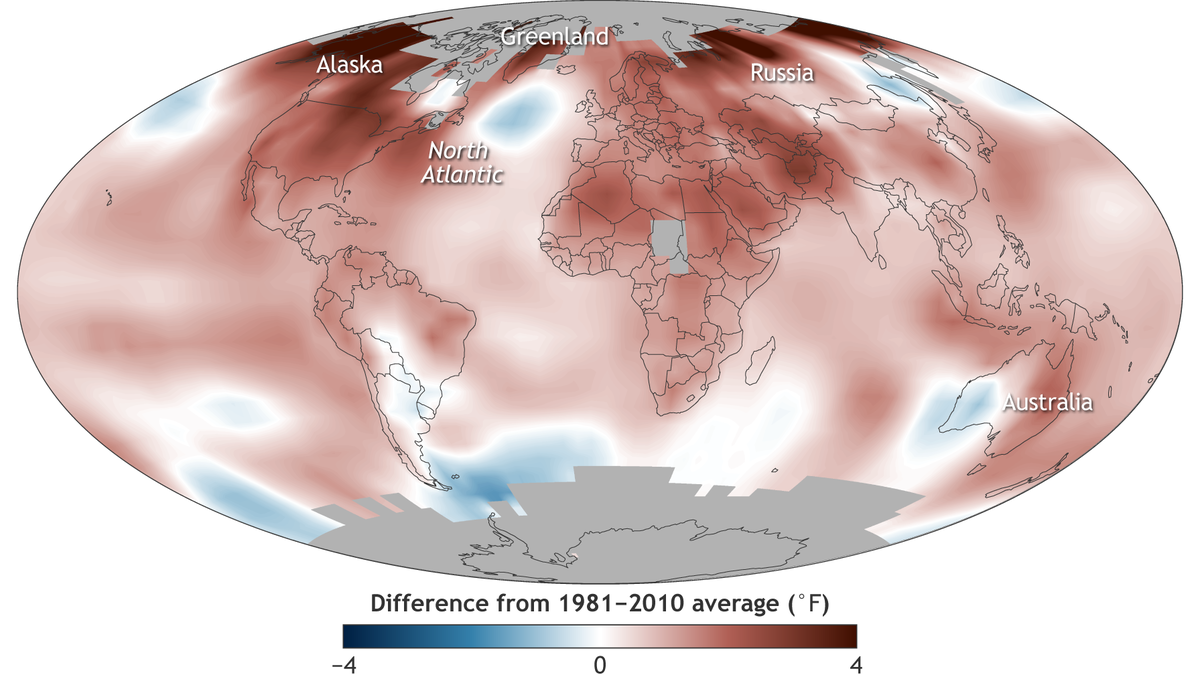
Data indicates that the Arctic had its second-warmest year on record in 2017 with an average air temperature that was nearly 3ºF above what it was on average between 1981 and 2010. The scientists are able to compare that data to temperatures recorded as far back as 1900 when measuring these trends.


As a result of this warm year, the sea ice extent didn't recover as it has in the past, leaving much of the Arctic free from ice altogether. Fortunately, a cooler than normal summer prevented more of it from melting off, or the situation might be drastically worse. Either way, things don't look great in the far north of our planet.

On Wednesday another report was released on the scholarly journal Earth's Future that calls into question our estimates of the increase in sea level across the planet as a result of melting ice sheets in the Antarctic. Data indicates that as those ice sheets continue to collapse – something we saw several times in 2017 – the rise in ocean levels will be faster and more severe than imagined. Just how fast and how severe? According to the report, we could see a major shift in water levels as soon as 2050, with oceans rising as much as 8 feet (2.4 meters). If that happens, it would have an impact on more than 236 million people across the globe.

But the same report says that it is not too late to avert this potential disaster. The researchers behind the paper say that we can still cut the emission of greenhouse gases like CO2 to try to turn things around. They do warn that time is running out however, with major changes needed in the next few years.

For me, climate change is the biggest challenge we currently face as a species. All of the indicators are there that things are happening around us, but whether or not we can still do anything about it remains to be seen. I remain optimistic, although I do think we need to get more serious about the situation. Hopefully this last report is right and that there is still time to change things for the better.

Video: Climate 101 - Nat Geo Educates Us on Glaciers

There as been a lot of talk all year long about the collapse of the ice shelfs in Antarctica and the impact that will have on the glaciers there. This phenomenon has the potential to have long and lasting consequences for hundreds of millions of people around the globe, but just what does this mean for climate change? In this video, National Geographic provides some insight into what is happening to the world's glaciers and how this could impact all of us in the future.

Receding Antarctic Glaciers Bring Cause for Concern

Throughout 2017 I've posted a number of stories about Antarctica's ice shelves are calving off massive chunks of ice sending icebergs adrift into the Southern Ocean. We first saw one of these events back in July, when a large section of the Larsen-C Ice Shelf broke away, creating a berg the size of Delaware. In September, a similar break-up occurred near the Pine Glacier as well. As you can imagine, these events have been watched closely by scientists, who view Antarctica as the canary in the coal mine when it comes to climate change. Now, there is even more cause for concern, as thing continue to confound and perplex researchers.

Typically when a large chunk of ice breaks away from the Antarctic, it tends to float north into the Southern Ocean, where the warming waters cause it to melt and break-up over a period of years. But, that isn't what happened with the piece from the Pine Glacier, which quickly broke up into 20 smaller pieces less than a month later. That means that the ice itself is already somewhat thin and fractured, and possibly that the water around it is starting to warm up as well.

Why is this such an issue? Because the Pine Glacier is already the fastest retreating glacier on the planet, and it contains about 10% of the water in the Western Antarctic Ice Sheet. When you combine that with the nearby Thwaites Glacier, which is also shrinking rapidly, you'll find that there is enough water to raise sea levels across the globe by 11 feet (3.3 meters). That would be disastrous to millions of people around the world.

The large sections of ice that broke off from Pine Glacier and the Larsen-C Ice Shelf actually serve as a buffer between the sea and the glacier itself. With those protective buffers gone, the melting of the glaciers is only expected to accelerate. While it will take decades for them to vanish altogether, resulting in that 11-foot rise in sea levels, it won't take long for them to begin brining those levels ups couple of feet. That alone would be devastating. Throw in the fact that there are plenty of other glaciers that are adding to the increase, and you start to understand why this is such a major concern.

Unfortunately, it may be too late to do anything about it. The Byrd Research Center in Antarctica reports that average temperatures near the Pine Glacier have already risen 2ºC or 3.6ºF. That may not seem like a lot, but in a fragile ecosystem like the Antarctic, it is enough to push things past the point of no return.

Antarctica 2017: Father-Son Team Skiing to the South Pole for Clean Energy

We've been following some ambitious expeditions across the Antarctic already this season, but now we can add another one to the list. A father and son team have launched their own ski journey to the South Pole and they're doing it with an important environmental message too.

Rob and Barney Swan have embarked on what they call the South Pole Energy Challenge (SPEC) as part of their much larger 2041 Project. Over the course of the coming weeks, they'll travel on foot for more than 600 miles (965 km) in order to reach 90ºS. It appears they are following the usual route from Hercules Inlet to Pole, with an estimated time of about 8 weeks to finish the trip.

What makes this particular journey unique is that they plan to unveil some cutting edge technologies while en route and become the first team to ski to the South Pole using only clean energy sources. The duo are promoting the 2016 Paris Climate Accords and are hoping to use the expedition as a way to demonstrate clean energy technologies, while also acting to preserve the continent from the advances of global warming.

The father and son team have been skiing for about a week now, and are making solid progress for their first few days out on the ice. During the early part of the expedition it usually takes awhile for skiers to get their legs under them, and the sleds that they pull are at their heaviest. As time goes buy, they begin to find a rhythm and as they consume food and supplies, the sled gets a bit lighter, allowing them to travel further and faster. So far though, Rob and Barney have been chugging long at a nice pace, with mostly good weather and surface conditions.


This isn't Rob's first time skiing to the South Pole. In fact, he first followed in the footsteps of Robert Falcon Scott back in 1985-86. Then in 1989 he also marched to the North Pole, becoming one of just a handful of people to make both of those journeys by foot. Now, he's traveling across Antarctica once again, and finding it to be both a very different place than when he first visited, and yet often the same.

So why have they dubbed their expedition the 2041 Project? Because we have until the year 2041 to renew a treaty that bans mining and commercialization of Antarctica. In order to preserve this place, it is crucial that those agreements stand and are renewed. There are some indications that certain countries would like to mine or drill in Antarctica to claim precious resources, but those actions could be disastrous to the environment there. Rob and Barney are hoping to avert such a crisis.

Exactly how the SPEC squad distinguishes itself from other teams skiing to the South Pole remains a bit unclear. Most skiers use solar energy to power their gear while on the continent, although the fuel sources for their stoves vary a bit. On top of that, Rob and Barney flew to the Union Glacier camp from Punta Arenas, Chile, so I'm not certain how using a massive Ilyushin aircraft to get to Antarctica falls into their plan of using only clean energy. Still, I respect their message and mission and look forward to following them throughout the journey and learning more about the 2041 Project in general.

Video: Meet the Heroes of Mountain Hardwear's Impact Initiative

Mountain Hardwear has launched a new project called the Impact Initiative in which its sponsored athletes aren't simply looking to bag some unclimbed peak or explore a remote region of the world. Instead, they are focused on ways to do those things, while also working to protect and preserve our planet as well. In this video, we'll meet some of those brand ambassadors, who include the likes of ecologist Charles Post, mountaineer Garret Madison, and polar explorer Vincent Colliard, whom we were already introduced to in this video. The hope is that these men and women will inspire us to do our part as well. At the moment, we only have one planet, and more and more of us are waking up to the idea that we had better start taking better care of it.

The Impact Initiative from Mountain Hardwear on Vimeo.

A Giant Hole Has Opened in the Antarctic Ice and Scientists Aren't Sure Why

We're now just a few weeks away from the start of the Antarctic ski season, and even now there are explorers putting the finishing touches on their plans to travel on foot to the South Pole. As the austral summer returns to the frozen continent, we're now taking stock of what is happening in that part of the world, and scientists of discovered something fascinating, perplexing, and possibly worrisome all at the same time.
Using satellite imagery, researchers have identified a large hole in the ice on the Antarctic continent. Of course, holes develop in the ice all of the time. Scientists even have a name for them, calling them polynyas. But what makes this one different from most is that it is incredibly large and it is located miles from the place where Antarctica meets the ocean, which is typically where these phenomenon form.

In this case, the polynya is roughly the size of Lake Superior and is found in the heart of the Weddell Sea to the east of the Antarctic Peninsula. This particular hole has been spotted once before way back in the 1970's when the first satellites began photographing the continent. It is believed that in this case, the polynya was created when warm water in the Southern Ocean rose to the surface, pushing through the cold freshwater that sits on top. That warm water then acted as a vent, heating up the ice and causing it to melt rapidly. So rapidly in fact that it was able to create the hole even during the dead of winter.

The scientists studying the Weddell Polynya as it is now called have described it as a natural variable that has proven that their climate models are actually providing an accurate depiction of what is happening to our planet. Originally researchers thought that the hole couldn't form again as climate change increased precipitation in the region. But newer models did predict that it would reoccur as conditions shifted. The fact that it has happened again is demonstrating that current climate models for the Antarctic are on track. Even though this appears to be a natural phenomenon, it is still falling into line with the shifting climate patterns across the world.

This is just another strange occurrence in the Antarctic along with the large chunks of ice that we've been seeing break off over the past few months. Whether this is all a natural occurrence or the result of man's impact on the planet, it doesn't really matter at this point. The Antarctic has long been viewed as the canary in the coal mine when it came to climate change, and this canary is in dire straits.

More Bad News on the Antarctic Glaciers

Yesterday I shared a story about a large iceberg breaking off from Antarctica as the Pine Island Glacier there continues to calve at an alarming rate. That story comes on the heels of the news this past summer that a chunk of ice the size of Delaware collapsed off the Larsen C Ice Shelf. Now, we get word that things in the Antarctic may be worse than we thought, as climate change begins to truly take hold on the frozen continent.

According to a new report published in the Earth and Planetary Science Letters journal, the glaciers found on Western Antarctica are now melting at three times the rate that is typical for the region. A recent study discovered that the ocean waters in Marguerite Bay were 1 to 2 degrees warmer than usual, which was enough to cause four major glaciers found there to double the rate at which they marched toward the sea and triple the amount of ice that they lost. Those glaciers went from losing 7-10 feet (2-3 meters) of ice each year, to as much as 33 feet (10 meters) per year.

That news alone is bad enough, but it turns out that the data collected on the movement of these glaciers was taken from 2008 to 2012, which means that the rate of advancement and ice loss may be even more now. When the study was originally being conducted, the rate of acceleration was alarming and it is not likely that it has slowed any since then.

The glaciers in Marguerite Bay were once somewhat protected by an ice shelf that extended out into the sea. That shelf is now gone and the warmer ocean waters are working directly on the glacier instead. This is the same process that has just started on the Larsen C as well, where the ice shel broke off earlier this summer, removing the buffer zone between the glacier and the ocean. That means we should see accelerated movement and melting there soon too.

What does this all mean for the rest of the planet? With about 90% of the world's fresh water supply held in the ice on Antarctica, the melt off is likely to cause ocean levels around the world to rise. That process has probably already started, and it will eventually alter the way of life for millions of people around the globe.

 In my opinion, how we deal with this, and other climate issues moving forward, is the great challenge of our times.

Another Massive Iceberg Breaks Free From Antarctica

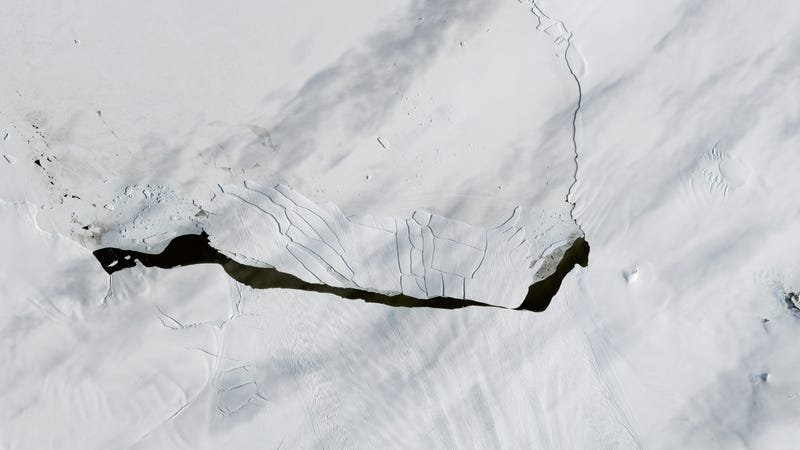
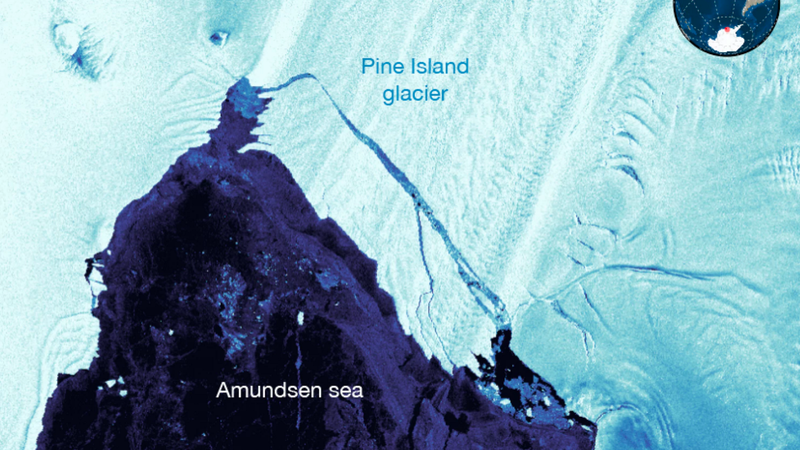
Researchers using satellite imagery to observe conditions in the Antarctic reported that another massive iceberg broke off from the frozen continent this past weekend. This lasted slab of ice is reportedly more than a 100 square miles (160 sq. km) in size, which makes it about four times the size of Manhattan.

Unlike the last giant iceberg that broke away from Antarctica back in July, this one did not calve off of the Larsen C Ice Shelf. Instead, it came from the Pine Island Glacier (PIG), which has been retreating at an alarming rate over the past few years. Reportedly, the PIG loses approximately 45 tons of ice per year at the moment, and is responsible for about a quarter of the loss of ice in Antarctica.

While quite large, this latest iceberg has reportedly already started to break up into smaller sections as it floats out to sea. It's size is large enough to create problems for ships passing through the region, but it is nothing compared to the 2240 square mile (5,800 square km) section that separated from the Larsen C a few months back. Scientists continue to track that slab of ice as well, and while it has reduced in size, it remains quite sizable.

According to this report, this is now the third major calving event from the Pine Island Glacier over the past few years, with the other two being nearly twice the size of this one. What concerns researchers the most isn't necessarily the size of these icebergs, but the rate at which they are breaking free. A glacier of this size, located this far south, shouldn't be calving off ice at this rate. And yet, it continues to do so, and is likely increasing in frequency.

On top of that, the glacier makes up about 10% of the drainage of the West Antarctic Ice Sheet, which means it is a significant contributor to potential rises in sea level. As Antarctica continues to warm, and more massive chunks of ice break free from the land mass there, the threat of rising sea levels becomes more of a concern.

To make matters worse, satellite images show that rifts are forming further inland, which means that the glacier is being eroded at a faster rate, and may start to calve larger chunks of ice like the one that dropped off the Larsen C earlier in the year. At the moment, the prognosis doesn't look good, as the PIG retreats, it will allow even more ice, which is backed up behind it, to begin to melt. It seems like it is only a matter of time before that starts to happen, barring some unexpected change in the climate on Antarctica.


Team of Explorers Set Out to Map Little Known Siberian Islands

An international team of explorers has embarked on an expedition into the Arctic to go in search of a set of almost-mythical islands located north of Siberia. The team hopes to not only fill in some blank spots on the map regarding this seldom visited place, but will also examine the impact of climate change on the environment north of the Arctic Circle.

The Pax Arctica Expedition was created to not only create awareness of threats to the Arctic but also to help usher in new ecological regulations governing that part of the world. To that end, a squad of French, Russian, and American explorers and researchers have begun sailing north through the treacherous Arctic Ocean in an attempt to reach New Siberia and the De Long Islands, which are generally only accessible in the late summer and early fall, prior to the arrival of the ice pack.

The team consists of expedition leader Luc Hardy, who is joined by a well-rounded research team that features the likes of paleozoologist Alexei Tikhonov and the anthropobiologist Eric Crubezy. They are being guided by veteran polar explorer Victor Boyarsky, who has had numerous expeditions into the cold places of our planet, including Antarctica and Greenland.

The group set out aboard a 437-ft. Russian Arctic research vessel called the Mikhail Somov from the port city of Tiksi a few days back. The ship will make a few stops en route to New Siberia and De Long, delivering meteorologists to remote weather stations throughout the area, and resupplying others. Those stations will generally be cut off from the outside for months at a time due to the arrival of winter, so the Somov is their lifeline.

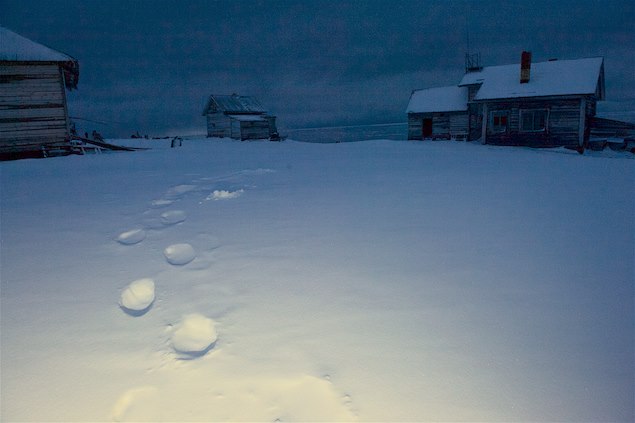
The ship reached remote Henrietta Island yesterday, which is part of the De Long island chain. They found very little indication that it had ever been visited by man in the past, although polar bear tracks were discovered in the snow. It is likely that as they proceed north, they'll encounter more of those creatures, and yet fewer signs of man.

Ultimately the team hopes to reach their main objective, which is New Siberia. Relatively low-lying  in terms of altitude, the island is covered in vegetation hardy enough to survive in the tundra. The place is renowned for having preserved mammoth bones and tusks, as well as other megafauna, in it permafrost, but it also serves as a good indicator of a place that could be deeply impacted by climate change.

You can follow the progress of the expedition via its blog, Facebook page, and live tracker.

2016 Was Officially the Hottest Year on Record

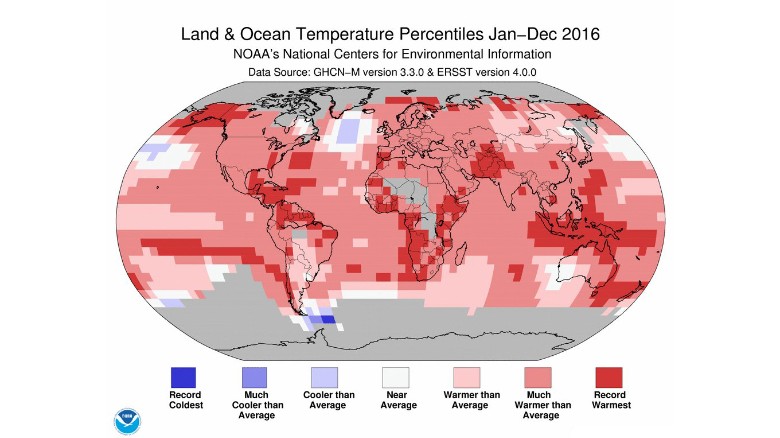
More sobering news this week from the U.S. National Oceanic and Atmospheric Administration (NOAA). The organization has released it annual State of the Climate report, and it includes some not so surprising data. Spanning more than 298 pages, the document indicates what a lot of us probably knew already: 2016 is the warmest year on record over the course of the 137 years that such data has been tracked.

The biggest take away from the report, which is peer-reviewed for accuracy, is that carbon dioxide levels in the Earth's atmosphere were measured at 402.9 parts per million. That is also the highest on record, but perhaps most startling of all is that it is the first time in 800,000 years that CO2 levels have risen above the 400 parts per million mark.

El Nino played a significant role in driving surface temperatures higher, but there were a number of other records set as well. According to the report, the global average for sea surface temperature, sea level, and the temperature of the lower atmosphere all reached record highs. Meanwhile the Antarctic sea-ice extent dropped to record lows as the impact of our warming planet took its toll on the ice.

The news of the record warm temperatures for 2016 follows two successive record breaking years in 2014 and 2015 as well. While that is not enough scientific data to indicate a trend as of yet, it also seems like more than a coincidence too. Our planet is, without a doubt, warming. It doesn't matter whether it is manmade or a natural phenomenon at this point. Debate on that topic has long ago set sail. Now, we just need to start doing more to help reverse this tide of increasing heat and start looking at ways that we can protect ourselves against the changes it will bring.

Read more about the state of our climate here.

100 Practical Ways to Fight Climate Change (and Trump's Poor Decision)

In the wake of President Trump's decision to exit the Paris Climate Agreement there has been a lot of discussion here in the U.S. about what that means exactly and the impact it will have not he future of our planet. While some business leaders here have applauded the move, for the most part there has been significant push back from individuals, cities, and states, many of whom have pledged to continue to abide by the Agreement, even as the nation withdraws.

For me, climate change is one of biggest issues that we face at the moment, and it doesn't just impact one or two countries or regions, but the entire planet. Which is why I was so happy to see this map from National Geographic that shows all of the various cities and states in the U.S. that have already joined the "Climate Rebellion" against the President's decision. The map shows the places that have either already become part of the U.S. Climate Alliance or have taken a pledge to stick to the Paris accords.

But, Nat Geo has published yet another story that will be of interest to those of us who feel strongly about this topic. It is entitled 100 practical ways to reverse climate change and is an interview with Paul Hawken, the author of Drawdown: The Most Comprehensive Plan Ever Proposed to Reverse Global Warming. The book was a New York Times bestseller when it was released, and it offers the aforementioned 100 ways that we can all help to reverse climate change.

Some of those options are detailed in the article, although most are saved for the book itself, which examines in a highly analytical way how to have a positive impact on our planet's environment. Options like switching to electric cars, using solar energy, and preventing deforestation are examined in detail, with practical methods provide for the reader on how he or she can help on a personal level.

Those of us who love the outdoors also care about preserving it for future generations as well. But when it comes to climate change, we are on a course that could not only spell the end of our environment, but leave us with no future generations to see it. Everyone can do something to help out, no matter how big or small, and it can make a difference. More importantly, its nice to know that others feel the same way, and that while the President may have turned his back on this cause, there is a concerted effort in the U.S. by others to ensure that the country plays its part.

2016 Was The Hottest Year on Record

Stop me if you've heard this one before...

According to NASA and NOAA, 2016 was the hottest year on record, breaking the previous mark for the third consecutive year. And if that wasn't sobering enough news, the latest report on climate change also indicates that 16 of the 17 hottest years ever have taken place since 2000.

Studies indicate that the average temperature across the planet increased by 1.1ºC (1.98ºF) last year, which may not sound like much but it is enough to have a dramatic impact on large sections of the globe – especially in the polar regions. It also means that we're already well on our way towards surpassing the 1.5ºC goal set by the Paris Climate Agreement from 2015.

The cause for the increased temperature remains the same as it has for the past two decades, or longer. The burning of fossil fuels increases carbon dioxide emissions into the atmosphere, and the continued deforestation of rainforests – often referred to as the "lungs" of our planet. These harmful processes seem to be continuing to accelerate, despite efforts to reverse their effects.

Historical records of temperatures have been kept as far back as the 1880's, which means we have more than 130 years of data to compare the current trends to. It is also becoming increasingly more difficult to deny the impact of humans on the environment. As part of the report, Michael Mann, the director of the Earth Science Center at Pennsylvania State University,  said "The effect of human activity on our climate is no longer subtle. It's plain as day, as are the impacts -- in the form of record floods, droughts, superstorms and wildfires -- that it is having on us and our planet."

To make matters worse, the Arctic seems to be warming at a faster rate than the rest of the planet, with temperatures now climbing to 3ºC (5.4ºF) higher than they were a decade ago. That means an increased rate of melting of the ice caps, which in turn leads to raising sea levels around the world. That will have a big impact on coastlines, eventually putting areas that are now inhabited potentially under water.

But, there is cause for some hope. Scientists believe that 2017 won't be warmer than the previous years thanks to El Nino keeping things a bit cooler. This is probably a temporary state of affairs however, even if it does buy us a brief respite.

How anyone can continue to deny climate change is beyond me. Whether or not humans are having an impact doesn't matter any longer. It's happening, and we need to do whatever we can to halt it. It's not too late, but time is running out.

Video: Meet The Snow Guardian

Meet billy barr (yes, that's how he spells it!), a man who has lived alone in a cabin near Gothic, Colorado for 40 years. Over that time, he has been keeping meticulous records of the weather, how much snow has fallen, what the temperature on any given day is, and so on. Those records are now proving invaluable to climate scientists, who view billy as an invaluable resource. This is his story, as told by National Geographic.

Temperature at the North Pole Climbs 50º Higher Than Normal

It has been a record breaking year for temperatures all across the globe, as climate change seems to be wreaking havoc with our atmosphere. We got a reminder of this yesterday, when temperatures at the North Pole soared by as much as 50º above normal, reaching 0ºC/32ºF on the surface. That's the same temperature as the Arctic usually encounters during the summer months, but it is highly unusual for it get so warm at this time of year.

To put things into perspective, that means that temperatures were warm enough to melt snow and ice, even as winter is arriving in the Northern Hemisphere. That should set off alarm bells about the state of the polar ice caps, which seem to be already retreating at an alarming rate. We've had a lot of somber news from the Antarctic recently as well, but this is just another indicator that our planet is definitely in a state of flux right now, and we're running out of time to do anything about it.

It also doesn't bode well for any explorers hoping to make an expedition to the North Pole. If it is this warm in December, what will the conditions be like in March and April, or even into the summer. I know that there are a couple of expeditions planned for the Arctic next spring, but they could be dealing with unprecedented ice break up, and the largest leads of open water that have ever been seen at the top of the world.

Of course, we do have a long winter to go, and temperatures are sure to return to normal at some point. But so far, November and December have been unseasonably warm, and have climbed up close to the 0ºC mark once before as well. Worse yet, the long-range predictions are saying that 2017 could be another very warm year, with further melting of the ice caps.

I'm not sure how much longer climate deniers are going to keep their head buried in the sand. The signs are there, and we're mostly ignoring them at this point. Still, it isn't too late to try to make a change. Hopefully that will be the New Year's Resolution for some important people who are in a position to have an impact on policy and reform. Time will tell.

Massive Reef Discovered at the Mouth of the Amazon River

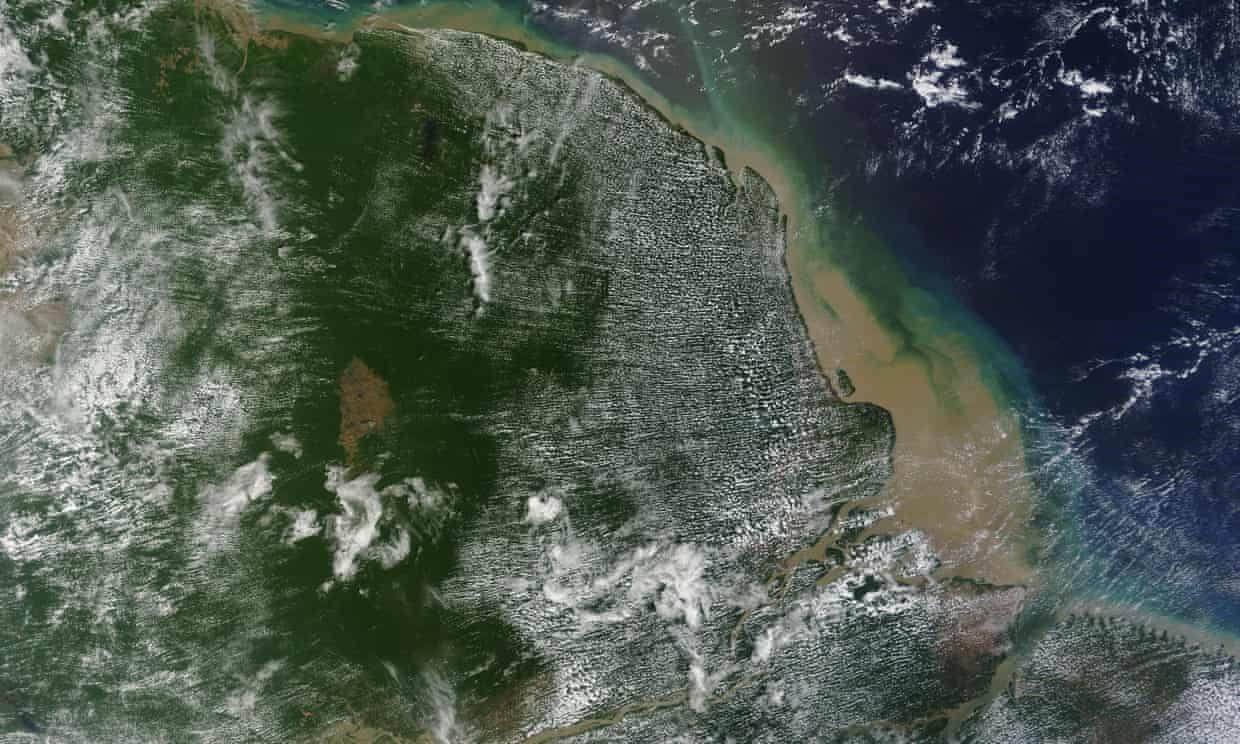
Here's a story that is further proof that our world still has a lot of mysteries and surprises to share with us. Scientists have discovered a massive coral reef hidden under the muddy waters at the mouth of the Amazon River in South America. The discovery comes at a crucial stage however, as the region has already been charted by petroleum companies looking to plumb its depth for oil.

Indications that the reef might exist first appeared back in the 1970's when fishermen began catching fish that were more commonly found on and around reefs in other parts of the world. But confirmation of the existence of this particular reef didn't come until recently, when researchers were finally able to prove that against all our knowledge and understanding of the ocean that it was hidden away along the coast of Brazil.

The reef stretches for nearly 700 miles (1126 km), and is more than 3600 sq. miles (9300 sq. km) in size. It is also said to be home to at least 60 species of sponges and 73 species of fish. Even more surprising is the fact that unlike other reefs found around the world, this one appears to be very healthy, and even growing. Climate change has begun to warm the oceans, which is causing coral reefs to die at an alarming rate. But this one is not displaying those same symptoms.

What makes this new reef so amazing is that it exists in a place that it was previously believed one shouldn't be able to survive. While it is submerged in ocean waters, the surface of the Atlantic is covered in fresh water that is dumped in from the might Amazon River. The river also deposits plenty of mud and sentiment into the water, which is typically not conducive to the growth of coral either. On top of that, oceanographers typically find reefs in shallower waters that are warmer and clearer than where this one exists. This has left some scientists to wonder if other reefs are out there in our oceans, just waiting to be found.


But the good news over the discovery of this reef – and the fact that it is thriving – is tempered somewhat due to the fact that it is already being threatened by man. It seems that the Brazilian government has already sold 80 parcels of ocean to oil companies to start drilling at the mouth of the Amazon. 20 of those blocks are already in operation, some of which are believed to be right on top of the reef itself. How that will impact the life of the reef moving forward remains to be seen.

Coral reefs play an important role in the keeping the ocean healthy as they often form protective barriers for ecosystems both along the coast line and living within the waters themselves. As those reefs recede, ocean storms, hurricanes, and typhoons could have a larger impact on certain regions of the planet. The Earth's coral reefs are also seen as the canary in the coal mine in terms of indicating the impact of climate change on an area too.

Still, finding this particular reef is amazing, especially since it shouldn't exist at all. Hopefully it will be well protected moving forward.

The Impact of Climate Change on Everest

There is no denying that climate change is having a major impact on our planet. Temperatures are warming, ice caps are melting, and ocean levels are rising. As a result, some of our most iconic places are now starting to be undeniably altered by this shift in our environment. That includes Everest, where the effects of climate change are becoming more and more evident with each passing year.

Outside Online has the story of two researchers who have traveled to Nepal this spring to study the effects of climate change on the mountain. In particular, they are watching how warming temperatures are impacting the Khumbu Glacier, which has been receding for years. That will have a direct impact on climbing the mountain, making it even more difficult and potentially deadly. 

Everest Base Camp sits just below the Khumbu Icefall, an important section of any Everest climb on the south side of the mountain. Mountaineers must pass through this dangerous section using ropes and ladders that must be carefully placed, and meticulously maintained, for the entire season. But as the glacier melts, the Icefall could disappear altogether, making it almost impossible to climb Everest from the Nepali side. Perhaps a new route would be revealed under the ice, but that isn't likely.

Additionally, the crumbling glacier has also made the trek from BC up to Camp 1 a lot more dangerous, as evidenced in 2014 when 16 porters were killed in an avalanche. More avalanches are likely to take place in that section of the climb as temperatures rise and the glacier continues to feel the stress. 

The Outside article goes into more depth on the impact of climate change not just on the mountain itself, and the Khumbu Glacier, which is a source for fresh water further down the valley. As the glacier continues to recede, that water will become more scarce, directly impacting the people who live in the area. 

This is a sobering piece about how climate change is already having a major impact on a part of the world that is now seeing dramatic changes. Soon, it will become even more difficult for us to bury our heads in the sand over this issue as the effects begin to be felt in more widespread parts of the world. Hopefully we can do something about it before its too late. 

July Was the Hottest Month Ever According to Researchers

There was disturbing news for environmentalists earlier this week as a new report indicates that July was the hottest month ever recorded. According to research conducted by the National Oceanic and Atmospheric Administration (NOAA), the average temperature across the planet in July was 16.6ºC/61.9ºF, which .08 degrees higher than previous marks, and has been deemed a "significant" margin in terms of weather.

Scientists are blaming global climate change and the El Nino phenomenon for the spike in temperatures, and sadly July wasn't the only month to see a bump. In fact, the seven previous months for 2015 have also set records for the warmest period recorded as well, with official records dating back to 1880.

Jake Crouch, a scientist at NOAA, says "Now that we are fairly certain that 2015 will be the warmest year on record, it is time to start looking at what are the impacts of that? What does that mean for people on the ground?"

In other words, there is definitely a trend forming, and it is not a good one. The Earth is getting warmer and it will have consequences for how we live within our lifetimes. As the polar caps melt, and the oceans rise, coastlines will be altered dramatically. Droughts will become more frequent and severe, and powerful storms are likely to become more common in their ferocity and duration. Looking around, it is easy to see some of these things already starting to happen, and chances are it is only going to get worse.


Much of this isn't new of course. We've been hearing the warnings from climatologists for some time.  And yet despite those warnings, we still have people who refuse to believe what the environmental data is telling us, even as glaciers recede, less snow falls in winter, and rivers and lakes begin to dry up. How these people can bury their heads in the sand and ignore what is happening is beyond me, but since climate change has been turned into a political issue, it seems to be a more common response.

As the debate rages over whether or not climate change is a natural phenomenon or is manmade, I have to wonder if it really matters. Is the cause of these changes really that important? What matters most is what can we do to avoid worldwide catastrophe, and what measures can we take to ensure that we have a future on this planet?

I'll get off my soapbox now. I mostly wanted to share this story that confirms what many of us already know. Climate change is happening, and it will impact the outdoor spaces that we love so much. Hopefully it isn't too late to make meaningful changes that can have a positive impact instead.

Melting Ice in Antarctica "Unstoppable" According to New Climate Report

A new climate report, released earlier this week, paints a dire picture for the ice sheets in west Antarctica. According to climate data collected by NASA, the region located along the Amundsen Sea is warming quicker than expected, as temperatures of ocean currents rise, pushing the effects of global climate change there "past the point of no return."

The new study stitched together data collected by satellite and flyovers by aircraft, to get a comprehensive look at how the Antarctic ice sheets are changing. After analyzing the findings, glaciologist Eric Rignot, co-author of the report, described the melting as "unstoppable" at this point.

While the paper says it will still take several centuries for the melt-off to occur, the ice located in the glaciers in question contain enough water to raise sea levels by as much as 4 feet (1.2 meters). That is enough to have a substantial impact on coastlines across the globe, and the cities that sit along the waters edge. That impact will most likely be felt in this century however, as estimates see a 1-3 foot rise in water levels by the year 2100. That is enough to displace tens of millions of people across the globe.

This particular area of Antarctica is hit harder by climate change than other regions due to the fact that the ice sheets sit on a shelf that actually rests below sea level. As the ocean currents have warmed, the increased temperatures are brought directly to the ice itself, causing them to melt at a substantially higher rate. That rate has increased by as much as 77% since 1973, when the data used in the study was first conducted.

Obviously, I write a lot about Antarctica, and the adventurous endeavors that take place there. It is one of the last great wildernesses on our planet, with vast regions that are still unexplored. These kinds of reports make it clear that the frozen continent is undergoing drastic changes at the moment, just like those that we've seen taking place at the top of the world in the Arctic. The fact that some people still question climate change is baffling to me. The consequences of what are happening to our planet have now moved past the point of whether or not it is man-made, and to the point where it doesn't really matter what is causing it, we need to figure out how to adapt to the changes, and have as little impact on the environment as possible.

I geography professor I had in college routinely use to say, "we're not destroying the planet, we're destroying ourselves." This seems to be the case here. In the greater scheme of things, the Earth will heal itself over time. It may take millions of years, but it will correct any impact that man has had on it. Those millions of years are just a blink of an eye in terms of geologic history, but that is plenty of time to completely wipe out all semblance of man. The Earth will go on without us, especially if we don't start thinking about ways to treat it better, and accept the changes that it is going through. It isn't too late for the planet, I just hope it isn't too late for us.

Video: Images From The Polar Realm

Filmmaker Richard Sidey is putting together an interesting documentary about the impact of climate change on the polar regions of our planet. The film is called Speechless: The Polar Realm, and he is busy editing it now. The video below serves as a trailer for that project and offers some stunning images to remind us just how beautiful, and full of life, the polar regions actually are. I'm not sure about the film as a whole yet, but these great shots definitely have me intrigued.

Speechless : The Polar Realm (film trailer) from Richard Sidey on Vimeo.