Showing posts with label South America. Show all posts

How to Trek to Aconcagua Completely Independently

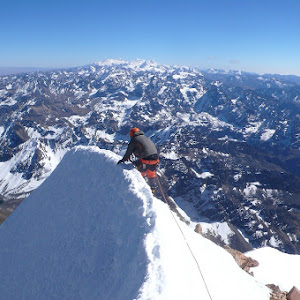
Standing 6960 meters (22,837 ft) in height, Aconcagua is the tallest mountain in South America, and highest peak outside of the Himalaya for that matter. Each year, hundreds of climbers flock to Argentina to climb up to the summit, with most using the mountain as a stepping stone to Everest or as part of their own Seven Summits expedition. Much like its Himalayan counterpart, Aconcagua also draws scores of trekkers each year, most of whom have no intention of ever climbing the mountain, but still want see it for themselves. Most of those treks are organized by local guiding companies, which lead adventure travelers into the shadow of the peak on a regular basis. But did you know that you can actually hike to Aconcagua completely independently? Our fried Rick McCharles of BestHike.com recently did just that and has shared his experiences online.

Rick tells us that the hike to Francia Base Camp on Aconcagua is a roughly 3 day, 2 night affair, with December through February ranking as the best months to go. Access to the Mendoza region of Argentina can be made through either Buenos Aires or Santiago, Chile. As is common on these kinds of adventures, independent travelers are not encouraged, but the trek is actually very doable, provide you have good equipment, some experience, and are willing to go it alone.

According to his report, the cost to go independently is roughly $200. Of that, $160 goes to the permit, $19 is spent on the bus ride to the trailhead, and the rest goes for the food that is eaten along the way. A similar trip routinely costs about $715/person from local outfitters.

If you want to know more about what is involved, the Best Hike editor has not only shared his entire itinerary on his website, but has produced the video of the trek that you'll find below. The schedule starts at Day 0 in Mendoza and then follows through the hiking experience over the course of the three days that follow. Rick tells us what to expect on the trail each day, including how long to expect to walk and how much elevation gain to anticipate along the way. He also includes plenty of great photos to demonstrate what you'll see throughout the trek too.

Very few people know that you can do this trek without hiring guides, which is the entire point of the Best Hike guide. Rick shares a wealth of information on his website not just about this particular journey, but countless others that he has taken across the globe. The site is a great resource for anyone who enjoys hiking and trekking in remote areas of the world. Check it out here.

Video: The Challenges of the 2018 Dakar Rally

This past weekend the 2018 edition of the iconic Dakar Rally got underway in Peru, sending drivers off on one of the most challenging and difficult motorized races in the entire world. The event is always a test of stamina, skill, determination, pushing competitors to their absolute limits. The video below takes a look at what to expect from the race, which is 12 days in length and starts in Lima, Peru, and finishes in Cordoba, Argentina. As always, it looks to be quite the adventure.

Mountain Runner Sets Female Aconcagua Speed Record

Standing 6961 meters (22,838 ft) in height, Argentina's Aconcagua is the tallest mountain in South America, and the highest peak outside the Himalaya in the world. That makes it one of the Seven Summits of course, luring in hundreds of climbers each year who are looking to add one of those iconic mountains to their resume. While not nearly as challenging as Everest, it remains a formidable peak, as Ranulph Fiennes discovered recently.

But about the same time that Sir Ran was preparing to head home a few weeks back, another climber by the name of Sunny Stroeer was preparing to make a run – quite literally – at the speed record by a woman on the mountain. On January 23, she did just that, setting a new mark for climbing from Base Camp to the summit, despite the fact that she had a respiratory infection.

Outside magazine has posted a profile of the 32-year old Stroeer following her epic ascent, which took 8 hours and 47 minutes to complete, shaving 29 minutes off the previous record. Stroeer is no stranger to long endurance events, as she is an ultrarunner who has competed in such events as the legendary Western States, amongst numerous other 50 and 100k runs. Perhaps her biggest adventure so far however is quitting her job back in 2015 to focus on running and traveling full-time. Since then, she has roamed around the southwest states of the U.S., and gone trekking in Thailand, Nepal, Tanzania, Germany, and other places.

Back in 2014, Stroeer climbed Aconcagua for the first time, going solo and unsupported, which is an impressive accomplishment in its own right. She told Outside that she was shocked at how few women were on the mountain, which gave her the idea of forming an all ladies team to make another attempt on the summit. She did that this year, and her record-setting run was a part of that expedition.

Sunny's story is an impressive one on a number of different levels. There is certainly a lot of inspiration to be had from her adventures. Congrats on the new speed record!


Adventurers to Attempt Atlantic to the Pacific Crossing of Amazon

We've seen some pretty impressive expeditions through the Amazon Rainforest over the years, and it looks like we can soon add another interesting one to the list. Filmmaker Reza Pakravan is joining forces with journalist Pip Stewart on an epic adventure that will take them across the Amazon starting  at it's Atlantic coast and ending in the Pacific Ocean. Along the way, they'll pass through remote sections of Brazil and Peru, while spending time living with the indigenous tribes that still inhabit this part of the world.

The duo, who are planning on starting the expedition today, hope to create a four-part documentary series about their journey, which will look at the way various changes to their environment is impacting the lives of the Amazon people. Severe deforestation, climate change, and other factors have become a severe threat to the lifestyle of these tribes, potentially ending a way of life that has existed relatively unchanged for centuries.

Reza and Pip will be traveling by bike and boat across the Amazon. They'll start at the mouth of the mighty Amazon River in Belem in Brazil and eventually ending in Lima, Peru. Most of the journey will be done on bike (both are accomplished adventure cyclists), but they will take a boat up the Purus River in order to cross one very remote section of the route.

Dubbed the Transamazonica expedition, the plan is to follow a road of the same name that was built in the 70's to help open travel and commercialization of the rainforest. That road covers some 4000 km (2485 miles), and has been a major boon for companies who have logged and developed the Amazon Rainforest. The hope is that this expedition will help raise awareness of the challenges that are currently faced by the people living in the rainforest basin, which is undergoing significant changes.

It should certainly be interesting to follow Reza and Pip's adventure, which you can do on both of their websites linked above.


Transamazonica ver Crowdfunding from Samarcanda Film on Vimeo.

Massive Reef Discovered at the Mouth of the Amazon River

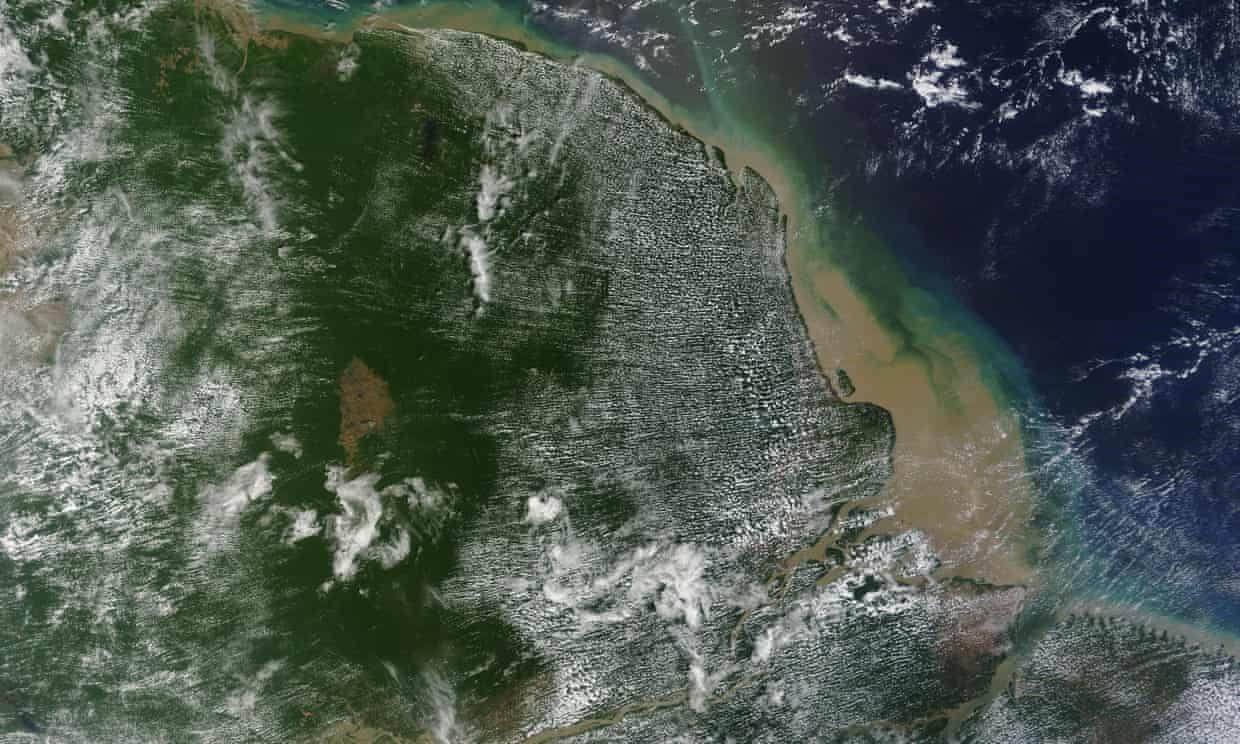
Here's a story that is further proof that our world still has a lot of mysteries and surprises to share with us. Scientists have discovered a massive coral reef hidden under the muddy waters at the mouth of the Amazon River in South America. The discovery comes at a crucial stage however, as the region has already been charted by petroleum companies looking to plumb its depth for oil.

Indications that the reef might exist first appeared back in the 1970's when fishermen began catching fish that were more commonly found on and around reefs in other parts of the world. But confirmation of the existence of this particular reef didn't come until recently, when researchers were finally able to prove that against all our knowledge and understanding of the ocean that it was hidden away along the coast of Brazil.

The reef stretches for nearly 700 miles (1126 km), and is more than 3600 sq. miles (9300 sq. km) in size. It is also said to be home to at least 60 species of sponges and 73 species of fish. Even more surprising is the fact that unlike other reefs found around the world, this one appears to be very healthy, and even growing. Climate change has begun to warm the oceans, which is causing coral reefs to die at an alarming rate. But this one is not displaying those same symptoms.

What makes this new reef so amazing is that it exists in a place that it was previously believed one shouldn't be able to survive. While it is submerged in ocean waters, the surface of the Atlantic is covered in fresh water that is dumped in from the might Amazon River. The river also deposits plenty of mud and sentiment into the water, which is typically not conducive to the growth of coral either. On top of that, oceanographers typically find reefs in shallower waters that are warmer and clearer than where this one exists. This has left some scientists to wonder if other reefs are out there in our oceans, just waiting to be found.


But the good news over the discovery of this reef – and the fact that it is thriving – is tempered somewhat due to the fact that it is already being threatened by man. It seems that the Brazilian government has already sold 80 parcels of ocean to oil companies to start drilling at the mouth of the Amazon. 20 of those blocks are already in operation, some of which are believed to be right on top of the reef itself. How that will impact the life of the reef moving forward remains to be seen.

Coral reefs play an important role in the keeping the ocean healthy as they often form protective barriers for ecosystems both along the coast line and living within the waters themselves. As those reefs recede, ocean storms, hurricanes, and typhoons could have a larger impact on certain regions of the planet. The Earth's coral reefs are also seen as the canary in the coal mine in terms of indicating the impact of climate change on an area too.

Still, finding this particular reef is amazing, especially since it shouldn't exist at all. Hopefully it will be well protected moving forward.

Video: Scenes From Machu Picchu

One of the most spectacular displays of ancient architecture found anywhere in the world, the mountain fortress of Machu Picchu needs little introduction. But this beautiful video takes us high into the Peruvian Andes to share some amazing views of this spectacular place. The wonderful music gives the clip a tranquil feeling that makes it a joy to watch, so just sit back and take it all in.

And if you haven't been fortunate enough to visit Machu Picchu yourself just yet, my friends at Mountain Travel Sobek can make that journey are a reality. Check out all of their options for visiting Peru and start thinking about your own adventure in the Andes.

Machu Picchu from irenaVision on Vimeo.

Video: Life Lessons From a Seven-Thousand Mile Long Bike Ride

Jedidiah Jenkins rode his bike from Oregon to the southernmost tip of South America. Along the way, he learned a lot about himself and the world. His friend, filmmaker Kenny Laubbacher joined him for part of the journey to find out why he would embark on such a ride. This video shares some of his answers, and may provide not only a bit of insight as to why someone would ride their bike 7000 miles (11,265 km), but perhaps a bit of inspiration for seeking your own adventures too. Beautifully filmed and thoughtfully put together, this is one clip you should not skip.

Video: Traveling Along La Ruta de los Gringos in Peru

Peru is a country with a surprising number of unique environments and landscapes. Ranging from the dense Amazon Rainforest to stark deserts, to the snowcapped peaks of the Andes, it is a land of startling contrasts. All of those settings, and more, are captured nicely in this video, which was shot over a three-week journey through the South American country. It is a wonderful travelogue that documents all of the fantastic things to see and do there, reminding us why Peru is a top destination with adventure travelers the world over.

PerĂº - La ruta de los gringos from Guillaume JUIN on Vimeo.

Aconcagua Speed Record Smashed Again!

It seems I missed quite a bit while I was away.

Back in December, Spanish mountain runner Kilian Jornet impressed us all with his amazing run up and down Aconcagua, the highest mountain in South America at 6962 meters (22,841 ft). At the time, Jornet destroyed the old record by more than three hours, posting a total time for the roundtrip at 12 hours and 49 minutes. As impressive as that effort was however, the new speed record was short lived, as it has already been broken by another very talented mountain athlete.

According to reports, Ecuadorian-Swiss sky runner Karl Egloff shaved nearly an hour off Jornet's time, by running to the summit and back in a mind-blowing 11 hours and 52 minutes. Both men used the same route up and down the mountain, covering some 40 km (25 miles), and notching up 4062 meters (13,327 ft) of vertical gain in the process.

While not quite as well known as Jornet, Egloff continues to add to his impressive resume. Back in 2013, the Spaniard ran up and down Kilimanjaro in just 7 hours and 14 minutes. Egloff would later break that record as well, besting Jornet by more than 30 minutes.

It seems that Jornet has a rival to keep him on his toes at long last. The Spanish runner is busy preparing to attempt a speed record on Everest this spring, and is probably completely focused on that  effort. Both of these men are supreme mountain athletes of course, and I'd love to see them compete head-to-head on a trail with one another. For now though, we'll probably have to be satisfied with each of them pushing harder on these speed record runs.

Aconcagua Speed Record Update: Kilian Turns Back in High Winds

On Friday, I posted the news that Kilian Jornet had launched his attempt to set a speed record on Aconcagua, the tallest peak in South America at 6962 meters (22,841 ft) in height. At the time, I mentioned that it might be awhile before we heard anything about his progress, and the success of failure of this attempt. It turns out it wasn't as long as we had hoped, as news was posted later in the day that the mountain runner had turned back due to high winds.

According to updates from Kilian's Facebook page, the Spanish endurance runner got as high as 6500 meters (21,235 ft) before turning around. He was reportedly making good time on his summit bid, but began experiencing high winds that exceeded 90 km/h (56 mph), which made it extremely difficult for him to continue upwards. When you're on a mountain like Aconcagua, those kinds of winds speeds can be very dangerous, particularly when you're traveling as light and fast as Kilian was.

The high winds didn't come completely by surprise. When Kilian announced that he was making his speed attempt, he mentioned that the weather wasn't as good as he'd like, specifically mentioning that the winds could be a problem. Of course, discretion is the better part of valor, and it was a wise move for him to turn back. According to the post on his Facebook page, he will try again soon, possibly as early as today or tomorrow depending on conditions.

Aconcagua is the latest in Kilian's Summits of My Life project, during which he has set speed records on other peaks, including Kilimanjaro, Mont Blanc, and Denali. On Aconcagua, he is hoping to break the old record, set by Jorge Egocheaga in 2011, of 15 hours and 5 minutes. If all goes according to schedule, he'll also be traveling to Nepal in the spring to attempt a speed record on Everest as well.

I'll be watching Kilian's social media outlets over the next few days to see when he starts his second attempt at this record. After having a couple of days back in Base Camp to rest, he is probably watching the weather forecasts at the moment, and waiting for his next opportunity. I'll post updates as I hear anything.

Video: Filmmaker Chases Himself Around South America

Here's a creative little video that will likely put a smile on your face. It was put together by filmmaker Ari Fararooy while on a recent trip to South America. Through some clever camera tricks, Ari manages to film himself, as he chases a very familiar figure around the continent. Enjoy!

Chasing Myself Around South America from Ari Fararooy on Vimeo.

Video: Mountain Biking Peru, GoPro Style

If you need further proof that the mountain biking in Peru is spectacular, than look no further than this video. It features Ali Goulet, Chris Van Dine and Aaron Chase on an adventure in the South American country that was captured on GoPro of course. The 4-minute clip is a bit older, but still a fantastic look at mountain biking in the Andes.

New Farthest Source Of The Amazon Discovered

Researchers say they have located a new source for the Amazon River and possibly adding an additional 47-57 miles to its overall length, which already extends beyond 4000 miles. But, with all things exploration related in the 21st century, there is some controversy as to whether or not this new location should actually be considered as a tributary for the longest river on the planet.

Since 1971, the Apurimac River has been considered the furthest source of the Amazon, and many explorers and adventurers have operated in the region under that assumption. According to this new report however, the Mantaro River, located in southwest Peru, now holds that distinction.

The researchers who have asserted that the Mantaro is the new source used satellite imagery and topographic maps to study the Amazon and it's numerous tributaries. With GPS tracking points, the team determined that the Mantaro is actually about 10% longer than the Apurimac, which would make the furthest source.


But as I mentioned, there is some controversy afoot. The Mantaro doesn't flow for parts of the year, thanks to a dam that was built in 1974. When defining a "source," most geographers feel that a river must flow uninterrupted. The researchers behind this new finding say that the Mantaro would flow all year if it wasn't for the dam.

Does it really matter where the true source is located? Most would probably say no. But if you're one of the many adventurers who has attempted to travel the length of the river, or explored the Amazon Basin, it means quite a lot. This revelation could invalidate certain past expeditions that paddled the entire river for instance.

Personally, I happen to enjoy that we're still discovering things about our own planet. It is stories like this one that remind us that exploration is important, even in the 21st century. Now, who wants to be the first to go upstream and actually visit the source? I'm in!

Couple Completes 6500 Mile Run Across South America

A couple of months back I wrote a story about David and Katharine Lowrie, a husband and wife team who were running the length of South America, south to north. The couple set out in July of last year with the intention of running 5000 miles (8046 km) along their planned route. Yesterday they announced that they had completed the run, reaching the Caribbean Sea in Carupano, Venezuela. The actual distance they ran? An astounding 6504 miles (10,467 km)!

The run, which David and Katharine had dubbed the 5000 Mile Project, began in Punta Arenas, Chile, the southernmost town on the continent. From there, they began traveling north, passing out of Chile and moving into Argentina, Bolivia, Brazil and finally Venezuela. Along the way, they passed over the Andes Mountains and through the Amazon Rainforest, two natural obstacles that are daunting under any circumstances.

As if running 6500 miles across a continent isn't an impressive accomplishment on its own, the couple also managed to launch their Big Toe Classroom along the way as well. This portion of their website is filled with lesson plans and other educational tools for teachers. These free resources are designed for 7-11 year olds and were created to help them learn more about South America and the plants and animals that live there.

All told, it took David and Katherine 14 months, 23 days, 19 hours and 24 minutes to run from the southern tip of the continent to the northern coastline in Venezuela. That's a lot of time on the road and I'm sure they are relived to be done.

Congratulations to the Lowrie's on the completion of an impressive expedition. Well done!

Argentinian Climber Attempting All 6000 Meter Peaks In South America

Earlier this week ExWeb posted a remarkable story about Argentinian climber Maximo Kausch who has set a goal for himself to climb all of the 6000-meter peaks (19685 ft) in South America. The idea for  this massive undertaking sprang from an expedition on Cho Oyu that Maximo led a few years back and upon returning home he decided that he wanted to continue climbing as much as possible. That led to him coming up with the concept of tackling all of the 6000 meter mountains, although at the time he had no idea what he was getting himself into.

The first obstacle that Max had to overcome was finding out just how many of these mountains were in the Andes. He thought that there might be as many as 50 when he announced his plans but research later revealed that there were 118 6000-meter peaks on his list. He had to use a combination of satellite mapping, data from NASA and Google Maps to locate all of the mountains, some of which are located in very remote places and have as many as 4 or 5 names. It took him three years just to compile all of the data he needed to begin the project.

After that, he was ready to set out but needed reliable transportation to get him to and from the mountains. He decided to use a motorcycle to get from one base camp to the next but he first had to overcome yet another obstacle – he had never ridden a motorcycle before in his life. Once he managed to master the bike, he was off and running and has been climbing ever since. He now spends about 8-9 months of the year climbing in the Andes. Sometimes he'll bag several peaks in a single week and on occasion he'll get two in a day. He tells ExWeb that he is mostly homeless right now while he pursues this challenge.

While climbing Max has made some interesting discoveries along the way as well. On more than one occasion he has come across Incan ruins on his way up to the summit. In one case he even discovered a large structure 60 meters square (197 feet) at the summit of one of the 6000-meter mountains. What exactly the structure was used for and what else remains at the site is a mystery.

You have to hand it to him, Maximo sure knows how to pick a challenge. The Andes offer plenty of great climbing and before he's done, he'll have seen most of it. At the point the story was submitted he said that he still has 57 mountains to go, so he's a little over halfway to his goal. If he achieves this, it'll certainly be quite an accomplishment.

Video: A Mountain Biking Adventure In Peru

If you're looking for yet another reason to visit Peru, check out this fantastic video which was shot on GoPro cameras by friends Ali Goulet, Chris Van Dine and Aaron Chase. The three men recenly visited the South American country where they had a chance to ride some gnarly mountain biking trails while interacting with the local culture. The result was this fine short film that may inspire you to want to follow in their tire tread.

Amazon Express Update: Into Brazil, Picking Up Speed!

The Amazon Express paddling team, led by West Hansen, continues to make progress in their attempt to kayak the length of the Amazon River in record time. The expedition that began back in the Peruvian Andes in August has now proceeded much further downstream and this week they've managed to once again pass some impressive milestones. They still have a long way to go until they reach the Atlantic Ocean, but West and company seem to really be in a groove now and knocking off the miles at an impressive clip.

Perhaps the biggest news to come from the AE squad this week is that they have left Peru behind at last and are now padding the waters of the Amazon in Brazil. Upon arriving at the first settlement in that country they had to share their paperwork, permits and passports but once the officials there saw that everything was in order, they were allowed to continue on their way. That means they've crossed the last diplomatic hurdles in their way, and should now have a free run to the finish, although they are likely to be stopped by local police or the Brazilian navy a few times along the way.

Shortly after enter Brazil, the team also moved into another timezone. While that may not really seem like much of an accomplishment, when you consider that they've now paddled far enough to completely traverse one timezone and enter another, it gives you an idea of the scope of their adventure.  Add to it that they've now been on the water for 62 days and you being to get an idea of how challenging this journey must be for them, both physically and mentally.  (Note: The 62 days represents the number of days they've been in their kayaks and paddling. The expedition has actually been longer.)

That daily grind isn't slowing them down much, as they have managed to really crank out the miles this week, even setting a new single-day distance record yesterday. Earlier in the week they came close to passing 80 miles (128 km) in one day, missing it by the narrowest of margins. Yesterday they blew past that mark however, covering an impressive 85.6 miles (137.7 km).


As they head further east, the team is finding fewer and fewer places to camp each night. The river is growing wider and larger as they go, and they are probably wandering further away from something that actually defines a shoreline. When camping last night they also reported that there were quite few caiman eyes watching them from the water. For those who don't know, a caiman resembles a small alligator, with most measuring no more than a couple of meters in length. They aren't particularly dangerous or aggressive, but I'm sure the boys are giving them plenty of respect none the less.

I'll post more updates as the team continues to make progress. They're doing quite well at the moment, but still have a number of weeks on the water  before they're done.

Video: Crazy Urban Downhill Mountain Bike Race Caught On Helmet Cam

The Red Bull Descenso del Condor is a crazy downhill urban mountain bike race that is held in La Paz, Bolivia each year. Riders scream through the streets, fly off jumps, roll down stone steps and otherwise go places that they probably shouldn't. It is a wild ride to say the least, and is best experienced in a video like the one below, which was captured on helmet cam. The video gives us a good idea of what the riders have to contend with as they fly through the course.

Personally, I think I'll stick to the trails, but it definitely is fun to watch. There was more than one occasion where I was expecting the rider to take the road or some other obvious path, only for him to go in an entirely different direction. This one may not be for the faint of heart.

Video: Dutch Peru Expedition 2012

Earlier this summer a team of climbers from AlpineAdventures traveled to the Peruvian Andes to attempt a new route on the 5440 meter (17,847 ft) Puscanturpa Este. After three weeks of working the mountain, they finally managed to summit the tricky North Face. They named their new route Poco Loco.

The team captured plenty of video of the climb and they plan on releasing the full film down the line. The trailer for the film, which you'll find below, gives you a good idea of what the climbers had to overcome to stand on top. The rock climbing elements alone look challenging, particularly at altitude.

Dutch Peru Expeditie 2012 Trailer from vincent van beek on Vimeo.

Amazon Source To Sea Update: Davey's Paddling At Last

The last time we checked in on the progress of Davey du Plessis he was negotiating some rather challenging sections of the Amazon River on an inner tube. At that time he had been out of contact for a week or so and everyone was eagerly awaiting word on how things were going. Since then things have improved for the South African who is traveling the length of the Amazon from source to sea. Not only has he climbed inside his kayak for the first time, he is also posting regular updates to his blog as well.

For those who haven't been following Davey's adventure thus far, he set off in June on an epic journey that will eventually cover as much as 7200km (4474 miles). He began his journey high in the Peruvian Andes at the most distant source of the Amazon. After climbing and trekking through the mountains, du Plessis climbed aboard his bike and rode along the Apurimac River for about 1500km (932 miles) to where it meets the might Amazon itself. It was at that point that he entered the water to start the third and final leg of the journey – a 5700km (3541 mile) paddle to the sea.

The start of the river portion of the adventure ended up being more challenging than he expected. The water was faster and higher than anticipated and as a result Davey elected to use a tire to float past the more difficult secitions. Even that wasn't easy however as he nearly lost all of his gear, which he pulled behind him in a kayak, on more than one occasion.


Yesterday du Plessis posted a big update to his blog. In it he talks about how his foldable kayak finally cleared customs, allowing him to truly start paddling. On his way from Lima back to the river however, he met a German couple whose son drowned while kayaking the section that Davey is now passing through. That left him a bit unsettled to say the least.

An update on his Facebook page also says that he received a military escort yesterday to meet the local chief of the indigenous tribes. Once that introduction has been made and Davey's plans made clear, the tribes will grant him safe passage along the water. If this bit of diplomacy didn't take place, it is likely that he would be met with hostility and suspicion along the way.

The river seems to still be the main threat to his safety however as he is still encountering plenty of challenging whitewater and his little kayak was not designed for those kinds of conditions. He estimates that he'll need to get another 50km (31 miles) down stream before the river widens out and slows its descent. After that it'll be calm, flat paddling for thousands of kilometers.

I spent some time on the Amazon River in Peru a few years back and it was far from difficult to paddle. That said, I was way down stream on the river proper where it spreads out for kilometers in all direction . It is a massive waterway in scope and scale with hundreds of tributaries and backwater to be explored and while there are settlements along its banks, there are also plenty of incredibly remote areas with few people as well.

For Davey, this adventure is just getting started and he will have so much to experience as he makes his way to the Atlantic Ocean over the months ahead.