


The Serraslses Brothers – Aniol and Gerd – are two of the top expedition kayakers in the world. The two men have been paddling together for years, and have traveled all over the globe to visit remote places in their boats. In this video, we join them on a journey across Iceland, where we get some views of that spectacular country that we've never seen before. This is an epic adventure that takes us past towering glaciers, down rushing rivers, and over some serious waterfalls, all with the amazing scenery that Iceland is known for serving as a backdrop.
Showing posts with label Kayaking. Show all posts
Showing posts with label Kayaking. Show all posts
Video: How to Paddle Straight Through an Island
Usually when I post a kayaking video it is of someone running utterly spectacular rapids or dropping off an insanely high waterfall. But this clip is completely different. It takes us to Umfin Island off the coast of Ireland, where we find intrepid paddler Iain Miller making his way toward shore, than paddling through a natural canal, until he reaches a sea cave at the heart of the island. Undaunted, the kayaker presses on, into the cave and under the island itself, proceeding with a headlamp to light the way. The passage is more than 300 meters in length, making it quite the undertaking to explore. Check out this amazing little expedition below.
Video: How to Choose a Kayak
So you've done some paddling, figured out how to maneuver your boat, and now feel like you're ready to buy a kayak of your own. But which one should you go with? The team at REI is here to help, providing this video with all kinds of helpful hints to help you pick out your first kayak. Obviously the kind of water you'll be paddling on plays a major role, but there are some other factors to consider too. Find out more in the clip below.
British Adventurer Emma Kelty Shot and Killed in the Amazon
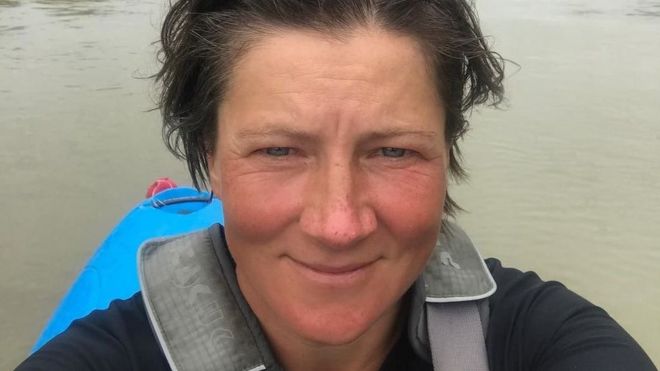
Kelty had been traveling alone, kayaking the Amazon River source to sea, when she was attacked and killed on September 13, 44 days into her journey. She was in northern Brazil at the time along a stretch of the river between Tabatinga and Manaus. This part of the Amazon is known to be particularly lawless, harboring drug runners and bandits. Emma had posted on her Facebook page that she had a run in with a group of thugs the day before she was murdered, but wrote that it was "all good."
The next day she was spotted by thugs again and they reportedly began shooting at her tent. The group of seven men then attacked her and stole some of her electronic gear. Local villagers say she was still alive when the men put her into their canoe, although she was badly injured.
Three of her assailants were later arrested when they were caught trying to sell some of her stolen equipment. Those men have told police that they were part of the gang that attacked Kelty, but that their leader was the one responsible. He is still at large somewhere in the jungle at this time. In their confession, they admitted to torturing and raping Kelty before dumping her body into the river.
Here at The Adventure Blog we followed Emma's expedition to the South Pole very closely last year, reporting on her progress regularly, and sending congratulations when she reached 90ºS. We even had a note from her at one point clarifying parts of the story on her journey. The news of her death has been a shock to say the least, and we send our condolences to her friends and family. Hopefully the men responsible for this brutal attack will be found and face justice.
This story is another harsh reminder of the challenges that we face on some of these adventures. The Amazon in particular has not been kind to explorers over the past few years, as attacks like this one have become all too common. Having been there myself, I can say that it is an amazing place, but it happens to be populated by not-so-nice people in certain areas.
In an ironic twist of fate, Evanilson Gomes da Costa – one of the bandits believed to have attacked Emma – has already met with an ignominious end. According to this story, he was shot dead by a rival gang who were looking to rob him as well. (Thanks again to Lou-Phi for the info)
Gear Closet: Yeti Panga 75 Waterproof Duffel Bag Review

Recently I've had the opportunity to test out the Panga 75, which as the name implies has a 75-liter capacity for carrying gear. That is a surprising amount of space for hauling around everything you need for your next adventure, although if you still require more space, Yeti also offers the Panga in a 100-liter version, while a smaller 50-liter model is available too. All three are virtually identical in terms of features and build-quality, so it truly is a matter of selecting the one that offers the carrying capacity you need.
Made from an incredibly tough laminated nylon shell that resembles the same fabrics used in Yeti's line of Hopper soft coolers, the Panga is practically bulletproof. The duffel can shrug off just about anything you throw at it, and come away completely unscathed. The only wear and tear that my model shows is a bit of dust and dirt from being knocked around outside. Other than that, there are no abrasions, rips, cuts, or tears of any kind. And while it is early in the bag's lifespan, I suspect it will be a very long time before such blemishes appear.
Those fabrics, when combined with Yeti's patented Hydrolock zipper, make this bag completely waterproof. Yep, you read that right, it is waterproof, not water resistant. I once got taken to task my a PR rep for a brand for calling a competing duffel "waterproof" when in reality it was only water resistant, so I was careful to ask where the Panga fell on this sliding scale. I was told that the bag will keep all water out, even if it is completely submerged.
Perhaps most impressive of all is that the Hydrolock zipper seals the Panga up airtight without having to roll the opening as you do with so many drybags. You can simply open and close the zipper as needed and trust that it is doing its job. I especially appreciate this feature when I just need to access the interior of the bag quickly, and then seal it right up again. It saves time and is more effective than other types of dry closures.
My favorite feature of the Panga is probably its EVA molded bottom. This not only serves as extra protection from moisture in damp environments, but it keeps the bag from sliding around too. This extra thick material is incredibly strong, increasing the durability of the duffel in a place where many competitors first begin to see wear and tear.
Other nice features of the Panga include six grab points for picking the duffel up, including two straps that can be slung over your shoulder to wear the bag like a backpack. And while the interior may be spartan by design, it also includes two zippered mesh pockets for organizing smaller items that you want to be able to access quickly.
The downside of the Panga duffel is that it is on the heavy side. The 75-liter model tips the scales at 6.1 pounds (2.7 kg), which is a lot of weight before you even begin to add any gear to the bag. But, that is the price you pay for an over-engineered, durable, and completely waterproof bag. In fact, I would expect nothing less from Yeti. Their products tend to lean towards the heavy side, with materials and construction methods that provide their legendary toughness. The Panga is no different in this regard, and in the long run you'll probably love it all the more for it.
As with other Yeti products, the Panga is on the pricey side too. The 75-liter duffel runs $349.99, but unsurprisingly to fans of the brand it is completely worth it. If you need a duffel bag that can survive in some of the most remote places on the planet, and you want it to keep all of you gear safe from the elements, this is the new standard for other duffels to aspire to. Simply put, it is the best bag of its kind on the market today. I can't think of higher praise than that.
Video: Above Bellingham - Drone Footage From an Adventure City
Bellingham, Washington is a city that has a lot to offer in terms of outdoor adventure, much of which you'll see in this video, which was captured using a drone to stunning effect. The clip starts a bit slow, and you'll probably wonder why it is worth sharing, but as it goes along the landscapes and opportunities for adventure reveal themselves. By the end, you'll be wanting to visit Bellingham yourself.
ABOVE BELLINGHAM - 4K Drone Film from Kjell Redal on Vimeo.
Reminder: October 14th is a National Day of Adventure

While not an official holiday of course, the entire point of the NDOA is to encourage people to get outside, engage in their favorite outdoor activities, or perhaps even try something new. To that end, the two sponsors of the Day of Adventure have helped organize more than 30 events across the U.S. to give us all a starting point for getting our adventures off to a good start.
While I'll actually be in Spain on that day, I'll certainly take some time to hit a trail and do some hiking, or possibly even some snorkeling in the Mediterranean Sea. And since it is a Friday, hopefully some of you will take part in the celebration by heading out to enjoy your own adventures too. Why not skip out of work early, grab your mountain bike and take a ride on your favorite trail? Or, gather up some friends and take a scenic hike somewhere before grabbing some dinner and drinks afterwards. The whole point is to add a little excitement and adventure back into your life, something that hopefully we do on a more regular basis than one day a year, but it is a good place to get started never the less.
So, whether your like to ride, hike, run, paddle, fly, climb, or some other crazy outdoor activity, don't forget to set a little time aside to pursue that passion next Friday. After all, you'll never regret the days that you do the things you love, and you might just discover other passions along the way.
Get out there and enjoy!
Video: Explorer Louis-Philippe Loncke Discusses Lake Titicaca Exepdtion At TEDxFlanders
Last year, explorer Louis-Philippe Loncke, along with Gadiel Sanchez Rivera aka "Cho", spent 38 days circumnavigating Lake Titicaca by kayak. That body of water, which falls on the border of Peru and Bolivia, is considered the highest navigable lake in the world, and yet no one had ever completely paddled its shores before. Recently, Lou-Phi appeared at TEDxFlanders to share his story about that expedition. The video below is his presentation. It offers all kinds of insights into what they found on their journey, and the logistics of kayaking in the Andes.
Outside Presents the 2016 Summer Gear Buyers Guide

The Buyer's Guide is broken down into multiple categories, including Float, Hike, Bike, Run, Fitness, and Travel. Each of those listings is further divided into subcategories that include lists of great gear that is applicable to the activity. For instance, under hiking you'll find the best tents for 2016, as well as the best hiking shoes. Meanwhile, under the bike category you'll discover the best mountain bikes and accessories for a summer ride.
Naturally, with this many items to explore, it can take you quite a long time to sift through all of the options. But, if you're in the market for a new sleeping bag, kayak, camera, or other equipment, the experts at Outside can help you find exactly what you're looking for. There are some really great products to check out here, each of which has been curated by testers who have put these items through their paces over the past few months.
Check out the full list of items on the Outside Online website by clicking here.
An Un-Cruise Adventure in Alaska

Now, before you start to think that this adventure blogger has gone soft, let me quickly point out that this wasn't your typical Alaskan cruise. Far from it in fact. I was invited to take part in a cruise through the Inside Passage with Un-Cruise Adventures, a company that does things a little differently than the mainstream cruise lines that most people use while visiting the area. How so you ask? Well, for starters the Un-Cruise fleet is made up of small ships, which means rather than sharing the vessel with hundreds – if not thousands – of other passengers, there were only about 70 travelers aboard my ship, the surprisingly well equipped Wilderness Explorer.
This small ship experience allowed everyone on board the ship to interact with one another, getting to know everyone else to some degree. This was especially enhanced when we shared stories around the table during meal time, but also when travelers joined one another on some of the active excursions that are a part of the Un-Cruise itinerary as well. Unlike other Alaskan cruises, passengers don't just stay onboard the ship the entire time, often heading on shore to take a bushwhack hike or to board a kayak to paddle the clear, crisp waters that are found throughout the Inside Passage. Other options for exploring the area included guided walks along the beach, stand-up paddleboarding outings, and skiff tours aboard Zodiac inflatable boats.
Personally, I'm not much of a cruise traveler. If you've read this blog for any length of time, you probably already know that I enjoy being active during my travels and prefer visiting places that I can explore under my own power. On an Un-Cruise you can do just that, thanks to the challenging hikes and great sea kayaking opportunities that actually allow you to get closer to the breathtaking Alaskan landscapes that are such a big draw to visitors.
Speaking of which, the Inside Passage delivered beautiful views at an astounding rate. Before going, I knew that the southeast section of Alaska was well know for its beautiful coasts, but even with that knowledge in mind, I was still surprised and astounded at what I found there. Snow capped peaks, rocky coves, icy fjords, towering waterfalls, and dense rainforest are all part of what you'll find there, with those elements coming together to create a place that is utterly unforgettable. More than once, I remarked that the places we were visiting looked like the should only exist in photos, but yet there they were splayed out in front of us.

In addition to breathtaking landscapes, Alaska is also known for its great wildlife, and my Un-Cruise adventure didn't disappoint in that area either. On our second day out of Juneau for instance, we spotted a pod of orca whales that we watched for nearly an hour. Over the course of the week, we also had encounters with bears (often with cubs!), moose, mountain goats, seals, sea lions, mink, sea otters, bald eagles, and countless other species of birds. If you're like me, and love wild animals in their natural environments, the Un-Cruise won't disappoint in this department either.
Another example of how Un-Cruise differs from the standard Alaskan cruise is that while there is a detailed plan and itinerary for your travels with them, that plan often changes on a moment's notice. For example, one of our days out on the water our captain made the decision to travel 85 miles out of our way just to track down a pod of humpback whales. This was much to the delight of the passengers aboard the Wilderness Explorer of course, as we spent a great deal of time watching these amazing creatures swim through the area. We even witnessed several impressive breaches, as the whales leapt from the water to give us an even better view. It was a memorable experience to say the least, and one that we all appreciated.
My wife – who accompanied me on the trip – and I also had another memorable encounter with an animal while on a guided sea kayak excursion. One afternoon we went out on the water for a couple of hours, and while we had the opportunity to watch a brown bear and her cubs grazing in the grass along the shore, we later had an even better moment with a member of the local wildlife. While paddling, we had a harbor seal following us around for 45 minutes or an hour, occasionally poking his head out of the water to see what we were up to, and even swimming directly under our kayak. He was a cute and curious little fellow, and it was one of the highlights of our entire trip.

Un-Cruise doesn't just operate in Alaska. The company also offers departures to the Galapagos Islands, Hawaii, Panama, Mexico, and beyond. To check out all of their options, visit Un-Cruise.com.
Aleksander Doba Abandons Third Atlantic Crossing

According to ExWeb, Doba set out on May 31 after waiting for forecast of good weather. But a few days later on June 2, he ran into trouble. A small (1 meter) – but powerful – wave hit Aleksander's kayak, tipping it over not once, but twice. The wave caused damage to the boat, which caused Doba to abandon the crossing, and head back to shore.
Once back on dry land it was determined that the damage done to the kayak was too much to repair and relaunch the Atlantic crossing. Aleksander had hoped he could be back on the water within a couple of days, but it soon became evident that his boat would require repairs that would take an extended amount of time, closing the window on paddling from the U.S. to Portugal this year.
This would have been Doba's third Atlantic crossing, but the first to go west to east. His most recent crossing was completed in 2014, when he paddled more than 7716 mile (12,417 km), starting in Portugal and ending in Florida. That was enough to earn him recognition as a National Geographic Adventurer of the Year, and recognition for what is possible even at an older age.
Aleksander had hoped to celebrate his 70th birthday in Portugal this year following his epic paddle. Now, he'll delay his third Atlantic crossing until next year, when he'll give it another go. Hopefully that expedition will be more successful.
Aleksander Doba to Kayak Across the Atlantic Ocean Again at Age 69

Doba will launch his 21-foot sea kayak on May 29, 2016. This time however he'll be traveling from west to east, departing New York City near the Statue of Liberty with the intention of reaching Lisbon, Portugal completely under his own power. While out on the ocean, he will celebrate his 70th birthday.
Doba made his first Atlantic crossing back in 2010-2011, setting out from Senegal and paddling to Brazil. Three years later he returned to the water once again, completing his epic crossing that would become the longest open water kayaking expedition in history. On that journey he set out from Lisbon and arrived in Florida. This time out he wants to complete the trifecta by kayaking the opposite direction from North America to Europe.
According to this story from Canoe & Kayak, this year's expedition will likely prove to be Doba's most difficult yet. This time out he'll be paddling through colder, more turbulent waters, where unexpected storms, high winds, and heavy waves are common. But he encountered similar conditions on his last crossing, and should be well prepared for what is to come.
We'll be following Aleksander's latest adventure closely and watching his progress. I want to wish him good luck on this venture. We should all be up to such adventurous endeavors at the age of 70.
Grand Canyon Paddling Speed Record Broken Twice in Three Days
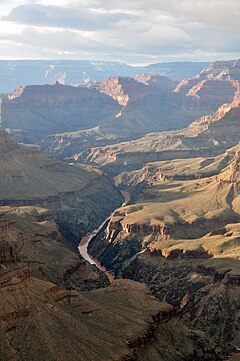
Outside magazine has a great piece on their website explaining the entire story, and it is an interesting one. Essentially, no one really cared about this speed record until author Kevin Fedarko wrote a book called The Emerald Mile back in 2013 detailing the 1983 record row. That sparked a renewed interest in trying to beat the old record within the paddling community, with kayakers Ben Orkin and Harrison Rea trying to set a new record last January. They failed in that attempt, coming up an hour and ten minutes short.
But last week a new team of paddlers hit the water with the hope of chasing the record. Ben Luck, Ryan Casey, and Matt and Nate Klema set off on January 20, with Matt actually reaching the finish line in 35 hours and 5 minutes, shaving an hour and a half off the previous record. Of course the foursome were ecstatic over their success, but they soon began to hear rumblings of another kayaker who was about to attempt the record himself.
Ben Orkin, who had missed setting the record last year, was back out on the river on a solo mission this time. He had no idea that the other team was even trying to set the record, let alone that they had already accomplished that goal. He was preparing to put-in the Colorado on Saturday morning when he received an email from Ben Luck informing him of the new time to beat. Knowing that he'd now have to go even faster than he had previously thought, Orkin moved forward with his plans.
The paddle wasn't an easy one. Orkin grew exhausted after paddling for hours on end completely on his own. He also flipped his kayak in some of the rough rapids, costing himself precious time. But in the end, he was able to best Matt's new record, covering the distance between Lee’s Ferry to the Grand Wash Cliffs in 34 hours and 2 minutes, 57 minutes faster than the two-day old record.
You can read a lot more about this story on Outside Online, where more details of these record-setting paddles are shared. The interesting thing to watch now will be how many more people will attempt to kayak the Grand Canyon, and just how low this time can truly go.
Inspired Kayaking In Scotland
My last video had me itching to get out on my mountain bike on an amazing trail in Moab, Utah, but after seeing this one, now I feel like paddling. Such is life some days.
The video below is a short paddling film put together by Dan Heyworth who went to Scotland to play in the whitewater recently. Turns out it was a very rainy week, and the rivers swelled up to epic proportions, making for a great video.
Scotland - Inspired Kayaking from Kokatat Watersports Wear on Vimeo.
The video below is a short paddling film put together by Dan Heyworth who went to Scotland to play in the whitewater recently. Turns out it was a very rainy week, and the rivers swelled up to epic proportions, making for a great video.
Video: Exploring Alaska by Inflatable Kayak
In the spring of 2014, a trio of adventurers set off to explore the Tatshenshini River in Alaska by inflatable kayak. They spent 12 days in a remote wilderness that began at their put-in at Dalton Post in the Yukon and ended in Dry Bay. Along the way they found some of the most spectacular landscapes imaginable in a place that few people ever visit. You can get a taste of that expedition in the video below, which takes us down the Tatshenshini with them. You can also read more about the experience here.
Tatshenshini from Fluid Glass Productions on Vimeo.
Video: Paddling Ingram Creek in Alaska
Over the past two summers, pro-kayakers Todd and Brendan Wells, along with Matt Peters, have turned Ingram Creek in Alaska into their own personal playground. As you'll see from this video, this river, which runs through the spectacular Kenai Peninsula, has a little of everything to offer paddlers, including some excellent whitewater and a 35-foot waterfall for that extra rush of adrenaline. This is three minutes of pure paddling bliss that I'm sure you'll enjoy.
The Best of Ingram Creek from Mountain Mind Collective on Vimeo.
Video: The Relentless River of Everest
Yesterday's story about Ben Stookesberry exploring the Dudh Kosi River in Nepal seemed to have captured the attention of quite a few readers. In that post, I mentioned a British expedition that made the first descent of the river back in 1976, creating a classic paddling documentary called Everest by Canoe, which would later be renamed the Relentless River of Everest. In that post, I shared a trailer for the film, which was enough to give us a taste of what that expedition was like. Today, I have the full film, which is 45-minutes of intense expedition kayaking action. The film is a wonderful throw-back to a different era, and truly generates a great sense of adventure about what the explorers were doing in the Himalaya. This is a classic BBC film, and if you have the time, I highly recommend you watch the entire thing.
Kayaking the Relentless River of Everest in Nepal

Back in 1976, the river was originally explored by a team of British paddlers, who brought back an impressive amount of film that they shot while on their expedition. That footage eventually became the basis for the adventure film Dudh Kosi: Relentless River of Everest, which has gone on to become one of the more legendary kayaking movies of all time. The team of six Brits traveled to Nepal to take on the river, which at that point had been totally unexplored. They were pushed to their absolute limits, as the raging rapids, impenetrable gorges, and impassable rocks tested them at every turn. The team was forced to abandon their attempt to run the entire length of the Dudh Kosi in Lukla, the starting point for the trek to Everest Base Camp. There was far more river to run below that point, it simply was too dangerous to go any further.
But that is exactly where Stookesberry wanted to go, and he needed some help from Tamang to continue his exploration. The two men dropped into a 130-foot gorge on their first day, leaving behind their only climbing rope on their first rappel into the valley. Without a rope, they would have to trust that there would be other places to exit along the way, but that meant also braving a river that was raging well beyond Category V rapids in a canyon that didn't allow satellite phone reception, and would make a helicopter rescue impossible.
For five days, the two men made their way down river. They learned early on it was best to portage around the more dangerous sections – that is when they could find a place to portage at all. Tamang attempted to run a gnarly section of the river on the first day, and ended up flipping his boat, becoming lodged in a crack, and losing his paddle in the process. That taught them to respect the river very quickly, and caution became the better part of valor moving forward.
As they descended, Stookesberry and his companion discovered a river like none they had ever seen. In some points it dropped more than 800 feet over a mile, and passed through gorges with rock walls that towered high over head. Boulder, often the size of tall buildings, chocked their path, and the rushing waters were continually pushing their skills to the limits. Over the course of the five that they spent on the water, they managed to cover just 10 downriver miles.
Reading this story from C&K was incredibly interesting to me, as it was once again a reminder that not all of the blank spots on the map have been filled in just yet. There are still plenty of places that are prepared to test the resolve of any humans who dare explore their depths, but thankfully there are also explorers who are still ready to press ahead with that challenge. The article wraps up by saying that Stookesberry intends to return to the Dudh Kosi in the future, and hopes to explore it more fully. He is also hatching plans to paddle the Tsangpo in Tibet, which is the ultimate prize for an expedition kayaker for sure. I'm looking forward to learning more about both of these expeditions in the future.
For an idea of what the Dudh Kosi is like, check out the video below. It is a teaser for the film that the British expedition made back in 1976, but conditions there remain mostly unchanged today.
Video: Pro Kayakers Make 800 Meter Descent of a Drainage Ditch
This is the wildest video I've seen in some time. It features pro kayakers Rush Sturges and Ben Marr flying down a draining ditch at Lion's Bay, in British Columbia, Canada. In total, the two men drop approximately 800 meters (2265 feet), while achieving speeds in excess of 72 km/hr (45 mph). All of the action is caught on their trusty GoPro cameras of course. Hold on tight for this one.
Video: Paddling Solo Through the Grand Canyon of the Colorado River
In January and February of this year, adventurer and filmmaker John Nestler paddled solo, and unsupported, through the Grand Canyon. He spent 27 days kayaking through that iconic landscape, documenting the journey as he went. The short film below is the result of that expedition, and features some fantastic scenes from Canyon, as well as some of the people that Nestler met while on his adventure. It is perfect inspiration for the start of a new week.
Why Rush Through Paradise from Fluid Glass Productions on Vimeo.