


In this video we get a look at a rare phenomenon in the Grand Canyon – a full-cloud inversion. What is that exactly? It occurs when cold air is trapped in the canyon itself with warmer air moving overhead. The result is a build-up of clouds below with clear skies overhead. Those standing on the canyon rim can watch the clouds below them as they move like waves. It is quite a sight to behold as you'll see in this clip.
SKYGLOWPROJECT.COM: KAIBAB REQUIEM from Harun Mehmedinovic on Vimeo.
Showing posts with label Grand Canyon. Show all posts
Showing posts with label Grand Canyon. Show all posts
Video: This Timelapse Video of the Grand Canyon is the Best Thing You'll See All Day
When it comes to sharing videos here on The Adventure Blog, I'm prone to hyperbole when writing the descriptions. But when it comes to this fantastic clip of the Grand Canyon, there simply aren't enough superlatives to do it justice. To understand what I'm talking about, you simply just have to watch it. At a little over 2.5 minutes in length, it isn't much of a commitment, and you'll be oh-so glad you did.
Thanks George for reminding me of this!
SKYGLOWPROJECT.COM: KAIBAB ELEGY from Harun Mehmedinovic on Vimeo.
Thanks George for reminding me of this!
Video: Thru-Hiking the Grand Canyon - Between River and Rim (Part 2)
Last week we had the first video in a three part series that follows photographer Pete McBride and journalist Kevin Fedarko as they make the very difficult thru-hike across the Grand Canyon in an effort to explore the challenges that the national park currently faces. In part 2 of the series, we return to the trail, where Pete and Kevin are now 200 miles (321 km) into their journey as winter begins to set in, bringing a new set of obstacles for them to overcome. This is an amazing look at the Grand Canyon as most of us never get a chance to see it, and it is well worth your time to watch in its entirety.
Video: Thru-Hiking the Grand Canyon - A 650-Mile Challenge (Part 1)
Throughout 2015 and 2016, photographer Pete McBride and journalist Kevin Fedarko set off to make a sectional thru-hike of the Grand Canyon in an effort to document the threats that that National Park now faces. Along the way, they faced more challenges than they had anticipated, as the journey was more difficult and dangerous than they had ever impinged. This video takes us along with them into the canyon, to experience much of what they saw while they were there. It is Part 1 of a 3 part series, which promises to be an amazing adventure with some important revelations to be had along the way.
Grand Canyon Paddling Speed Record Broken Twice in Three Days
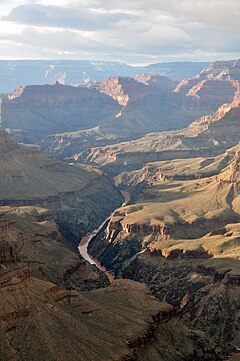
Outside magazine has a great piece on their website explaining the entire story, and it is an interesting one. Essentially, no one really cared about this speed record until author Kevin Fedarko wrote a book called The Emerald Mile back in 2013 detailing the 1983 record row. That sparked a renewed interest in trying to beat the old record within the paddling community, with kayakers Ben Orkin and Harrison Rea trying to set a new record last January. They failed in that attempt, coming up an hour and ten minutes short.
But last week a new team of paddlers hit the water with the hope of chasing the record. Ben Luck, Ryan Casey, and Matt and Nate Klema set off on January 20, with Matt actually reaching the finish line in 35 hours and 5 minutes, shaving an hour and a half off the previous record. Of course the foursome were ecstatic over their success, but they soon began to hear rumblings of another kayaker who was about to attempt the record himself.
Ben Orkin, who had missed setting the record last year, was back out on the river on a solo mission this time. He had no idea that the other team was even trying to set the record, let alone that they had already accomplished that goal. He was preparing to put-in the Colorado on Saturday morning when he received an email from Ben Luck informing him of the new time to beat. Knowing that he'd now have to go even faster than he had previously thought, Orkin moved forward with his plans.
The paddle wasn't an easy one. Orkin grew exhausted after paddling for hours on end completely on his own. He also flipped his kayak in some of the rough rapids, costing himself precious time. But in the end, he was able to best Matt's new record, covering the distance between Lee’s Ferry to the Grand Wash Cliffs in 34 hours and 2 minutes, 57 minutes faster than the two-day old record.
You can read a lot more about this story on Outside Online, where more details of these record-setting paddles are shared. The interesting thing to watch now will be how many more people will attempt to kayak the Grand Canyon, and just how low this time can truly go.
Scientists Discover Massive Canyon in Antarctica

The canyon was discovered using satellite imagery and ground penetrating radar that was pulled along behind snowmobiles and small aircraft. This giant gorge is located in the western region of the Antarctic near the Ellsworth Subglacial Highlands. It is said to be buried under several miles of ice, but its dimensions are staggering to say the least.
According to preliminary estimates, the canyon is believed to be 3 km (1.9 miles) deep, and more than 25 km (15.5 miles) across. It is also believed to run more than 1000 km (621 miles) in length, and even more amazingly it reaches 2000 meters (6500 feet) below sea level at certain points. In comparison, the Grand Canyon 1.8 km (1.13 miles) deep and stretches for 433 km (277 miles) in length.
The scientists studying the Ellsworth region aren't sure how old the canyon is exactly, although they do know that Antarctica has been covered in ice for at least 34 million years. Over that time, the glaciers that cover the area have shifted dramatically, ranging in thickness while shaping the surface found underneath them. Because of its immense size, it is believed that it was ice – not an ancient river – that carved this massive gorge.
Unlike the Grand Canyon, it is unlikely that humans will ever see this natural monument. Because it is covered in snow and ice, it would take millions of more years – not to mention dramatic shifts in climate – for it to ever reveal itself. Still, it is fascinating to know that this place exists, and it makes you wonder what else is still out there, hidden under the ice.
Video: Bright Angel Trail to Plateau Point in the Grand Canyon
Here's a beautiful short video that is even more impressive when you realize the entire thing was shot using just an iPhone 6 Plus. It features some amazing footage from the Grand Canyon, where filmmaker Dan Carter hiked Bright Angel Trail to Plateau Point, capturing video as he went. It is incredible to think that we now have such great cameras, and video editing tools, right in our pockets. Filmmaking has never been so accessible as it is today, and as a result, we're getting some very cool videos. Enjoy!
Grand Canyon Bright Angel Trail to Plateau Point (iPhone 6 Plus) from Dan Carter on Vimeo.
Video: Paddling Solo Through the Grand Canyon of the Colorado River
In January and February of this year, adventurer and filmmaker John Nestler paddled solo, and unsupported, through the Grand Canyon. He spent 27 days kayaking through that iconic landscape, documenting the journey as he went. The short film below is the result of that expedition, and features some fantastic scenes from Canyon, as well as some of the people that Nestler met while on his adventure. It is perfect inspiration for the start of a new week.
Why Rush Through Paradise from Fluid Glass Productions on Vimeo.
Video: The Dramatic Effects of Wind and Water on the American Southwest
We all know that wind and water can have a dramatic impact on the environment, particularly after millions of years of being able to relentlessly attack the stone over which they flow. There are few places where that is more evident than in the American southwest, where canyons and gorges are common. The video below gives us a glimpse of those places, showing us just how beautifully they have been carved by these forces of nature.
EROSION from Brett Lyon on Vimeo.
Video: Discovering Adventure On The Colorado River In The Grand Canyon
Defining adventure is a very personal thing. What make up an adventure for me, may be very different from what is an adventure for you. This short film follows a group of kayakers as they paddle the Colorado River in the Grand Canyon, while also seeking to define what "adventure" means to each of them. It is a compelling little documentary that will leave you thinking about the topic, and pondering exactly "Why We Go."
Why We Go from Brett Mayer on Vimeo.
Video: Running Rim to Rim to Rim In The Grand Canyon
If yesterday's video of trail running in Patagonia wasn't enough to get you motivated, than perhaps this fantastic video will. It was shot last October in the Grand Canyon, where trail runners Jeff Pelletier and Karl Woll did a double crossing of the Grand Canyon (rim-to-rim-to-rim), covering 46 miles, over 14 hours, in the process. Along the way, they captured some fantastic images from the trail. This short-film captures the essence of that adventure incredibly well.
Thanks to Karl for sharing this. Great work!
Thanks to Karl for sharing this. Great work!
Erik Weihenmayer To Paddle The Grand Canyon

In the article, the New York Times caught up with Erik while training at the U.S. National Whitewater Center in North Carolina, where he can perfect the skills needed to kayak the Colorado River through the Canyon. Those skills are daunting for someone with normal vision, but for Erik they require a completely different level of dedication. He says that he paddles by listening to the water around him and feeling what is beneath his boat and paddle. It is an intuitive approach to the sport that can only be mastered through practice and experience. Even with that experience however, Erik is trailed by a friend while out on the water who gives him verbal directions on which way to go and how far to turn.
There is no specific date set for when Weihenmayer will make his attempt on the Grand Canyon, although he says that if his training continues to progress that he hopes to do so next year. The trip will be a long and demanding one through some remote parts of the country. Erik says that they won't even be able to use satellite phones to stay in contact on certain sections of the paddle, which will be a multi-day affair.
Considering all of the things he has accomplished, you would think at some point I would cease to be amazed at the things that Erik does. But paddling the Grand Canyon will be yet another amazing feat to add to a resume that is already full of fantastic adventures.