Showing posts with label Backpacking. Show all posts

Gear Closet: MSR Windburner Stove System Combo Review

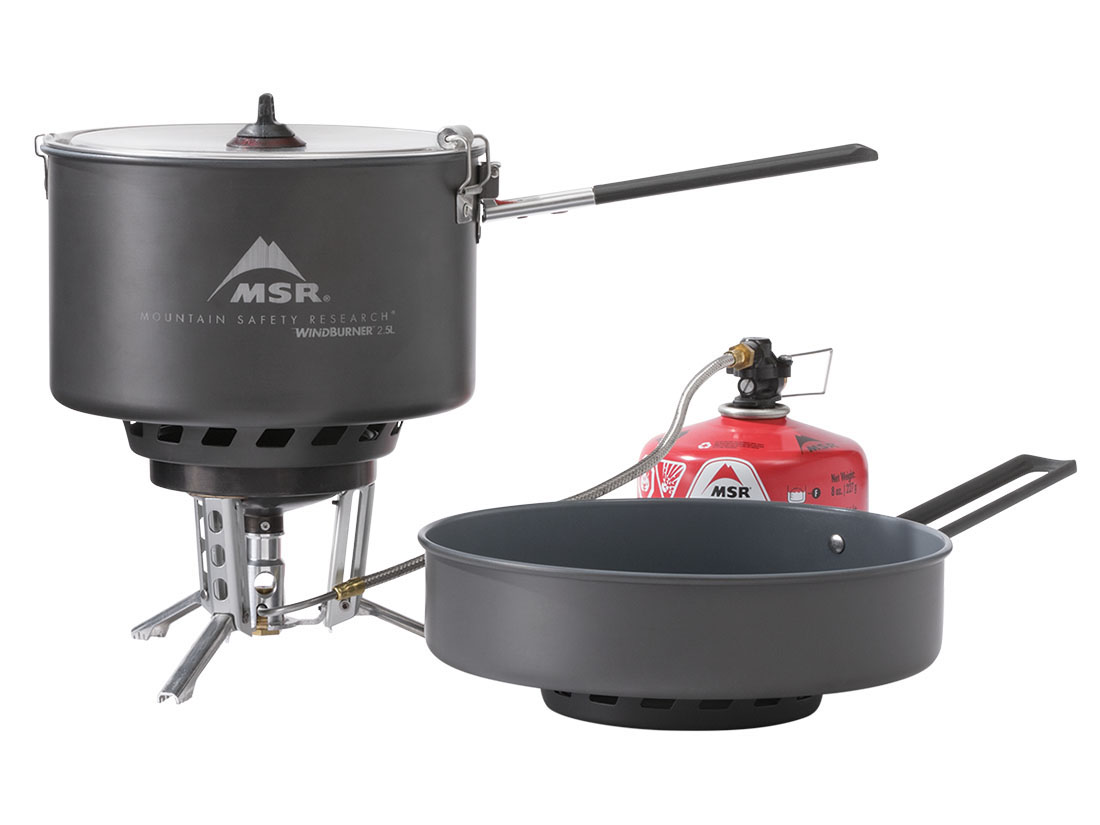
A few months back I reviewed the new MSR PocketRocket 2 camp stove, lauding it for its lightweight and efficiency. I was impressed with how such a tiny stove could pack in so many features, making it the perfect option for ounce-counting hikers and backpackers. But sometimes when you head into the backcountry you need a more robust option for creating meals, both for yourself and larger groups. That's when it is a good idea to bring MSR's new Windburner Stove System Combo along instead, providing more versatility and functionality in a surprisingly small package.

Now, before we get too far into my thoughts on the Windburner Combo, lets get one thing straight. When you consider everything that is included in the package, this is a lightweight cooking option, but it isn't in the same category as the PocketRocket, which weighs just a few ounces. The Windburner Combo actually tips the scales at 1 lbs., 13 ounces, making it a far more substantial item to carry along with you. That said however, if you're not someone who is looking to go ultralight on the trail, this new cooking system will really allow you do a lot more in terms of preparing meals at the campsite.

The Windburner Stove System Combo comes with just about everything you need for backcountry meal preparation. It includes the Windburner stove itself, a 2.5-liter ceramic-coated sauce pot, and an 8" skillet. Everything is designed to work modularly with one another, and the stove, pot, and pan nest nicely for ease of carry.

The core of this combo package is of course the Windburner stove itself. This little dynamo is already well-known to be very efficient, even in high winds and cold conditions. The stove's radiant burner heats up extremely quickly and the built-in pressure regulator ensures that a hot flame is maintained at all times, no matter the weather conditions. That same burner is built to balance nicely on a wide variety of surfaces and can easily accommodate both of the included pans. Stability is enhanced further with the use of an external gas line, which connects to a fuel canister.

MSR claims that the Windburner can boil a liter of water in about 6.2 minutes, which isn't the fastest time we've seen, but is still top-notch performance from a stove of this kind. My tests with the burner have found this to be a fairly accurate estimate, although I have yet to test it in heavier winds or colder temperatures. Still, I was impressed with how easy it was to set up the system and how quickly it was able to get water boiling. Even my home stove takes several minutes to make that happen.

The included sauce pot and skillet are both lightweight, easy to keep clean, and extremely useful. Rather than just boiling water to make a dehydrated meal, you can actually bring real ingredients and cook something tastier and more substantial. This is especially helpful for larger groups, when bringing more food is a better option than loading up on prepackaged options.

Other nice features include folding handles on the two pans that make them easy to store and a locking strainer lid that makes it easy to pour out excess water. The stove's controls make it easy to adjust the temperature from a simmer up to a rolling boil, while the entire package has been designed to nest an 8-ounce fuel canister too.

Priced at $259.95, the Windburner Stove System Combo is a great choice for those who need more robust options for cooking meals at their campsite. Not only does it provide pretty much everything you need in a single package, you're also getting a top-notch, and highly efficient stove in the process. If you've been on the look out for a new cook system that allows you to be more versatile, and feed more people, than this product needs to be on your short list. Fast, efficient, and easy to use, it will help you take your backcountry cooking game up a notch.

Find out more at MSRgear.com. And purchase this cooking system online at REI.


How to Beat Cold Conditions While Winter Camping

For most of us, winter is just another season that brings new opportunities for outdoor adventure. But, it is still true that you have to take extra precautions during the season to stay warm and safe out in the cold conditions. To help us do that, Men's Journal has shared 4 ways to beat the cold while winter camping.

Most of the tips are ones that experienced winter campers already know, but are good reminders none the less. For instance, MJ says that you should consider the location of your camping trip before setting out. Some destinations require a bit more thought and planning to enjoy a comfortable outing. In their example, they mention hat the Adirondacks are actually better for camping at 0ºF/-17ºC than it is at 30ºF/-1ºC thanks to the snow being dryer. Wet conditions, as in any season, are the bane of any camper's existence.

Other tips include staying hydrated throughout the trip, as you'll dehydrate at a rapid rate in the winter too. Also, wear googles to keep blowing snow from your eyes and prevent damage from sun glare, and finally consider the location of your campsite carefully.

The tips presented int he article come our way from John Gookin, who has trained thousands of U.S. Marines on survival and warfare in arctic conditions. If anyone knows a thing or two about staying comfortable in cold weather, it is probably him. That said however, I would have liked to have had a bit more depth in each of these tips. There is more to be said for sure, but this is a fairly superficial look at how to stay warm.

Still, it is worth a read for sure. To check out John's suggestions click here.

Eric Larsen Tells Us How to Survive a Winter Camping Trip

Winter camping isn't for everyone. You have to be well prepared for the cold temperatures, bring plenty of food and water, and not mind being huddled in a tent when conditions take a turn for the worse. If anyone know how to survive in the cold for an extended period of time, it is probably Eric Larsen, who has skied to both the North and South Pole amongst his various expeditions into the Arctic and Antarctic regions of our planet. Recently, Larsen shared some tips for winter camping with Men's Journal, providing some insights on how to do it right.

In the article, Eric offers some good recommendations for how we can all get more accustomed to spending time outdoors in cold conditions. For instance, he shares his tips for dressing in layers, he tells us why it is important to keep our extremities warm, and why we need to eat and drink more regularly too. He also tells us how to stay warm at night, keep our important electronics functioning, what gear you need to bring, and much, much more.

Whether you're a complete beginner to the idea of winter camping or you're experienced veteran, chances are you'll learn a thing or two from this article. Very few people know more about traveling through remote areas in extreme cold than Larsen, and he offers up plenty of invaluable tips for staying healthy and happy on a winter expedition. Keep in mind, backcountry winter camping for Eric is still a far cry from the weather he faced when going to the poles, which is an entirely different level of challenge.

Check out all of the great tips, gear, and information that he shares here.

Video: How to Fix a Sleeping Bag Zipper

Here's a "how to" video that we can all appreciate. This time, the good folks at REI explain how to fix a sleeping bag zipper, which is probably something we've all had to deal with at some point. There are few things more frustrating than wanting to climb into a warm bag at the end of a long day, only to discover the zipper isn't working properly. This video will help you sort out those issues and get your sleeping bag performing at a top level again.

The Adventure Podcast Episode 3 is Now Available

Just a quick note to let readers and listeners know that the latest edition of The Adventure Podcast is now available for download and to listen to online. For those who haven't had a chance to listen in on the show just yet, it is kind of an audio version of this blog, sharing news, gear reviews, and opinions on what is happening in the outdoor and exploration space.

On this week's episode, my cohost Dave Adlard and I discuss a number of big topics, including fallout over Nepal's decision to ban solo and disabled climbers. We also take a look at a 10-month long training course to prepare students to become outdoor guides, which has both of us wishing we were 20 years younger. Our main topic is tips and tricks for cutting weight from your backpack and luggage, and we take a look ahead to Outdoor Retailer next week as well. We wrap up the show by answering another gear question from a listener and share our favorite gear for the week. 

As always, you can listen to the show online, or subscribe to it in iTunes, Google Play Store, and through Stitcher. For those who just want to sample it, I've also embedded the latest episode below. Give it a shot and let us know what you think.

Also, you can find us on Facebook and Twitter, and we welcome any feedback or questions via email too.  Thanks for giving us a shot!


Video: How to Replace the Shock Cord in Your Tent Pole

REI"s ongoing video series with tips and tricks for maintaining our gear has provided a lot of useful information over the past few weeks, but today's clip may be one of the most useful of all. It helps walk us through the process of replacing a shock cord in a tent pole, which can become frayed or broken over time. Rather than just going out to replace the poles themselves – or worse yet the entire tent – perhaps his video can help get you up and running again.

Gear Closet: Night Trek 270 Tactical Shoe Lights Review

As a frequent runner, I look forward to putting in some miles on an almost daily basis, rain or shine; hot or cold. But, if there is one thing I don't like, its heading out for a run after dark, mostly because I worry a bit about whether or not I'm visible enough for passing cars to see. I've had so many close calls over the years, that I do a pretty good job of staying aware of my surroundings and avoiding serious mishaps. Still, even while wearing a headlamp and reflective clothing, I've nearly been hit more times than I can count. But over the past couple of months I've been testing a pair of Night Trek 270 Tactical Shoe Lights, and I can honestly say they've helped significantly.

The Night Trek 270 are a pair of bright lights that attach to your shoes or boots, not only helping you to stay more visible, but allowing you to see more of your surroundings too. They have three different settings – high, low, and flash – and they even have red sidelights that can help them pop out of the darkness just a little more.

The lights feature a clip that slides under and over your shoelaces to secure them in place. Once there, they shouldn't move around much, projecting as much as 150 lumens of light in a 270º pattern in front of you as you walk and run. I say the shouldn't move around too much, but in my testing I found that they work better on some shoes as opposed to others. For instance, I tried them on three different pairs of running shoes and on two of them they stayed firmly in place and never came off. On the third pair however, they would occasionally come loose and fly from the shoe while I ran.

On one occasion I had to backtrack for nearly a mile to retrieve it, which is testament to how lightweight these lights actually are. I didn't even notice that it had dropped of my shoe for quite some time, which made retrieving it a bit of a pain, but it was easy to spot laying upside down on a sidewalk with the light still blasting away.


When attached to hiking boots, I had no issues with the lights, as I wasn't moving at as fast of a pace, and the thicker laces seemed to hold the light well. In fact, hunters, campers, and hikers will probably appreciate the Night Treks just as much as runners, even though they'll be using them for a different purpose.

Battery life is advertised as 3-5 hours depending on the brightness setting, but I was easily able to get 6-7 hours of life from them on the lowest setting before needing a recharge. I run for more than an hour most evenings and could go a full week without having to juice up the lights again. Cold conditions did eat into that battery life however, as it does with most electronic devices.

It is difficult to say just how much more visible you are when wearing these lights on your running shoes. But, from anecdotal evidence, I can honestly say that I have had fewer close calls since I started using the Night Trek 270s then when I was running in the dark before adding them to my gear closet, using just a headlamp alone. There were times when I wondered if my headlamp was even on, as cars seemed to not notice me at all. But with these lights in place on my shoes, that changed noticeably, as I saw passing vehicles slow down; unsure of what was approaching them. I suspect the movement of the lights on my feet played a role in that process too.

The Night Trek 270 sells for $74.95, which means they aren't an inexpensive investment. In fact, there are a lot of different options for runners that can increase visibility at night that don't cost this much. But, most of those devices are cheaply built and aren't particularly bright. These shine through the night like a beacon and are very well made, resisting accidental drops, kicks, and even moisture without a problem.

They're also made to last a very long time, which means you probably won't be replacing them every year like you would with something less expensive. Just be sure they're attached properly to your shoes. At $75/pair, you definitely won't want to lose them.

Nat Geo Gives Us the 15 Skills Every Adventurer Needs

Have you ever thought about all of the skills that an explorer or adventurer needs in order to survive on a challenging expedition? If so, then I have just the article for you. National Geographic published a story a few weeks back detailing the 15 skills that every adventurer needs, with some insights as to why each of them is important.

Some of the items on the list come from simple common sense, while others a bit more surprising. For instance, Nat Geo says that any adventurer worth his salt will know how to avoid getting lost and can properly pack a backpack. Those may seem like simple, straight forward skills, but it is actually amazing to discover how many people don't even possess those basic abilities. I'm continually surprised by the people I meet who can't work a compass or read a map properly.

On the other hand, some of the skills that make the list are not so intuitive. For instance, the story mentions learning to eat for fuel, meaning having the proper foods to power your adventure. Polar explorers can never get enough calories for instance as the extreme cold forces their bodies to work hard to stay warm. Nat Geo says that today's adventurers need to be tech savvy too, which is something that wasn't much of a concern in the past.

There are a number of other useful skills on the list, including how to stay mentally tough, how to make a fire, and how to be environmentally responsible. But, perhaps the most important one of all, is knowing when to quit. You can push your body to the limit and plan everything down to the last detail, but sometimes things are outside of your control, so it is important to know when to say you're done. After all, coming home safely and in one piece is an important aspect to any outdoor adventure.

Check out the entire list here.

Video: How to Waterproof Your Tent

More maintenance and repair tips courtesy of REI today, this time with a focus back on taking care of our tents. The video below offers advice on how to best waterproof your camp shelter, ensuring that it continues to protect you from the elements as it ages. This is, once again, a great reminder that a little upkeep and care can go a long way towards keeping our expensive outdoor gear functioning at a high level.

Video: How to Patch a Sleeping Pad

We'll continue our "How to" videos from REI today with some more great tips for maintaining and repairing our gear. This time out it is how to patch a sleeping pad, which is something we can all probably appreciate knowing a bit more about. There is nothing worse than being on a long trip and discovering your pad won't hold air. Fortunately it is fairly easy to fix as you'll see in the clip below.

The Adventure Podcast Episode 2 is Now Available

Just a quick note to let everyone know that Episode 2 of The Adventure Podcast was released yesterday. In this episode, my co-host Dave Adlard and I talk about the latest adventure news with a look at some Antarctic expeditions, climbing teams heading to Everest and K2 this winter, and more. As usual, we also talk about useful gear and share some items that we've both been using in the field.

Our main topic this week is the 10 Essentials of Hiking, with discussion on whether or not they are still viable in the 21st century (Hint: They Are!) and out take on how the list has changed and evolved over the years. Throughout this segment we continue to talk about important gear and share some ideas on things that you can take with you into the backcountry.

For thos who are interested in checking out this latest project of mine here's how you can listen in:

  • If you just want to listen on your computer then click here to get a web version of the show, complete with an audio player, episode description, and so on. It works great, it just isn't quite so portable. 
  • iOS users (iPhone, iPad, iPod, etc.) can subscribe to the show in iTunes by searching for "The Adventure Podcast," but it can still be hard to find. Here's a direct link
  • Android users can find us in the Google Play Store by again searching for the title of the show. But, to save time, here's another direct link
  • If you use Stitcher to listen to your podcasts on any platform, we're also available there. If search doesn't work, here's the direct link for Stitcher users.
You can also follow the show on Facebook and Twitter. Comments, suggestions, and questions can be emailed to theadventurepod@gmail.com. In fact, we're looking for questions to answer on the air, and had our first one just this week. 

Thanks for listening. I hope you'll check us out and enjoy the topics. 

Video: How to Clean a Sleeping Bag

The Care and Repair series of videos from REI continues today, this time with tips on how to clean your sleeping bag. This is probably something we could all use some help with, as far too often we forget to take good care of our bags after coming home from a trip. But, a little cleaning and maintenance will keep them performing – not to mention smelling – better for a lot longer.

Video: How to Care for Leather Hiking Boots

Ever wondered about the best way to care for your leather hiking boots? If so, the latest video from REI is here to help. It offers some great tips for keeping your boots not only looking good, but performing well too. As it turns out, a little simple cleaning and maintenance can go a long way to keep those boots in great condition for years of use.

Video: How to Clean Your Hydration Reservoir

REI is continuing its ongoing video series of how to care for our favorite outdoor gear. This time out they've shared tips on how to clean a hydration reservoir, which we all know can get pretty nasty after extended use. The one-minute clip offers some handy tips on how to get the scum out of your water bladder, which helps to keep the water tasting fresh and prevents having to buy a new bladder too often.

Video: How to Clean Your Tent

REI continues its "how to" series of videos today, this time providing some tips on how to clean your tent. This is something that a lot of rarely do, and yet the inside of our tent can definitely attract a variety of funky smells and strange dirty marks. This short clip will tell you how to get your favorite tent smelling fresh and clean, and looking brand new, in no time at all.

Backapcker Gives Us 13 Great Last Minute Holiday Gifts for Hikers

The clock is ticking on the 2017 holiday season, and Christmas is only a few days away now. If you're still scrambling to find the perfect gift for the outdoor lover in your life, Backpacker magazine is here to help with its picks for the 13 best last-minute gifts for the hikers.

The list is a good one, offering all kinds of suggestions. And with prices ranging from just $13, all the way up to $450, there truly is something for everyone here. Amongst the gear that makes the cut are an inflatable camping pillow from Klymit, a daypack from The North Face, and a solar charger from Revel. You'll also find jackets, socks, and other apparel, as well as a backpack for your dog.

Backpacker has put together an eclectic list here, with some really thoughtful items that many hikers wouldn't consider getting for themselves, but would love to have as a gift. Each of the items that made he cut are high quality and really useful in a variety of outdoor settings. They also come from top brands that we all know and love, making them easy to recommend as well.

If you're still wondering what you should buy the hiker on your list, don't panic. You still have a bit of time. But you might want to click here to see what Backpacker recommends just in case.

OutdoorX4 Mag Presents First Ever Gear Issue

If you haven't had your fill of holiday gear guides just yet, I have another very good one one to share. OutdoorX4 magazine – an outlet that I contribute to on a regular basis – has released its first ever Gear Issue, and it is filled with great reviews of some of the best products around. While the magazine does have an off-road/overlanding slant, it is aimed at outdoor enthusiasts of all types, and the gear that is found within this issue is perfect for hikers, backpackers, adventure travelers, and more.

There are literally dozens of pieces of gear to sift through in this issue, so it is almost impossible for me to list them all here. But, you'll find reviews of sleeping bags, portable charging stations, camp cookstoves, tents, hiking boots, and much more. I personally contributed 5 or 6 reviews, but have also found numerous other items that I want to add to my gear closet for use on my own adventures, both on and off-road.

Unlike most of the other gear guides we've seen in the past few weeks, the OutdoorX4 gear issue actually offers insights into why these items are a good choice, either for yourself or someone on your shopping list. This isn't a superficial list of products that make great gifts, but is instead a comprehensive look at each and every product that was included. The reviews (other than mine!) are well written and informative, helping you to decide if the gear is indeed what you're looking for.

You can read the entire Gear Issue online by clicking here. And if you like what you see, you can also subscribe to OutdoorX4 here. Digital subscriptions start at $20 with the print mag edition priced at $25. We promise we'll make it worth your time.

Gear Closet: Cauldryn Fyre Mobile Heated Water Bottle

One of the things that I've l liked most about the continued advancements in technology is that it has forced us to improve the batteries that go into our various devices. These more powerful and long-lasting rechargeable power cells have made their way into a wide variety of other product that either didn't use them before or didn't exist at all. Such is the case with the new Cauldryn Fyre Mobile, a heated water bottle that will redefine the way you think about hot beverages and cooking around the campsite, while on the go.

At first glance, the Cauldryn Fyre looks like a lot of other water bottles you might find on the market, It is sleek, made of stainless steel, and uses the vacuum-insulated design that has proven to be a winner in countless other models over the past few years. The 16-ounce bottle even has two openings for sipping a beverage or for pouring out more liquid depending on your needs.

But look a little closer, and you'll start to see how this product differentiates itself from the competition. For starters, it includes a built-in heating mechanism that allows it to warm a beverage completely on its own, or keep liquids hot for hours at a time. This heating element is so powerful in fact that it can even boil water all on its own. Simply plug the bottle into a USB outlet and set it to the temperature you need.

The Cauldryn Fyre comes in two different models, the standard version and the Mobile. The difference between the two is that the Mobile edition comes with a battery pack that allows it to function while away from a power source. An included battery pack means that you can have hot beverages on the go, even if you're venturing far off the beaten path. Taking a morning hike to the top of your favorite peak, but would like some hot coffee along the way? The Cauldryn Fire Mobile can handle that. Snowshoeing or backcountry skiing and want some hot cocoa? Check!


The secret behind the Cauldryn is its Fyre heating element. Embedded in the bottle itself, this handy piece of technology offers five levels of warmth ranging from Boil (212 degrees), Brew (195-205 degrees), Extra Hot (160-170 degrees), and two Hot modes (135-145 degrees and 125-135 degrees). Those modes can be selected as needed, providing options for conserving battery life too. The Boil and Brew options eat up the most power of course, while the lower hot modes are much more conservative. In fact, they can be switched on and keep a beverage steaming hot all day long, even running off of just the external battery.

The stainless steel cup can be easily removed from the power pack for wire-free drinking. It snaps back into place extremely easily, making it a breeze to take a drink while driving, then return it to its power source to keep the beverage warm as needed. The travel mug does a good job of keeping liquids hot (or cold) completely on its own, but when paired with the mobile battery pack, it truly can provide warm drinks all day long.

With the battery pack attached, the Cauldryn Fyre Mobile is a bit tall, which means you'll have to be careful not to tip it over. Because of this extra height it can be a bit unstable, although the lids ensure that no water spills out. In fact, the device actually operates just fine, even if it is laying on its side.

One of the more intriguing uses for the Cauldryn Fyre Mobile is as a portable stove for use in the backcountry. Because it can boil water quite quickly, you can heat up packaged meals in no time at all. Obviously there are backpacking stoves that are much smaller and lighter than this device, which tips the scales at about 1 pound (.45 kg), but when you factor in fuel and a pot to boil water, things even out quickly. On extended trips the battery life wouldn't necessarily be up to the task, but on short overnighter or weekend outings, this is a viable option. Particularly if you bring solar panels or an external power source for recharging.

Speaking of the battery, it holds a large enough charge that if you're conservative with how you use the Cauldryn Fyre you can make it last for quite a long time. The battery pack comes with two USB ports as well, allowing users to recharge mobile devices such as a smartphone. The battery pack is sold separately for $69.99, allowing standard Cauldryn buyers to add one later if they like, or Mobile users to pick up an additional one for additional run time.

Overall, the Cauldryn Fyre Mobile is a fast and efficient way to boil water, but is also fantastic for keeping hot beverages warm for extended periods of time. That makes it a great choice for anyone who spends time in the outdoors during the colder months of the year. Whether you're actually hiking into the backcountry or simply going to the local ice rink, this bottle will come in handy. It also makes a great gift heading into the holiday season as well.

The standard Cauldryn Fyre runs $69.99 while the Mobile edition is $129.99. Find out more here.


Men's Journal Presents the 20 Best Gifts for Adventurers

I may have shared my picks for the best holiday gifts for outdoor adventurers a few weeks back, but as we get closer to Christmas there are sure to be others. For instance, Men's Journal has posted its picks for the 20 best pieces of gear for the adventurer in your life, with some really great items we'd all like to find under our tree this year.
The list gets off to a rocky start – at least for me – by suggesting a rifle from Ruger, but I know plenty of people who wouldn't mind receiving that as a gift. Other items include awesome rain pants from Kuhl, iPhone cases from OtterBox, and a tent from Big Agnes, amongst plenty of other things. In fact, it is safe to say that pretty much whatever your favorite outdoor pursuits are, you'll find something you can use here, including a folding kayak from Oru and a waterproof duffel from Yeti (which also made my list!).

I won't spoil the rest of the items on the Men's Journal list as there is plenty to discover. Check out all of their picks by clicking here.

Gear Closet: Salewa MS Ultra Flex Mid GTX Speed Hiking Shoe Review

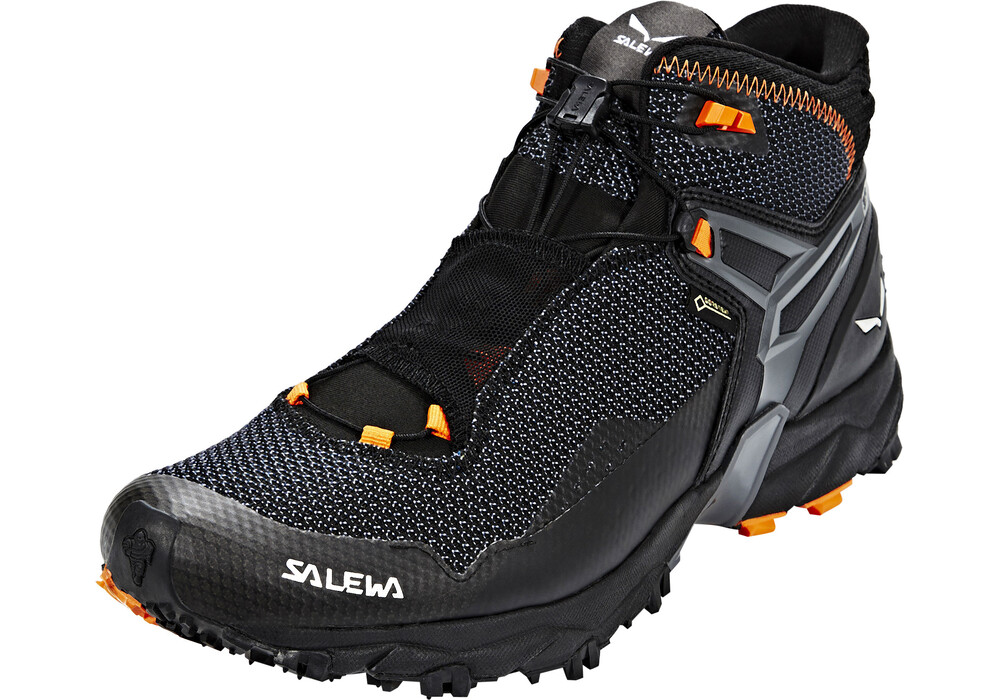
If you've been searching for an excellent hiking shoe for your light and fast adventures, your quest might be over. The new MS Ultra Flex Mid GTX from Salewa has everything that fast packers could ask for, wrapped up in a slick looking package that delvers a high level of performance both on and off the trail.

Tipping the scales at 11.5 ounces (23 oz./pair), the Ultra Flex is a boot that competes with trail runners in terms of overall weight. These shoes feel extremely light on your feet, and with their athletic fit, they allow hikers to be be nimble and quick, while also maintaining a great connection with the trail. Those who have wider feet might find the fit a bit too confining, but if you're like me, and prefer a shoe that provides stability and agility in one package, this is the boot for you.

The Ultra Flex uses a Michelin Ultra Train outsole to provide traction in a variety of conditions. Yes, that is the same Michelin that is best known for making tires, but that pedigree translates well for use in the outdoors too. I've worn these shoes in a wide range of situations, including completely dry and flat trails, to wet and muddy paths up and down hills. In all cases, I found the soles performed admirably, holding a firm grip on wet rocks, slick pavement, sand, silt, and mud.

Salewa also incorporated a Gore-Tex lining into the Ultra Flex boots, providing a nice level of water resistance in the process. I've worn these boots while crossing streams and slogging up muddy trails, and have come away with dry feet each and every time. I even wore them in a driving downpour, and yet not a drop of moisture made its way inside. That's pretty impressive for footwear this light and comfortable.


Speaking of comfort, the Ultra Flex might be my new favorite light hiking shoe. As mentioned, they wrap the foot snugly, which I personally prefer over boots that have are little roomier. Thanks to the shoe's built-in Ortholite sicklier, I found that I could wear these shoes all day long without developing hot spots or blisters, even in warmer conditions or when transitioning from trail to town. That is a level of versatility that I happen to appreciate, as it means these shoes can pull double-duty when traveling as well.

As you would expect from a light hiking shoe, the Ultra Flex offer a high level of breathability. This helps to keep your feet cooler and dryer, which plays a major role in comfort as well. On warmer days, my feet did get a bit warmer during active pursuits, but not any more so than most other hiking shoes you would wear.

Salewa used a speed lacing system for cinching up the boots that makes it quick and easy to get them on and off. That system is also simple and light, helping to keep the overall weight of the boot down, while still holding them firmly in place on your feet. The drawstrings tuck neatly into a mesh stash point on the front of the shoe, keeping them neatly out of the way while hiking.

Despite these boots being so lightweight, they manage to provide excellent support all around. I was impressed with how much arch and ankle support the Ultra Flex offered, and its flex-collar didn't impede motion in anyway. They are especially nimble on descents, which is often where a boot fails to offer the performance we need. That wasn't he case here, as I never felt out of control or off balance, even in wet conditions.

I'd be remiss if I didn't at least mention how great these boots look as well. While that isn't always a top selling point for a great hiking shoe, it never hurts for them to pass the eyeball test too. The Ultra Flex certainly does that, as these boots look completely badass. Their low profile and athletic design pay off in spades in this area, making this a shoe that you'll want to wear even when you're not on the trail.

Priced at $190, the Ultra Flex Mid GTX offers a lot of bang for the buck. Yes, you'll be able to find other light hiking shoes for less money, but very few will offer the kind of performance that you'll find here. This is a boot that was built for those who want to go fast on the trail and each individual component and design element is geared towards that goal. As already mentioned, if you have wider feet this probably isn't the boot for you. Otherwise, this is one of the best light hiking boots I've ever worn, punching well outside its weight class.

Buy from Backcountry.com.