


The Minke Whale is one of the least studied and understood species in the whale family and in an effort to get to know them better, researchers recently attached a camera to one of the creatures as it swam in the waters of the Southern Ocean. The video below gives us a whale's eye view of the Antarctic, providing a brief glimpse into the Minke's world.
Showing posts with label Wildlife. Show all posts
Showing posts with label Wildlife. Show all posts
Volvo Ocean Race Team Witnesses Rare Whale Encounter on Stage 4
We've been following the Volvo Ocean Race closely since it first started back in October, and currently the ships are en route to Hong Kong on the 4th stage of the round-the-world race. Currently, the teams are locked in a tight formation with just 12 miles separating them as they pass through the doldrums on the Indian Ocean on their way to the next stage finish. That's a far cry from the difficulties they faced in the Southern Ocean just a few short weeks back.
But perhaps the most interesting and exciting news isn't about the competition at all – at least not directly. A few days back, Team Vestas 11 Hour Racing had quite an encounter at sea, and they managed to capture it on the video you'll find below.
The clip was shot by Amory Ross, a reporter who is currently embedded with the crew. Using a drone, he was able to capture footage of a whale feeding frenzy just off the coast of the Solomon Islands. The sight is so rare, that whale researchers have already contacted Vestas to see if they can study the footage for future research. If you look closely, you'll even be able to spot sharks in the water too.
This is a good reminder that while the VOR is a competition that spans the globe, the teams also have some amazing encounters along the way. To check out this rare site, watch the video below.
But perhaps the most interesting and exciting news isn't about the competition at all – at least not directly. A few days back, Team Vestas 11 Hour Racing had quite an encounter at sea, and they managed to capture it on the video you'll find below.
The clip was shot by Amory Ross, a reporter who is currently embedded with the crew. Using a drone, he was able to capture footage of a whale feeding frenzy just off the coast of the Solomon Islands. The sight is so rare, that whale researchers have already contacted Vestas to see if they can study the footage for future research. If you look closely, you'll even be able to spot sharks in the water too.
This is a good reminder that while the VOR is a competition that spans the globe, the teams also have some amazing encounters along the way. To check out this rare site, watch the video below.
Video: Photographing Polar Bears in One of the Most Extreme Environments on Earth
While they don't get the same level of recognition as explorers and extreme athletes, adventure and wildlife photographers also go to the ends of the Earth to get that perfect shot. Take nature photographer Joshua Holko for instance. In this video, we join him on an expedition to Svalbard in Norway, where he battles some harsh arctic conditions to photograph polar bears in their natural environment. The place is beautiful and unforgiving, and sometimes he must brave the cold for hours to get the photo he is looking for. But when everything comes together, it can be spectacular.
Researchers Discover Shark That May Be 500 Years Old

This particular individual was first spotted by scientists who were conducting a catch and release program during which 28 Greenland sharks were examined. It was notable for its size, stretching 18 feet (5.4 meters) in length, which was an indication of its longevity for sure. Do to its slow metabolism and life in icy waters, the species only grows at a rate of about 1 cm per year.
Unlike other sharks, which have hard, calcified tissue that can be used to detmeurine their age, a Geenland shark has mostly soft tissue instead. In order to determine the age of individuals scientists have begun using radio carbon dating, which examines cells that are taken from the eye. In this case, the dating process gave them the estimated age-range for this particular shark.
To be certain, the 272 to 512 year range is a wide one. The researchers say it is unlikely that this particular shark is actually 500+ years old, but it is quite possible. Their research indicates that it is most likely around 390 years old, which is still pretty mind blowing. Even if it is relatively young at 272 years of age, it is still quite impressive.
Greenland sharks are particularly difficult to observe in the wild since they live in remote places, swim through extremely cold waters, and can dive as deep as 9100 feet (2774 meters). But, researchers are doing their best to learn more about these creatures, and determining their lifespan is part of that process. Just how long they can live is a mystery, but it seems likely that there might be some hardy individual members of the species that are indeed more than a half-century old.
Nature is awesome.
Video: Let the Tiger Go - Saving Wild Tigers in Sumatra
The once thriving population of tigers in Sumatra have raced to the edge of extinction. These magnificent big cats have been hunted by poachers, who sell their skins and bones on the black market, where they remain in high demand. That has caused the Sumatran tiger population to fall to under 400 animals remaining in the wild. In this short documentary, we'll travel to Sumatra to see the team that is working to keep these creatures from vanishing. In the clip, we'll witness their efforts to rescue once such tiger first hand, as they battle ruthless hunters looking to make a quick buck at the expense of an entire species.
Rare White Giraffes Remind Us How Amazing Our World Can Be

But, the creatures don't suffer from albinism as some suspected. Instead, they have a very rare genetic condition called leucism. This trait doesn't allow an animal to create pigmentation in its skin cells, while other organs can continue to form naturally. Albino animals usually have pink eyes, but these giraffes – and other creatures with leucism – have natural looking eyes instead.
Fortunately, this trait doesn't have any lasting impact on their ability to survive in the wild, and in this case the mother obviously passed on the rare genetic defect to the calf. But, as you'll see in the video below, it gives them a unique quality that is simply magical. Something tells me that the Hirola Conservation Area is about to get a lot more visitors.
Fortunately, this trait doesn't have any lasting impact on their ability to survive in the wild, and in this case the mother obviously passed on the rare genetic defect to the calf. But, as you'll see in the video below, it gives them a unique quality that is simply magical. Something tells me that the Hirola Conservation Area is about to get a lot more visitors.
The Man Who Searched for the Yeti

In the interview, Taylor talks about how a photo of an unusual footprint found in the snow of the Himalaya by British explorer Eric Shipton back in 1951 sparked the imagination of millions across the globe. The photo purportedly shows a track that looks rather man or primate like on the Menlung Glacier. Shipton found the footprint, which was allegedly 13 inches (33 cm) in length, while trekking across the glacier in search of a new route to Everest. He photographed it, shared it with others, and the mystery of the Yeti was born.
At the time, Taylor was a young boy living in India where his parents managed a hospital. Like many others, he was captivated by the story and spent part of his life delving into the mystery that is the Yeti. Along the way, he became familiar with a remote section of Nepal called Barun, which is home to a jungle that is so thick that few people have ventured inside. The idea was that if the yeti existed, it probably was hiding inside.
Taylor never found the abominable snowman as the yeti is often called, but he did find a creature called a tree bear that made its home in the Barun region. The tracks of the bear resemble those that were found by Shipton, although there are still many mysteries that surround the story, including how the footprint was found on Menlung Glacier to begin with.
The article not only takes a look at the history of the search for the yeti (both Hillary and Messner searched for the creature), but Taylor's own efforts to protect and preserve Barun, leading to the creation of the Makalu-Barun National Park. But beyond that, there are also some thoughts on the legendary creature and whether or not it has ever actually exited.
Fascinating stuff for those of us who enjoy tall tales and the mountain culture of the Himalaya. Read the entire story here.
Video: Rare Drone Footage of a Blue Whale
Blue whales are amongst the rarest and most elusive animals on the planet, and while they had been brought to the brink of extinction, they seem to slowly be making their way back from the edge. This video gives us an amazing look at one of these creatures from a drone's eye view. The clip shows us how the blue whale eats as it goes about its life in the ocean. As the largest creature ever known to inhabit the Earth, it is quite a sight, and one that I was fortunate enough to see on my recent visit to the Southern Ocean. Check it out for yourself below.
Video: The Colors of Africa
It's no secret that Africa is one of my favorite places to visit, and if you wonder why, you only need to watch this video. It is a colorful, majestic place that is filled with life and energy. In this clip, you'll catch a glimpse of the people, landscapes, and wildlife that make Africa such a special place. Just watching it makes me long to go back. Enjoy.
Colors of AFRICA by Avichai Wechsler from אביחי וקסלר צילום on Vimeo.
Are You the 2016 National Geographic Nature Photographer of the Year?

The contest website says "We’re looking for photos that showcase the awe-inspiring and diverse natural world around us. That could be a powerful wildlife shot, a stunning landscape, or a look at a complicated environmental issue—whatever nature means to you." In other words, there is a pretty broad interoperation out there of what exactly Nat Geo means by "nature." I'm sure more than a few have you have captured some great images over the past 12 months that you can submit to the contest. Entries are begin accepted until November 4, after which a panel of judges will decide which photos are worthy of making the cut.
Of course, there are some great prizes for those who win the contest. Each of the categories – Landscapes, Animals, Action and Environmental – will have three winners. First place will be awarded $2500 in case, while second place will get $750 and a signed National Geographic book. The third place winner goes home with $500. But best of all, the Grand Prize finisher will receive a 10-day trip for two to the Galapagos Islands courtesy of Natural Habitat Adventures. I can't think of a better place to take more photos of nature than that destination.
As you would expect, competition is sure to be tough in this contest, but you just might have the wining photo sitting on your hard drive right now. Pick out your best and submit them for consideration. Who knows, you just might be on your way to the Galapagos in the near future.
Polar Bears Trap Russian Research Team Inside Arctic Base
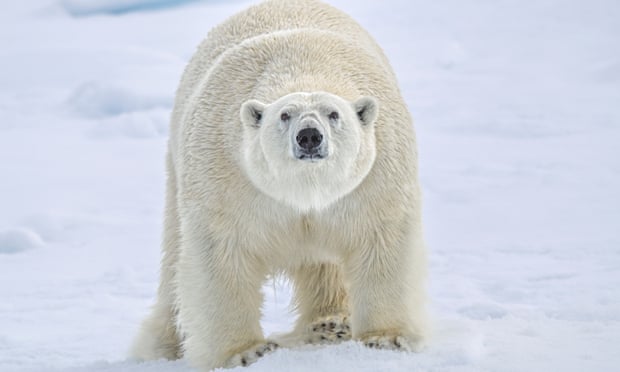
Normally, in order to keep the bears at bay, the scientists use flares and have dogs at the base to scare off the animals. But, the team had run out of flares, and according to Mashable the bears even killed one of the dogs. Because of this aggressive nature, the researchers have had to abandon some of their projects, and had been instructed to only leave the base when absolutely necessary.
It was originally reported that it would take weeks to deliver new flares and dogs to the station, but apparently relief came earlier today when a passing research vessel made a detour to lend a hand. The ship resupplied the team with flares, which were used immediately to scare off the bears. The next resupply ship wasn't scheduled to arrive for another month, but this should help buy the team some time.
Apparently, the bears gather near the base to wait for the Arctic Ocean to freeze. That typically occurs in late October or early November, at which time they'll depart the area and head north. Considering the current state of the arctic sea ice, it may take longer than usual before the bears begin their migration, and it is possible that they'll return to that location again in the days ahead.
In the past only about 4-6 bears have spent their summers on Troynoy, but apparently this year there are at least 10, including some large female with small cubs as well. One of the females has even been spending her nights just below one of the windows of the weather station, making it even more difficult for the team to sneak outside to record readings for their research.
Hopefully there will be some relief for these scientists soon. While watching polar bears up close sounds like an amazing experience, being locked inside and unable to go out doesn't seem like a lot of fun.
Video: Clever Seal Avoids Death by Jumping into Boat
What's a desperate seal to do when being hunted by orcas? Why jump into a passing boat to avoid certain death of course! That's exactly what happens in this video, which was shot by an amateur filmmaker (witness the use of vertical video) who caught a pod of orcas hunting a seal who ultimately decides his best course of action is to leave the water altogether and hitch a ride on their boat. Warning: some of the language in the clip is a bit salty, but it is still amazing to watch nonetheless.
Video: Squirrel Grabs GoPro, Makes Own POV Movie
What happens when a squirrel grabs your GoPro camera and runs with it up into the trees? You get a squirrel's eye view of what it is like to hop along on branches high above the ground of course! That is exactly what happened in this video, with the little rodent picking up the camera and setting off on his merry way. The entire time the video is recording, giving us a unique perspective that we wouldn't normally see. Fortunately the squirrel was kind enough to give the camera back to the footage could be uploaded to YouTube. Check it out below.
Video: A Kenya Safari By Radio Controlled Car
This short, but very sweet, video takes us to Kenya, where a couple of ingenious travelers came up with the idea of strapping a GoPro camera to a radio controlled car, essentially turning it into a makeshift, ground-based drone. The results were pretty spectacular, as they managed to capture some of the most iconic wildlife of the Masai Mara up close and personal.
Video: Whale Encounters Don't Come Any Closer Than This!
We've seen some interesting whale encounters captured on video over the years, but none of them are as close as this one. A feeding humpback wandered into Knudson Cove in Ketchikan, Alaska and when it breached it was right inside the harbor. It isn't often that you see a whale this closely, let alone capture it on video. Wow!
Video: Meet Nat Geo Wildlife Photographer Joe Riis
Joe Riis has one of those jobs we all dream of. He is a wildlife photographer for National Geographic an occupation that takes him to wild and remote places all over the world. In this video, we learn more about Joe and his job, but also discover that even when you lead an adventurous life, there are still plenty of challenges to finding happiness and contentment. This is a clip you shouldn't miss. Particularly if you're looking to lead a more fulfilling life.
Joe from Andy Maser on Vimeo.
Video: The Wildlife of Chernobyl
It has been 30 years since the nuclear disaster at Chernobyl in the Ukraine. Since than, the city, and the surrounding area, has been mostly deserted of people, but wildlife has returned to the area and is thriving. In this video from National Geographic, we get a glimpse of those creatures that include wolves, foxes, dogs, and other animals. It is fascinating to see them wandering through a place where humans continue to shun. As is usual, nature finds a way.
Video: Experience Kenya From the Air
I love Africa, and thanks to this video I'm reminded why. It is a beautiful, amazing place that once it gets into your heart, it is impossible to shake. Here, we take a tour of Kenya using drone footage to explore the landscapes, people, and wildlife of East Africa. It is a wonderful look at a destination that every adventure traveler should see. The diversity of things to do there is astounding, as you'll see in this 4+ minute clip.
Kenya from the Air from Matador Network on Vimeo.
Video: Nat Geo Photographer Captures the Wildlife of the Arctic
Think the Arctic is lifeless? Think again. In this video, we travel north with National Geographic photographer Vincent Munier, who visits the frozen landscapes of our planet to shoot the amazing wildlife that is found there. He captures great photos of wolves, foxes, arctic hares, owls, and of course polar bears. Munier has compiled many of these images in his book Arctique.
Rare Sumatran Rhino Dies Days After Being Found

Back in March, it was revealed that a rare, and highly endangered, species of rhino was discovered in the wilds of Sumatra. Those creatures were believed to be totally extinct, as none have been spotted there in more than 40 years. In order to protect the animal, she was captured in a pit trap and taken to a sanctuary where it was believed that she would be well protected from poachers.
But over the past few days, the rhino – who was named Najaq – saw a down turn in her health as she struggled to fight off an infection. On Tuesday, it was announced that she lost the fight, and passed away due to complications from the infection. There is a pending investigation to learn more about the situation, but it is believed that Najaq suffered an injury from a snare set by poachers prior to her being discovered. Wounds from that injury grew infected, leading to the death of the rhino.
This is obviously sad news. A few weeks ago the discovery of this creature brought hope that perhaps the species could be brought back from the brink of extinction, but this is a setback that makes those efforts even more difficult. Najaq does give us hope however that there are rhinos still out there in the wilds of Sumatra just waiting to be discovered. Hopefully conservationists find them before the poachers do.