


This short film is a dramatization of what could happen on a mountaineering expedition into the high places of the world. It begins with one climber joining his mates in their tent to inform them that one of the other members of the team has gone missing. From there, things escalate quickly. You'll have to watch all the way to the end to get the full effect, but it is worth the pay off.
Mountain Fever from Kabakon Film & Medien on Vimeo.
Showing posts with label Rescue. Show all posts
Showing posts with label Rescue. Show all posts
Pakistani Officials Weigh in on Nanga Parbat Rescue Controversy

In a post made to the Pakistan Mountain News page on Facebook officials made four points that they thought were important enough to share. Those points were as follows:
1. First, Pakistan is a developing economy and ‘Tourism’ sector receives much less attention. Despite, it has world’s best wonders. Neither there are institutions for high-demanding-skills rescue operation on mountain nor has it modern resource and equipment.While some will probably look at this list and see a set of excuses, these are all very important things to keep in mind. Pakistan is indeed a developing country that doesn't have the resources of some other nations when it comes fountaining these kinds of operations. It is also true that Tomek and Elisabeth's expedition was a low-budget affair, leaving little room for error and not much in the way of a safety net if things went wrong. Unfortunately, things went very wrong, and they also didn't have the resources for a rescue.
2. Second, these mountaineers go on Nanga Parbat at very economical package. Such economical packages do not cover many essentials. It is only their bravery and audacity that make them to summit in the winter.
3. Third, Askari Aviation does not have high-tech helicopters that can hover around in inclement weather condition. As it was coordinated rescue operation, nobody could help Tomek and Elisabeth in private capacity.
4. Lastly, Poland or French official authorities did not contact State of Pakistan officially after this rescue. However, Eisabeth was given utmost care and attention. The Chief Secretary of Gilgit-Baltistan enquired after her in hospital. She did not utter a word.
Askari Aviation is the company that has received a lot of venom for not reacting quicker and potentially trying to bilk more money out of the operation. But it is also probably true that they don't have very sophisticated helicopter designed for use in the high mountains.
In other words, there are always multiple sides to a story and it is clear that we understand all of the variables at play. Clearly this is a complicated situation with a lot to think about. Sadly, Tomek lost his life, and because of that this will likely be a divisive topic for a long time to come.
Thanks to Alan Arnette for sharing this story.
Could Tomek Mackiewicz Have Been Saved on Nanga Parbat?
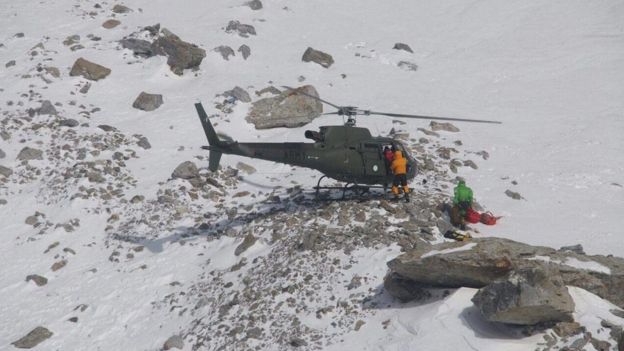
In an interview conducted on Wednesday, Revol said that she feels a lot of anger over the situation. She believes that Mackiewicz could have been saved had officials in Pakistan worked faster and been more forthright in their actions. The French climber says that she sent out an SOS to her husband, Tomek's wife, and Ludovic Giambiasi, who was helping coordinate the expedition from back home. Those three jumped into action to try to get help for Revol and Mackiewicz, but were met with resistance and stalling on the part of the Pakistanis.
Perhaps the most disturbing element to the story is how the Pakistani helicopter rescue team began negotiating the price of starting the operation. According to reports, they initially wanted $15,000 to fly to Nanga Parbat to rescue Elisabeth and Tomak. But as things progressed, that price rose to $40,000 in cash and in advance, before the flight would ever leave the ground.
It should be also noted that while high altitude rescues have become fairly common on Everest and other big Nepali peaks, in Pakistan they remain fairly rare. The pilots and SAR teams don't have much experience conducting such operations, which also makes them hesitant to go too high. Tomek was stranded at 7200 meters (23,622 ft), while Revol was told to descend down to 6300 meters (20,669 ft) to meet a rescue team. When she did that however, no one arrived to lend a hand and she was forced to spend another night exposed to the elements in a crevasse. This eventually led to her pulling her boots off while hallucinating, causing severe frostbite.
Knowing these circumstances, it is easy to understand why Elisabeth feels such anger. She says that she only left Tomek behind because she was instructed to do so and was told that rescuers would go up to retrieve him. Obviously now she feels regret at that decision, although it most likely saved her life in the long run.
Considering the description of the symptoms that Tomek was experiencing at the time, it seems unlikely that he was going to survive the expedition after making a late summit, but spending a night in a crevasse. Revol says that when she woke up the next morning, Mackiewicz was bleeding from the mouth and was unconscious, sure signs of altitude sickness. Unable to move himself, she really had no choice but to descend, and the hard reality is that her companion was quite possibly too far gone at that point regardless.
On the other hand, the fact that another 24 hours passed before anyone came to help leaves room to wonder. Had the Pakistanis reacted much more quickly, could they have saved Tomek too? For their part, the Polish team from K2 put in a heroic effort, climbing as fast as humanly possible considering the terrain and altitude. In the end though, poor weather moved in preventing them from going any higher.
The entire situation will no doubt spur a lot of debate within the mountaineering community. In the end, we'll never know for sure, but it is clear that if you're climbing in Pakistan it is important to understand all of the risks you could face.
Nanga Parbat Debrief: More Details Emerge on Tragic Expedition
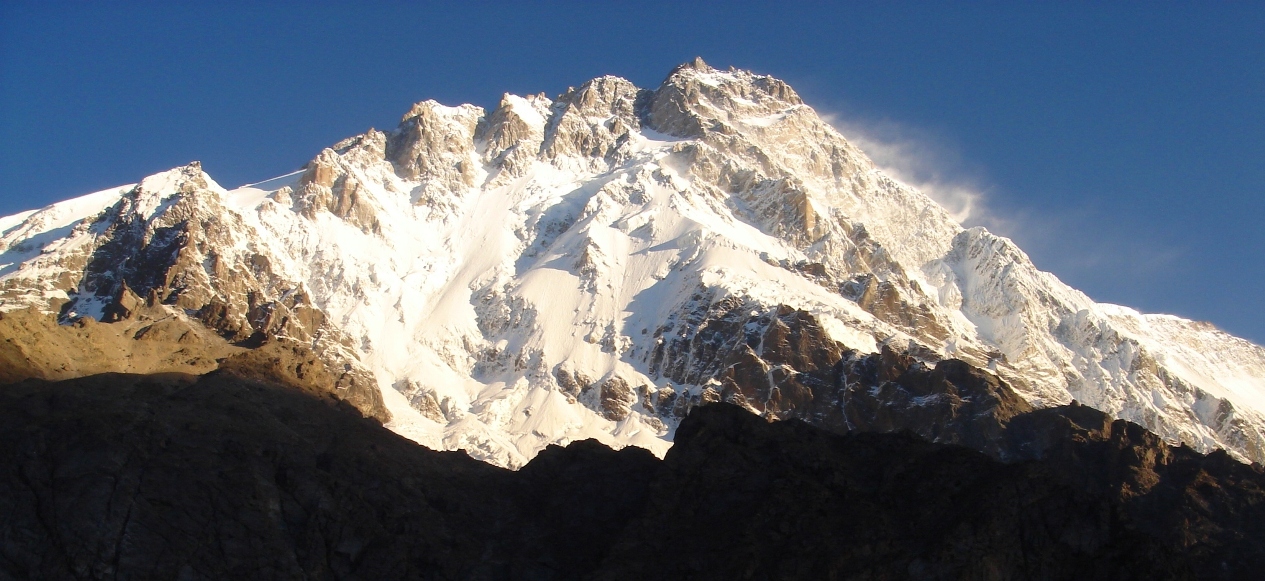
According to Revol, she and Tomek Mackiewicz set out for the summit late last week as expected, The duo were attempt to become just the second team to climb Nanga Parbat during the winter, a project that Tomek had been focused on for more than seven years. The two climbers were successful in that venture, reaching the top of the 8125-meter (26,526 ft) peak late in the day. But, they had pushed their luck too far and arrived around 6:00 PM local time, which meant that they couldn't spend much time at all on the summit.
To make matters worse, as they turned to go back down Tomek revealed that he had lost his eye site. Revol says that he hadn't used a mask during the ascent because of the hazy conditions, and after hours of exposure he was suffering from snow blindness. The two carefully made their way back down the mountain with the Frenchwoman leading the way and her Polish climbing partner handing on to her shoulder.
From there, Mackiewicz's condition only continued to deteriorate. His breathing started to become irregular and both climbers were suffering from frostbite. With exhaustion setting in, they knew they wouldn't be able to reach their high camp, so they sought shelter at 7200 meter (23,622 ft) to try to wait out the night.
By dawn, Tomek was bleeding from the mouth and had mostly slipped into unconsciousness. It was then that Elisabeth called for help and was told that if she descended to 6000 meters (19,685 ft) rescuers could come get her and they could go up to retrieve Mackiewicz too. So, she moved the Polish climber into a crevasse for protection from the wind and started down the mountain.
But help didn't come that day, and both climbers were forced to spend another night outdoors. It was then that Revol began to hallucinate believing that someone had come to bring her hot tea. She says that she believed that in order to repay them she needed to give them her shoes, so she removed her boots. She wandered around barefoot for more than five hours, which induced severe frostbite, the damage from which is still being assessed.
Eventually she was able to descend into one of the team's campsite and as she arrived she saw two headlamps coming through the night. They belonged to Polish climbers Denis Urubko and Adam Bielecki who had flown by helicopter from Base Camp on K2, and put in their own superhuman effort to get up the mountain and locate Revol. They got her into a tent as soon as possible and began treating her for exposure.
The rescue team was also faced with a tough decision at that point. They had stabilized Elisabeth but she was still in danger, meanwhile Tomek was still further up the mountain and likely in critical condition if not already dead. If they went up to find him, there was a good chance they wouldn't locate him at all, plus poor weather was setting in. They made the tough choice to stay with the Frenchwoman to ensure that she survived and got down safely.
Currently, Elisabeth is in a hospital in France where she is recovering and the damage from the frostbite is being assessed. There could be amputations still coming, although doctors are hoping to save her fingers and toes. A decision is expected on that process within a day or two.
As you can imagine, she is extremely emotional and still suffering from exhaustion and exposure. The entire expedition has been a challenge and at the end she was forced to make what is likely the toughest decision of her life. Leaving her friend behind was incredibly difficult and she will no doubt carry the emotions of that for a long time to come.
You can read more about the story here.
Quiksilver CEO Missing Off the Coast of France

Agnes had taken his boat out yesterday to do some fishing and hasn't been seen or heard from since. The boat itself ran aground near the surfing resort town of Hossegor, which immediately prompted a search and rescue operation by the French coastguard, but so far no signs of the businessman have been found.
Members of his Boardriders' team say that Agnes often went fishing before coming into work each morning. The waters of the Atlantic Ocean that he was traveling through are known for their turbulent waves that routinely draw surfers to the area. Thick fog was prevalent yesterday morning as well, although it remains a mystery as to whether or not these conditions played a role in the CEO's disappearance.
In a statement released publicly the company said, "The Boardriders family and entire surfing world are devastated by this news. We are concentrating on working with the local authorities on the search and rescue effort and supporting Pierre's family."
Search operations were suspended last night due to darkness, but were scheduled to resume today. The coastguard is employing three ships and two helicopters as part of the rescue effort, but of course the more time passes, the chances of finding Agnes alive diminishes greatly.
Our thoughts are with Agnes' friends, family, and coworkers in this sad time.
Tomek Mackiewicz Perishes on Nanga Parbat Following Heroic Rescue Attempt
When last we checked in on the winter climbing expeditions, Tomek Mackiewicz and Elisabeth Revol were in Camp 3 on Nanga Parbat waiting out poor weather conditions. They had planned to move up to C4 later in the week and then make an attempt on the summit on Thursday or Friday. Unfortunately, things didn't go as planned and they found themselves in trouble when descending from the 8000-meter (26,246 ft) mark.
Eventually the duo were able to descent to 7400 meters (24,278 ft) where they huddled in the tent. It was at that point that Revol discovered that her climbing mate was suffering from severe frostbite and snow blindness. Eventually, Tomek would slip into unconsciousness as well, leaving the Frenchwoman to make what was probably the hardest decision of her life. With things looking very grim, she made a call to inform their support team to the situation and began descending the mountain on her own. She had no food or water and had been high on the mountain for several days.
When the Pakistani government received word of the situation they contacted the Polish team attempting the first winter ascent of K2 to see if they could help. The rescue operation was delayed due to poor weather, but on Friday Denis Urubko, Adam Bielecki, Piotr Tomala and Jarek Botor were picked up by helicopter in K2 Base Camp and flown to Nanga Parbat to launch a rescue operation.
Urubko and Bielecki were the tip of the spear in that operation, setting off at lighting quick speed to go up the mountain in an attempt to bring Tomek and Elisabeth down. They flew up the Kinshoffer Route covering an astounding 1250 meters (4101 ft) in seven and a half hours. That is an amazing pace considering how technical the route is and the fact that they were climbing at night.
Eventually, Denis and Adam were able to locate Elisabeth, but the weather began to deteriorate at a rapid rate and they were forced to turn back down. She was suffering from frostbite and hadn't had any water or food for more than two days. But, they were able to get her safely down from the mountain where she was taken by helicopter to Islamabad for medical attention. Unfortunately, the poor conditions prevented anyone from being able to climb up to Tomek's position, and the Polish climber is now believed to have died on the mountain.
One of the key aspects of this story is that the mountaineering community from around the world rallied together to raise the necessary funds to mount the rescue operation in the first place. Hiring a helicopter in Pakistan is not cheap or easy, and the Nanga Parbat expedition was a low-budget affair. But, when word of the situation reached the rest of the world, a fundraiser was launched to help with the process. That fundraiser is still going on, with the money now being directed to Tomek's wife and three children.
This is a sad story all around. Tomek has been obsessed with climbing Nanga Parbat for the better part of the past decade, spending seven winter seasons in his attempt to reach its summit. Finally he is at rest on the mountain that he had spent so much time trying to crack. Elisabeth reportedly has severe frostbite on three of her toes and is in a weakened state, but is otherwise in good condition. She will likely fly home in a few days time, although she will no doubt be haunted by the experience for years to come.
The Poles on K2 put up a heroic effort and will now return to Base Camp on that mountain as well. They'l resume their expedition there and will continue the pursuit of the first winter ascent of K2 in the days ahead.
Our condolences go out to Tomek's friends and family. It is a terrible loss and he will indeed be missed.
How Search and Rescue Teams Conduct High Altitude Rescues

National Geographic has published an article that includes a video of just how these operations are conducted, and as you can imagine it isn't easy. It takes training, dedication, the proper gear, and plenty of guts. In the thin air of the Himalaya, there is little room for error and yet it seems that these types of rescue operations are becoming more frequent, particularly as more people flock to Everest and other big peaks in the region.
In this story, Nat Geo introduces us to Chhirring Dhenduk Bhote, who was born in east Nepal not far from Kangchenjunga and Makalu. Bhote has become well known in his country's SAR community, conducting 21 of the 35 long-line rescue operations that have taken place in Nepal since 2008. During those types of missions the rescue helicopter is unable to land at the site and rescuers must instead rappel down to where they are needed. As the article points out, they aren't always fast enough and sometimes their rescue operation becomes a recovery one instead.
The article, and especially the video, a fairly eye-opening, giving us a glimpse of what takes place during a high altitude rescue. This is what happens when a climber finds him or herself in trouble on one of these big mountains, and needs to be retrieved and taken safely back down. It is a dangerous job to say the least, but thankfully someone is there to do it.
Check out the entire story here.
Video: Skier Falls into a Crevasse, Records it All on GoPro
Ever wonder what its like to fall into a crevasse? If so, this video will help quell that curiosity. It features skier Jamie Mullner, who fell into a big crevasse while skiing this past December. Fortunately for him he had his GoPro recording and everything turned out okay, but it is a bit of a scary situation, especially as his friends work to find him and get him out. Definitely a place that most of us want to avoid. Check it out below.
Video: Kayaker Rescued Before Going Over 60-Foot Waterfall
This video is seven months old, but only came to my attention yesterday thanks to our friends over at Climbing.com. It shows the dramatic rescue of a kayaker who went over a 20-foot (6 meter) waterfall, only to then realize that there was a 60-foot (18 meter) drop on the other side. The action is mostly caught on GoPro cameras as the two kayakers involved struggle to avoid going over the falls. Pretty scary stuff to say the least.
Kayaker saved just before swimming over a 60 foot waterfall!! from David Fusilli on Vimeo.