Showing posts with label Kilimanjaro. Show all posts

Trail Runner Sets Women's Speed Record on Kilimanjaro

Danish trail runner Kristina Schou Madsen has set a new women's speed record on Mt. Kilimanjaro, the highest peak in Africa. According to Gear Junkie, she was able to complete the 19,341-foot (5895 meter) ascent in a mere 6 hours, 52 minutes, and 54 seconds. For those keeping track at home, that's even faster than the 7 hours and 14 minutes that it took Kilian Jornet to do the same run back in 2010, but still well off the pace of the men's record, which is held by Karl Egloff and stands at 4 hours and 56 minutes.

Madsen set the record back on February 23, launching her run from the Meek Gate located at 5347 feet (1630 meters). She then managed to beat previous female record holder Fernanda Maciel by about 15 minutes, with her times verified by SPOT, Garmin GPS and the International Skyrunning Federation.

In addition to setting a new FKT (fast known time), Madsen used the speed run to raise funds for the Zara Tanzania Charity, in organization that conducts a number of different projects amongst the Maasai people. Kristina brought in $1000 for the charity, which will use the money to help build a classroom, dining hall, toilets, and a kitchen in a village school near Ngorogoro.

In an interview with Gear Junkie, Kristina talks about why she chose to take on Kilimanjaro, the gear she used for the ascent, and how she trains in her home country where the highest point is just 613 feet (187 meters) above sea level. She also tells GJ what's next on her schedule, with a couple of upcoming ultra competitions to keep her busy.

Congratulations to Kristina on an impressive performance. It never ceases to amaze me how these endurance athletes continue to raise the bar in terms of speed records. To put this in perspective, the rest of would find its challenge to complete a Kili climb in six days, let alone six hours. Well done!

Tusker Scout Team to Go in Search of a 7th Climbing Route on Kilimanjaro

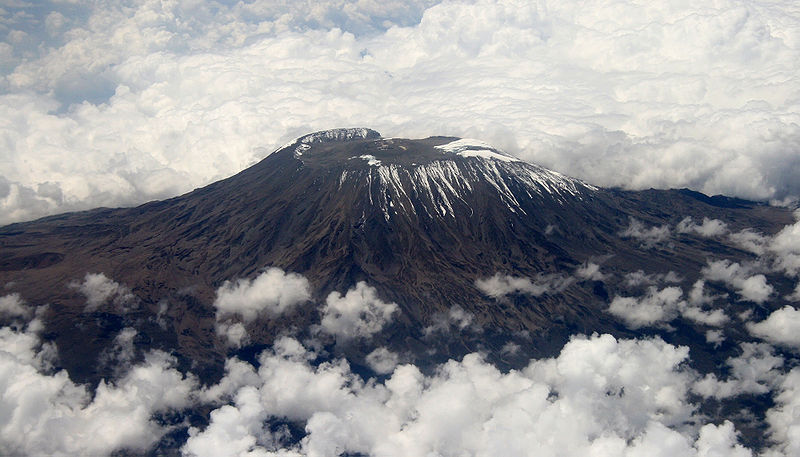
At 19,341 feet (5885 meters) in height, Mt. Kilimanjaro is the tallest peak in Africa, and the highest free-standing mountain in the world. Trekking to the summit of Kili has long been a major bucket list item amongst adventure travelers, and remains a challenging, but very rewarding experience. It is such a popular climb in fact that there are more than 200 companies that offer guided treks on the mountain, taking thousands of travelers up one of the six established climbing routes each and every year. But now one of top guides on Kilimanjaro believes he may have discovered a seventh route, and will soon head to Tanzania to see if it is a viable option.

According to this blog post on the Tusker Trail Adventures website, company owner Eddie Frank is planning to take a scout team to Kilimanjaro in January to search for this elusive seventh route up the mountain. The other routes – Machame, Marangu, Lemosho, Rongai, Umbwe, and the Northern Circuit – can get quite crowded during the busy time of the year, removing much of the solitude and remoteness that many of us enjoy about adventure travel. But a seventh route would likely add that back into the experience, not to mention a sense of wandering into the unknown. 

In the blog post, Eddie says We’ve been climbing Kilimanjaro for 41 years and we want to offer something new, a route no else has done.” For those intrigued to learn more, he's quick to add, "We will scout it in January so stay tuned."

For now, the details of this potential new route are shrouded in mystery and we'll probably have to wait until after January, and possibly beyond, to learn more about it. But for those of us who have been to Kilimanjaro, and know its current routes, the prospects of a seventh option are exciting. Especially one that could take trekkers far from the bustling crowds. As the Tusker article points out, the Machame route is the most popular, drawing more than 16,000 hikers each year. This new option – wherever it is – would be completely free from other trekkers, as least for awhile. 

I had the privilege to climb Kili with Eddie and the Tusker team back in 2015 and for my money the company is the best operator on the mountain. If anyone can find a new route, and take adventure travelers up it, is is probably the Tusker crew. Best of all, if this new route is indeed viable, some lucky trekkers will get the chance to be amongst the first to go up it. That alone is pretty exciting. 

Self Described "Crazy Grandma" Attempting Seven Summits

Proving that age is just a number and adventure can keep us all young, a self described "crazy grandma" is attempting to climb the Seven Summits at the age of 58. Lisa Walker has already knocked Kilimanjaro off of her list and will head to Aconcagua next month for her second mountain, as she pursues her quest to climb the higher peak on each of the seven continents.

Ripcord Rescue Travel Insurance has a profile of Walker on its website in which she shares some of the challenges she has faced climbing and traveling in different parts of the world, including an intense trek to the top of the 20,100-foot (6126 meter) Stok Kangri in the Indian Himalaya. Only half of her team managed to reach the summit on that tough expedition.

Walker isn't just a climber, but an endurance athlete too. She competes in long distance running races and triathlons, including half-Ironman events, which keeps her in better shape than most people her age. That has also inspired her to want to climb the Seven Summits. As part of that plan, she trekked to Everest Base Camp last spring to get a glimpse of the mountain that will eventually be her ultimate goal. While there, a travel companion got seriously ill, contracting altitude sickness and had to be taken to lower altitude on a horse before being evacuated to Kathmandu for treatment. Unfortunately, that person didn't have travel insurance, and was nearly bankrupted by the experience.

The story the Ripcord shares is a cautionary one. On the one hand, it provides some inspiration in the form of Lisa's attempt to climb the Seven Summits. But on the other, it is a sharp reminder of the things that can – and do – go wrong when traveling to remote corners of the globe. In those cases, I'm a big advocate of having the proper travel insurance, and Ripcord is the best that I've come across. They'll pretty much insure you for any kind of trip, including mountaineering expeditions without a limit on altitude. They also cover adventure racers, hunters, and other extreme athletes heading to pretty much anywhere on the planet. I've used Ripcord a couple of times and have even seen them in action evacuating two of my teammates off Kilimanjaro, and can attest to how efficient and professional the staff is.

As for Lisa Walker, hopefully she'll never need to use Ripcord on her adventure to Aconcagua and beyond. There is no word yet on which peak will come after that, but she's just getting started on this challenging endeavor. Hopefully we'll get future updates on her progress.

Mountain Biking to the Summit of Kilimanjaro

In February of this year, mountain bikers Rebecca Rusch and Patrick Sweeney set off on an epic ride to the summit of Mt. Kilimanjaro in Tanzania. They spent six days riding up – and down – the mountain, which is the tallest in Africa at 19,341 feet (5895 meters) in height. They rode that challenging route to raise funds for World Cycling Relief, a nonprofit that seeks to provide bicycles for people living in developing countries. The Kilimanjaro ride managed to raise nearly $20,000 for the cause, which allowed the organization to purchase 131 new bikes.

Now, several months after cycling to the roof of Africa, Rusch was interviewed about the experience by the team at Gear Junkie. In the article she talks about how they got organized for the expedition, why they chose Kilimanjaro, and what it was like on the trail. Rebecca, who is an experienced endurance and adventure sport athlete, called it the hardest ride she has ever done, which should give you an indication of how challenging this undertaking was for her and Patrick. She also shares some insight into what the trail was like, and the gear that she used along the way too.

For an even better look at this amazing mountain bike ride, check out the video below. It is a 7-minute short documentary on the endeavor that will provide even more insights into the ride. Having climbed this mountain myself, I can tell you that it wouldn't be easy to go up or down it on a bike.


Video: An Awesome Kilimanjaro Montage Video

My friends at Tusker Trail – who I climbed Kilimanjaro with back in February – shared this great video on their social media outlets. It is a montage of clips and photos of a climb up the tallest peak in Africa, with some fantastic shots from about every stage of the journey. If you've ever wanted to give Kili a go, this is four-minute look at what to expect. And if you've been there before, it'll bring back some powerful memories.

Gear Closet: Rocky S2V Substratum Direct Attach Hiking Boots

Recently I've had the distinct pleasure of putting some of the fantastic gear from Rocky S2V through it's paces. I carried both the Provision Jacket and Provision Pants with me to Kilimanjaro, and if you've read my reviews of those two products, you already know that they proved invaluable in keeping me warm and dry on Summit Day. I've also been testing Rocky's Substratum Direct Attach hiking boot as well, and have once again come away incredibly impressed with the level of design, comfort, and attention to detail that has been put into this product. This is a boot that will see you through many adventures – in incredibly poor conditions – and continue to keep you moving all the while.

I will say that while I was very excited to receive the Substratum Direct boots as part of my pre-Kilimanjaro care package from the good folks at Rocky S2V, they did not accompany on my journey to Africa. As I wore them prior to departure, I realized two things. First, they needed to be properly broken in before I could scale a mountain in them, and secondly they are incredibly warm, which would have been great on the summit push, but not so useful on the lower portions of Kili where you're hiking through muggy rainforests. For those reasons, I chose to leave them at home and carry a pair of boots that were more suitable for all of the climate zones on Kilimanjaro instead.

That said, it should be noted that these boots are actually fairly easy to break-in, I simply didn't have the time to do so before leaving for my climb. But upon return, I have been wearing them regularly, and it has taken very little time at all to get them completely broken in. They were already very comfortable straight out of the box, but the flexibility wasn't quite where I wanted it at first. But it didn't take long at all for the boots to loosen up, and feel more natural on my feet.


As with all of their gear, Rocky S2V has built the Substratum to perform incredibly well in the poorest conditions imaginable. They are completely waterproof, with the fabrics that make up the boot treated with Rocky's proprietary Hydro IQ which repels moisture incredibly well, while still allowing your feet to breathe nicely. They also use both PrimaLoft and Aerogels as insulation, which explains why they are so incredibly warm, even in very cold conditions.

Of course, it doesn't matter how warm and dry a boot keeps your feet if it doesn't provide good traction on the trail. The Substratum deliver in that department too with Vibram sole that sticks to just about any surface – wet or dry – and provides plenty of protection for the foot too. I've used these boots on dry and muddy trails, as well as on snow and ice, and have found that they provided excellent traction on all of those surfaces. Something that provides a nice piece of mind when heading out on more challenging excursions.

The Substratum gets high marks for durability as well. As with Rocky S2V's other products, the level of construction is incredibly impressive, and it feels like these boots were built to last a very long time. My pair looks practically brand new despite having a few miles on them. The designers of these boots picked high quality materials for every element of the Substratum, and while I've only had them a short time, it seems this is the kind of hiking boot that will last you for years.

Those high quality materials will definitely extend the life of the boots, but they also have added a bit of extra weight to the shoes as well. I don't have very many nits to pick with the Substratum, but they are on the heavier side when compared to the competition. If you're a backpacker or climber who counts every ounce, you may find that a lighter boot is more to your liking. But when you consider the level of durably, protection, and performance that the Substratum bring to the table, you may find that there is very little else that can actually compete with them in all categories.

As mentioned several times, these boots are quite warm. So much so that I'm not sure they'll be something that I could wear on the trail during the summer months. They are definitely well suited to cooler weather hikes, and will perform exceptionally well in the winter, but during the summer most people will probably find them to be uncomfortably warm. Keep that in mind when you consider what you're looking for out of a boot, and when and where you'll be using them.

Rocky S2V designs their gear to be used in extreme conditions, and as such they often build in features that are meant to help us survive in the backcountry, even when disaster strikes. With the Provision Jacket for example they include a handy little survival kit complete with a signal mirror, compass, and so on. Both the Jacket and the Provision Pants also incorporate the Recco rescue technology as well, making it easier for SAR teams to locate the wearer should they go missing. With the Substratum boot the mad scientists in the Rocky labs have incorporated two fire sparkers and two wet cubes in the insole, making it very easy to start a fire should you find yourself in a situation where that is necessary. This is a nice touch that helps set Rocky's gear apart from the competition, and while you may never need to use these survival items, it is nice to have them just in case.

The Substratum carry an MSRP of $299.99, which puts them into a more expensive price range than most people will probably want to spend on a boot. But then again, these boots aren't built for most people. They are made for the active outdoor adventure who demands high performance out of their equipment, and expects it to meet those demands in the harshest environments imaginable. This is a boot that is made for backpackers and mountaineers heading into remote areas where conditions can be a bit unpredictable, and they will serve those men and women very well. If you're in need of that kind of performance, than this is certainly the boot for you.

On a side note, Rocky S2V makes a lot of boots that are used by U.S. military personal stationed across the globe. Much of the design and technology that goes into those boots have also made their way into the Substratum as well. In fact, both of the Green Berets that accompanied me on my Kilimanjaro climb owned boots from Rocky, and had nothing but praise for their high quality and high level of performance. One of those soldiers even brought a pair along for the trip, and he wore them throughout. The Substratum take many of their cues from those same boots, and the Rocky legacy and quality is evident across their entire line of gear. I can't tell you how impressed I am with all of their products, and I will be recommending them highly for a long time to come.

Kilimanjaro Climb for Valor 2015: A Rescue On the Mountain

This article is the fourth in a new series about my recent Kilimanjaro climb. In the days ahead, I'll be sharing several articles about the experience to help readers prepare for a potential trek of their own in the future. If you'd like, you can read Part 1Part 2, and Part 3 respectively.

Because Kilimanjaro is a non-technical climb there is a common misconception amongst those who haven't visited the mountain that it is actually a very easy trek to the top. In fact, I've actually spoken with some people who have been downright dismissive of a Kili climb, saying that it offers little in the way of a challenge, and isn't particularly difficult. This shortsightedness can lead to a few surprises however, catching some climbers off guard. While it is true that Kilimanjaro doesn't require any special mountaineering skills to summit, it still presents some serious challenges due to its altitude. At 5895 meters (19,341 ft) in height Kilimanjaro is not to be taken lightly, something that my entire climbing team was reminded of in dramatic fashion on our recent visit to the mountain. 

The Climb for Valor team that went to Kilimanjaro last month with Tusker Trail was made up of a group of individuals who were about as healthy and physically fit as any group that you would find on the mountain. In fact, there were two Green Berets that were part of the team, as well as several widows of fallen U.S. special forces soldiers. The remainder of the team were also incredibly fit, and about as well prepared for a trek at high altitude as any group of travelers that I have ever been around. That high level of physical fitness would serve each of well in the days we would spend on the mountain, and would ultimately lead to a high level of success come Summit Day as well. 

But sadly not everyone on the team was able to join us at the summit. In fact, a few days into our adventure we all faced a sobering reality that was an indicator of just how serious a Kilimanjaro climb can truly be. On our second night spent above 3962 meters (13,000 ft) two members of the team became quite ill, and ultimately had to be evacuated by helicopter from the mountain. While we all knew that altitude sickness was a serious concern, none of us expected to face it in such a dramatic fashion.

That evening, one of the members of the team – an incredibly fit Green Beret no less – became ill and started to have a difficult time breathing. A quick check of his oxygen levels revealed that he was at just 60% saturation, and his lungs were beginning to fill up with fluids. Fortunately the Tusker guides are well trained to handle situations like this one and they were quickly able to diagnose the problem, and oversee the patient's medical care on the mountain. It didn't hurt that Tusker is one of the few guide service on Kilimanjaro that carries both bottled oxygen and a portable altitude chamber (PAC), with the Tusker team well versed in how to handle both the oxygen and the PAC. The ailing climber was quickly placed inside the PAC to help alleviate his symptoms, but because he had developed High Altitude Pulmonary Edema (HAPE), the only way for his condition to improve compleltey was to get down off the mountain. Something that wouldn't be easy in his weakened state. 

As part of the Climb for Valor package every Tusker climber was issued adventure travel insurance coverage from a company called Ripcord Travel Protection. Ripcord provides all of the standard coverages you would expect, including trip cancellation and interruption, as well as lost baggage coverage, and so on. But unlike most other travel insurance policies, it also covers emergency evacuations for medical and security purposes as well. It was fortunate that we all had this protection from Ripcord, as it allowed us to call in a helicopter to evacuate our strike companion from the mountain, allowing him to get the medical attention he needed in a much more expedited fashion. 

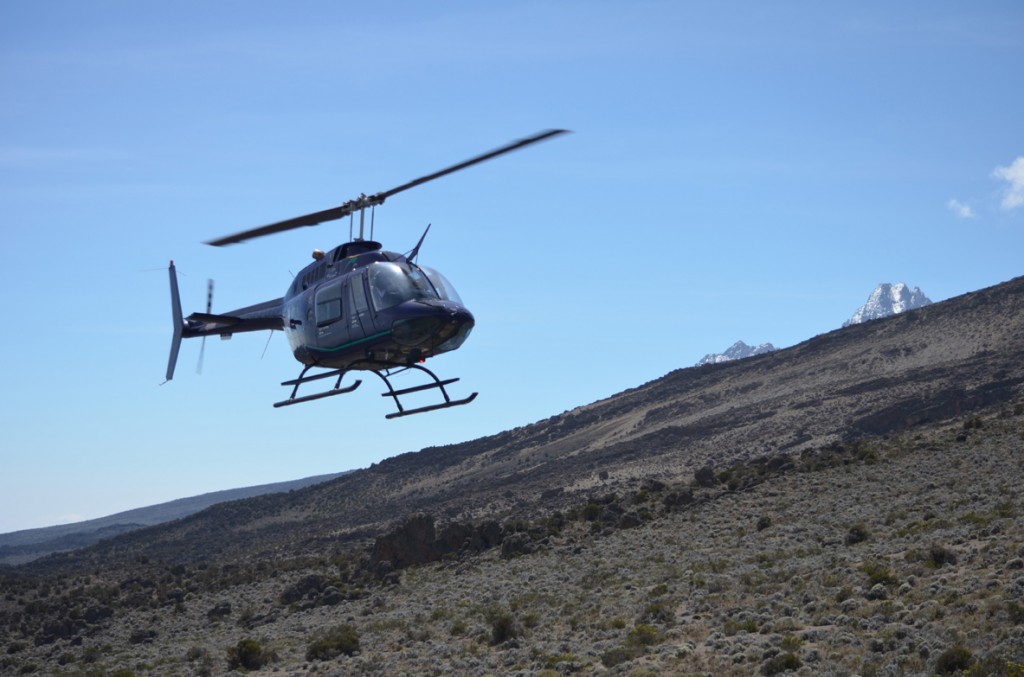
The climber who was stricken with HAPE was placed inside the portable altitude chamber to help make him feel more comfortable until morning. By daybreak he was starting to feel a bit better, but it was still vitally important that he get off the mountain. By mid-morning a helicopter was sent to pick him up, and within a matter of minutes he was on his way to a local hospital where he was treated for his symptoms, and released that same day. Dropping in altitude had allowed him to recover quickly, but it was certainly a humbling reminder of just how serious climbing at altitude can be. 

The helicopter also evacuated a second member of the team who had suffered a severe allergic reaction over night as well. She woke up that morning with severe swelling in her lips and face, and while it was unclear what caused the reaction, we knew it was best that she be evacuated as well. In an environment like Kilimanjaro even a seemingly small threat to your health can turn into a major issue, and we couldn't afford to wait to see what exactly the problem was. 

With our two companions gone from the group, the dynamic changed significantly. Not only did we miss those two personalities, we were all reminded about then serious nature of the climb. It was not a foregone conclusion that we would all reach the top, and altitude sickness is can be a real problem, even on a non-technical mountain like Kili. The rest of the team was eventually able to a make it to the top without any more serious threats to our health, but I think we were all a bit more cautious following the evacuation, as we all knew that it could have been anyone of us on that helicopter. 

Thankfully, the two people evacuated were back to full health in a just a day or two, and both welcomed the rest of the team after we descended from the mountain. With the whole team reunited once again, we celebrated a successful climb with dinner and cold beers back in Moshi, as we all began to reflect on what the experience had meant to each of us. 

On a personal note, I can't tell you how impressed I was with how the Tusker staff handled the evacuation process. The guides are well trained to handle emergency situations, and they saw to the health of our companions while making the necessary arrangements to get them safely off the mountain. 

Similarly, the folks who represented Ripcord – two of whom were on the climb with us – were extremely professional and on top of the situation as well. They facilitated the evacuation as efficiently as possible, and made alternate arrangements when the first airlift fell through. If you are a climber or adventure traveler who frequently finds yourself in remote places, they are certainly the insurance policy that you want covering your expeditions. Their policies go above an beyond what is typical for the industry, and it clear that they take their clients' health and security very seriously. 

As for anyone who intends to climb Kilimanjaro in the near future, hopefully this story will serve as a reminder. Don't take the mountain lightly. Sure, it is a high altitude trek without many technical challenges, but the altitude alone is enough to cause concerns, and it is a mountain that can take you by surprise if you go unprepared. 

Kilimanjaro Climb for Valor 2015: The Team

This article is the second in a new series about my recent Kilimanjaro climb. In the days ahead, I'll be sharing several articles about the experience to help readers prepare for a potential trek of their own in the future. Read Part 1 here

No matter what kind of trip you go on, the people that you travel with will have a huge influence on your overall experience. If you don't happen to enjoy the personalities of the people you are traveling with, you'll end up having a terrible time. Conversely if you are accompanied by a truly special group, even the most mundane of excursions can turn into a truly memorably one. Kilimanjaro is far from mundane however, and fortunately for me I was able to share it with an incredible group of people, making the climb all that more enjoyable. 

As mentioned previously, I traveled to Africa to climb Kilimanjaro as part of Tusker Trail's inaugural Climb for Valor. This very special trek was put together to raise funds for the Duskin & Stephen's Foundation, a nonprofit dedicated to creating scholarships for the children of fallen U.S. special forces soldiers. Through the Climb for Valor, Tusker was able to raise more than $100,000 to contribute to this fund, kicking off this first effort in grand style. 

With such a highly focused theme to the climb it should come as no surprise that Tusker was able to attract a number of participants from within the U.S. special forces family. Not only did we have two active-duty Green Berets join us on the trip, but the widows of three fallen soldiers as well. For security purposes I won't mention any specific names, but these men and women came to Kili with a purpose. They not only wanted to summit for a good cause, they also had their own very personal reasons for wanting to climb the mountain as well. 

Spending nine days trekking up Kilimanjaro with someone gives you the opportunity to get to know one another very well. After all, you're gathering in a cramped mess tent for your meals, you're sharing primitive toilet facilities, and there is ample time to chat when you're on the trail for hours on end. It is safe to say that our team bonded very quickly, and by the second day of the trip we were already sharing inside jokes, memorable stories, and very personal information. 

Prior to the trip I already had a deep appreciation for the job that the U.S. special forces teams do, but in sharing time with these men and women that appreciation only grew stronger. Both of the soldiers on the trip had suffered wounds in combat in Afghanistan, and listening to their tales brought a personal edge to the story that just can't be acquired simply by watching the nightly news. Their experiences in the field range from comical to harrowing, with just about every kind emotion in-between. 

As for the widows that joined us on the trek it is impossible to overstate just how strong and courageous they are too. They lost their husbands in a war that has lingered on far too long, and while that is certainly the ultimate sacrifice, they continue to approach each day with renewed optimism, an indelible spirit, and sense of purpose that is incredibly admirable. Were our fortunes reversed, I'm not sure I could be quite so forgiving and generous. 

There were other members of the team of course too. Several us came along in a different capacity to help chronicle and support the Climb for Valor. Each played a key role in creating a fun, friendly, and accepting atmosphere that made the entire trek feel more communal. For instance, Dr. Avi regaled us with endless stories of some of the things he's seen in, and out, of the emergency room over the years, while Kiwi Edan kept us in stitches with his New Zealand accent. Together we formed a close knit group that by the time we reached the summit we had transcended being just traveling companions and has become very good friends. 

A Kilimanjaro climb will test your physical limits, and it helps to have a good supporting cast around you when you start to go up to altitude. I couldn't have asked for a better team to have around me on this journey, and I'm very proud to have summited with such an amazing, inspiring group of folks. I'm sure at least some of them will become lifelong friends, and I look forward to connecting with them again down the line.

If you plan to climb Kili in the future, I hope you are blessed with such a wonderful team as well. It makes all of the difference. 

Kilimanjaro Climb for Valor 2015: The Route

This article is the first in a new series about my recent Kilimanjaro climb. In the days ahead, I'll be sharing several articles about the experience to help readers prepare for a potential trek of their own in the future. 

As many of you already know, there are a number of routes that trekkers can use to reach the summit of Kilimanjaro. Those routes include Marangu, Rongai, Lemosho, Shira, Umbwe and Machame. Each of them includes unique characteristics and features which makes them stand out from one another. For instance, the Marangu route is generally considered the easiest – relatively speaking – and features a series of huts for climbers to stay in along the way. As a result, it is often more crowded as well, which can certainly have an impact on the experience. On the other hand, the Machame route is widely regarded as the most scenic, although it is is also very challenging and steep. Each of the others have their own benefits and drawbacks, depending on the experience you most want to get out of the climb.

When selecting the route for the Climb for Valor, the team at Tusker Trail decided that they wanted to do something a little different. The idea was to give the climbers on our team a complete unique look at the mountain, along a route that is seldom hiked. We began by entering Kilimanjaro National Park at the Londorossi Gate and proceeding up the traditional Lemosho Route along the western flanks of the mountain. At that stage of the climb we were passing through rainforest, with the trail meandering up to our first campsite located at Mti Mkubwa at about 2795 meters (9170 ft).

The next day we continued upwards out of the forest and entered a new vegetation zone dominated by overgrown heather. At that point, we were still following the Lemosho Route up to Shira Plateau, which afforded us our first truly great look at the mountain. From that vantage point it appeared impossibly tall and still very far away, but Kilimanjaro now loomed over us, giving us a clear idea of what we had come to do. We camped that night at Shira Camp, which is located at 3505 meters (11,500 ft).

On Day three we began to divert from the Lemosho Route at last and ventured out onto the all-but abandoned Northern Circuit of the mountain. At this point, we left all other teams behind and had the trail completely to ourselves. While we weren't exactly overwhelmed with crowds along the trail, it was refreshing to have the place to ourselves. After a full day of hiking to the Moir Camp (4164 meters/13,660 ft), Kili seemed much closer. It became abundantly clear that the summit was indeed an obtainable objective, and soon we would start to head up in ernest.


But before our summit push would begin, we had two days of acclimatization ahead. We wandered along the Northern Circuit staying at relatively the same altitude to allow our bodies time to adjust to the thin air. On our first night we stopped at the Pofu Camp (4017 meters/13,180 ft) before proceeding on to Third Cave (3963 meters/13,000 ft). These extra days were certainly crucial for getting ready for to move up higher, and I think everyone on the team was happy to have the extra time.

I'd be remiss in my report if I didn't mention the scenery along the Northern Circuit. Not only did it allow us to keep an eye on Kilimanjaro at all times, it also provided fantastic views of the countryside far below. Since Kili is a stand alone mountain, there aren't other peaks to block your view. In fact, the land around Kilimanjaro is mostly flat, which means you can see for miles in all directions. Much of the time we were actually hiking above the cloud cover, which alone made for some breathtaking scenery, but when the clouds parted you truly got a sense of just how high up we were. It was awe inspiring to the say the least.

After spending the night at Third Cave, it was time to start heading up once again. On day 6 of the climb we gained more than 760 meters (2500 ft) in altitude has we moved up to Kibo Hut at 4730 meters (15,520 ft). This would be our launching pad for the summit push the following day, and the thin air was certainly evident. At that altitude, moving too quickly could leave you out of breath, and while we were all well acclimated, everyone was feeling the effects of the thinner air none the less.

Day 7 was Summit Day at last, and while we al knew it would be a difficult challenge, the entire climbing team was ready to proceed up. Unlike most of the other squads, we set out just before dawn proceeding up and up and up. At times it felt like we would never stop climbing, as the narrow trailed wandered back and fourth towards the crater rim above us. But around noon we finally popped over the edge and arrived at Gilman's Point. This is a major milestone for any Kili climb, as it means that you've reached the crater rim, and put the majority of the ascent behind you. But you're also still two hours away from the summit as well, so the work isn't quite done just yet.

Proceeding on from there, we hiked another hour to reach Stella Point, another important spot on Kilimanjaro. It is at that point that several routes to the summit converge as the final push to the top begins. From there, you can actually see the summit itself, even though it is still some distance off. The trek upwards transitioned onto snow at that point, which made it a bit tougher to walk, but not unbearably so.

The final approach to Uhuru Peak is a satisfying one. The final section of the climb allows you to see the famous sign on top of Kili from a long way off, although it slowly and steadily gets closer as you go. Before you know it, you're standing on the Roof of Africa, with amazing views spread out all around you. We topped out at a little after 2 in the afternoon, and had the summit to ourselves for the entire time. This gave us the opportunity to take plenty of photos and savor the moment, despite the fact that it was a cold and blustery day on top of Kili.

At long last we were ready to proceed down. But unlike most other teams, we were not descending very far. One of the other highlights of the Climb for Valor route was that we actually spent a night camping in the crater of the volcano. Crater Camp is located at 5700 meters (18,700 ft) on field of snow and ice. It was definitely a chilly spot to rest, but it was also a beautiful one that included some amazing views of the increasingly shrinking Kilimanjaro glaciers. There was just one other small team in the crater that night, although it truly did feel like we had the place all to ourselves.

The following day we awoke to temperatures of 15ºF/-9ºC in our tent. It had been a cold night, and while we were all warm in our sleeping bags, it was tough to climb out and face the weather. But, it was also time to start heading down, and I think it is safe to say that everyone on the team was ready to begin that process. Over the next day and a half we would descend along the Mweka Route, which is used by almost every team on the mountain. As we went down, the air became thicker, the temperature became warmer, and we all started to feel much stronger. But the descent is not one to be taken lightly. It can be very demanding on legs that are already strained from the climb up to the summit. If your legs weren't particularly sore from the previous days of trekking, chances are they will be by the time you reach the bottom.

All told, we spent nine days on the mountain, which seems like a perfect schedule. Not only did it give us a chance to truly enjoy the beautiful scenery, but it was also ample time to acclimatize to the altitude as well. By the time we reached Mweka Gate, we were all ready for a hot shower, a comfortable bed, and a few simple amenities that we had missed out on while on the mountain. But we were also filled with a great sense of pride and accomplishment at having reached the summit as well. Tired, dirty, and immensely satisfied, we returned to Moshi to start thinking about our return home.

More to come soon!

Video: Barefoot Kilimanjaro - To the Roof of Africa without Shoes

Back in 2012, a group of adventurous friends set out to climb Kilimanjaro, the tallest mountain in Africa, completely barefoot. Having been there myself, this was something that I would have thought impossible, but never the less, they managed to reach the summit, hiking the entire way without shoes. Now, more than two years after their expedition, the team has released a wonderful documentary about their climb. The entire 37+ minute film can be found below, and I think you're going to love it. It is a wonderfully crafted doc that will inspire you in numerous ways. So sit back, set the video to full-screen mode, get comfortable, and allow yourself to be transported to Africa, and Kilimanjaro, for a little while.

Video: Starry Night Over Kilimanjaro

What could be better than a timelapse of an incredibly starry night? How about a timelapse of an incredible starry night over one of my favorite places. In this case, Kilimanjaro – the tallest mountain in Africa. The mountain makes a dramatic backdrop as the celestial light show plays out over head. Quite beautiful. I hope you enjoy.

A Starry Night of Mt.Kilimanjaro from kwon, o chul on Vimeo.

Video: For The Love Of Mountains

Here's a clever little video that puts into perspective some of the most famous mountains on the planet. Using simple – yet effective – graphics, the short clip compares the heights of such peaks as Everest, K2, Kilimanjaro and several others. It also mixes in an interesting fact about each of the mountains as well. It is quite a nice intro to some of the places we all love so much.

For the Love of Mountains from Al Boardman on Vimeo.

Celebs Find Success On Kilimanjaro Climb

Last week I told you about a group of young celebrities that had traveled to Africa to attempt to climb Mt. Kilimanjaro for a cause. At the time, the team was just preparing to set out on their expedition which was being undertaken in an effort to raise awareness of the importance of clean drinking water in developing parts of the world. Today we received word that the expedition was a success, with all the members of the squad reaching the summit.

The expedition, which is called Summit on the Summit II, was led by Grammy Award nominated musician Kenna, who organized a similar climb back in 2010. This time out, Kenna was joined by actors Justin Chatwin (Shameless) and Beau Garrett, (Tron: Legacy) as well as singer Mark Foster (Foster The People),  amongst others. The group was led by experienced mountain guides Melissa Arnot and Dave Morton, each of whom has years of experience on mountaineering expeditions.

At 5895 meters (19,341 ft), Kilimanjaro is the tallest mountain in Africa and the highest free-standing peak in the world. Each year, it draws thousands of climbers who attempt to make their way to the summit along mostly non-technical routes. A Kili climb is, in a sense, a tough hike that is made all the more challenging due to the altitude. The celebrities spent seven days on their ascent, which was along the very scenic Marangu Route.

Kenna formed the Summit on the Summit organization as a direct response to witnessing the water crisis first hand in his homeland of Ethiopia. But rather than just contribute to a cause that was already spreading the word about the water crisis, the musician wanted to do more. So he formed SOTS and rallied some of his friends to the cause, creating a global buzz about the importance of clean drinking water. The first Kilimanjaro climb was big success, garnering all kinds of media attention. That has directly led to this second climb, which has been a good reminder that this issue continues to be an important one.

Congratulations to the climbers on a job well done.

Video: Wingsuit Flight Over Kilimanjaro

In keeping with our Kilimanjaro theme today, we have this video which features wingsuit pilot and BASE jumper Valery Rozov flying off the top of Africa's highest peak. As you can imagine, the views are spectacular, and the flight is an impressive one. Hard to believe I was just on this mountain a few days ago. Enjoy!

Gear List For Kilimanjaro

As many of you know, mountaineer Alan Arnette is in the midst of his Seven Summit Climbs for Alzheimer's during which he hopes to reach the top of the highest mountains on each of the seven continents in an effort to raise money and awareness of the Cure Alzheimer's Fund.  He has already completed four of the climbs (Vinson, Aconcagua, Everest, and Elbrus) and was denied a summit attempt on Denali due to persistent bad weather, and in a few days time he'll leave for Africa, where he'll attempt Kilimanjaro.

Over the weekend, Alan posted an update to his blog sharing the gear that he'll be taking with him on this climb. As he notes, Kili is a different kind of climb, as it is actually a "hike-up" mountain that includes a lot of altitude, but not much technical challenge. The result is that it isn't as gear intensive as some of the other big peaks, although Summit Day does require warmer gear than most of the rest of the trek. Alan also included a video showing off his specific gear and sharing the items that he's taking with him. You'll find that video below.

I know that Kilimanjaro is is a popular destination for many adventure travelers, and I regularly get e-mails regarding the trek. I thought that Alan's blog post and video would come in handy for anyone planning their own trip to Kili as it will help you to know what exactly you should be taking with you when you head to Tanzania. There is no need for a bulky down suit on this expedition, although you do pass through five climate zones from the base of the mountain to the summit, so you still need to bring plenty of gear along.

After Kili, Alan will next head to Indonesia to climb Carstensz Pyramid and then on to Australia for Mt. Kosciuszko, the tallest point on that continent.


Low2High: Africa Expedition Underway


A unique expedition got underway last week in Africa when Brit Kyle Henning set off on his bike from the shores of Lake Assal near Djibouti, Ethiopia. That region has the distinction of being the lowest spot on the continent, falling 155 meters (508 feet) below sea level. From there, Kyle will ride his bike to Tanzania, covering about 3000km (1864 miles), where he'll then proceed to climb to the top of Mt. Kilimanjaro, the highest point in Africa at 5892 meters (19,340 feet).

Henning has dubbed his journey fittingly enough Low2High: Africa, and he has undertaken this excursion to raise funds for the New Day Children's Center, located in Bahir Dar, Ethiopia. Kyle hopes to raise £2,500 (roughly $4000) for the center to help meet the needs of some of the children there. He has just finished a two year stint in the Peace Corps, where he helped to improve the HIV/AIDS Services Network in the city, but he hasn't finished helping out just yet.

Already ten days into his ride, Kyle has posted a rather large update to his blog to help keep everyone informed of how the journey is going so far. He has also spoken with ExWeb, who have posted a nice interview with him as well. Henning tells ExWeb that he is "having the time of my life" on this expedition and that he is glad that he has taken on the challenge.

This seems like another fantastic adventure. As I mentioned a few days back, traveling through Africa on a bike sounds like a great way to explore the continent. Getting to visit it's lowest and highest points along the way, is an amazing bonus. Hopefully Kyle is successful in his venture, both for himself and the children he is trying to help back in Bahir Dar.

To donate to Kyle's cause, go to his fund raising page here. As of this writing, he has raised about £888.13, so he is well on his way towards his goal, with a bit to go yet.

Martina Navratilova Abandons Kili Climb Due To Altitude Sickness

Last week I wrote a story about tennis legend Martina Navratilova, who was attempting to climb Kilimanjaro for the Laureus Sports For Good Foundation. At the time, she was just about to embark on her climb, calling it "just a basic hike." Turns out, she got more than she bargained for, as she had to be assisted from the mountain and spent some time in a Nairobi hospital recovering.

According to this story, Navratilova reached as high as 4511 meters (14,800 ft.) on the 5894 meter (19,340 ft.) mountain before she turned back. Apparently, fluid had begun to collect in her lungs, and she was showing all the classic signs of altitude sickness. On Thursday of last week she abandoned her climb and was assisted down the mountain by porters, who took her to a nearby hospital before she was transferred to another in Nairobi where she spent three days recovering.

Navratilova is considered one of the greatest female athletes of all time and lives at altitude in Aspen, Colorado. But she had never been higher than 12,000 feet before this climb, and we all know that altitude can doe weird things to the body. It seems that that is the case here. No matter how fit and well trained you are, altitude is the great equalizer and can bring anyone down.

Fortunately, Navratilova is recovering just fine, and is on her way home. She's disappointed that she didn't complete the climb, as it was to raise funds for Laureus, but she now has a healthy respect for mountaineering, and Kilimanjaro in general.

Just a basic trek indeed!

New Speed Record Set On Kilimnajaro

Spanish mountaineer and endurance runner Kilian Jornet has set a new speed record for climbing and descending Mt. Kilimanjaro in Tanzania, Africa, reaching the summit of the 19,340 foot peak, and returning to the base, faster than the previous record, which was held by Tanzanian Simon Mtuy at 8 hours and 27 mintues.

According to this article, which is written in French, and had to be translated via Google, Kilian reached the summit of the Kili in just 5 hours, 23 minutes, and 50 seconds compared to Simon's 6 hours to that point. He then turned and raced back down the mountain, crossing through all five climate zones along the way, and finished with an overall time of approximately 7 hours and 14 minutes! An astounding time for sure.

Upon reaching the base of the mountain, Kilian was greeted and embraced by the former record holder.

Having been to Kilimanjaro and seen the conditions there, this is an astounding feat to me. The tallest mountain in Africa is no easy trek, and to complete it at this kind of speed is remarkable. To put this in perspective, many climbers on Kili make the journey to the summit and back in roughly six days, so Kilian was actually completing a days worth of climbing each hour. Amazing!

Thanks to Louis-Philipe Loncke for sending this my way.

Summit on the Summit Documentary Airs Sunday!

Back in January, a team of celebrity climbers made the trek up to the summit of Mt. Kilimanjaro in Africa. The team, which included musician Kenna, rapper Lupe Fiasco, and actors Emile Hirsch and Jessica Biel. Dubbed the Summit on the Summit, the climb was made to create awareness of the growing global clean drinking water crisis.

On Sunday, a 90 minute documentary of the climb will air on MTV (Yes, that network still exists!). The program begins at 9PM Eastern Time/8 Central. Below is the trailer for the film, check it out to get a glimpse at what it's all about, then set your DVR for Sunday night to see the entire movie. Should be worth watching.

Seven Ribbons Foundation Sets Sights on Seven Summits!


I frequently mention the Seven Summits around here. It's one of the top achievements in the adventure world, and a lofty goal for anyone. The concept is fairly simple. Reach the summit of the highest mountain on each of the seven continents, although there is some debate over Australia vs. Oceania, which usually leads to climbers going up eight mountains rather than seven.

I recently came across an organization called the Seven Ribbons Foundation, which is an International charity that has made it their goal to to place a pink ribbon, representing the fight against breast cancer, on each of the Seven Summits. The goals of the Seven Ribbons Foundation are simple. Inspire those with breast cancer to beat the disease, work to prevent the disease from spreading by promoting early detection and generate awareness of breast cancer through the Seven Summits climbs

Checking out the organization's blog, it appears that they have only recently begun their campaign. In fact, I don't believe they've even climbed their first peak yet, which means we can follow along as they go through the process of preparing and tackling each of the mountains. They are currently hoping to begin this June, when they travel to Africa to climb Kilimanjaro.

Another great series of climbs for another great cause. Good luck to the entire team as they get started on this amazing adventure.