


Here's a fascinating short video for the gear nerds amongst us. It takes us to the MSR manufacturing center in Seattle, Washington where we learn how the company puts together its iconic line of snowshoes – most notably the excellent Lightning Ascent snowshoe. For anyone who has ever wondered how your favorite gear is built, this video is for you. You might just be surprised by how much thought and care goes into assembling these products. Check it out below.
Showing posts with label Snowshoeing. Show all posts
Showing posts with label Snowshoeing. Show all posts
Gear Closet: Under Armour Fat Tire Govie SE Winter Boots

Built like an indestructible tank, these boots are jam-packed with a lot of nice features, starting with the impressive Boa laces. For those who haven't used the Boa system before, it incorporates a set of thin, stainless steel laces - wrapped in a protective casing – with a set of lace guides on the boot. The steel cables run through a special dial that allows the wearer to set the exact fit they need. You simply pull the boots onto your feet, press down on the dial to click it into place, and twist the knob to tighten the laces to your desired level. Once the fit is adjusted to your specific needs you are free to go about your business without worrying that the laces might come undone or the shoe will loosen up as you wear it. When you're ready to take them off, just pop up on the dial for an instant release.
Boa got its start on snowboard boots and they have transitioned very well to other winter footwear as well. On the Fat Tire Govie SE, the system feels right at home. In fact, I was able to tighten the boot down to meet my personal fit needs better than any other winter snow boot that I've ever worn. While turning the Boa dial, the entire shoe closes up around your foot, providing a snug, but comfortable fit that once set remains firmly in place.
Speaking of fit, when I first pulled the Govie SE on, I thought that they were a bit too tight for my needs. Out of the box they felt a little stiff and I was wondering if I should have gone up a half-size just to provide a bit of extra room. Granted, I was wearing thicker winter socks at the time, but even still it felt a bit confining. But after wearing them for a bit, the shoes began to loosen up some and I soon found they were comfortable and easy to wear for prolonged periods of time. The Boa laces allowed me to continue to get the fit I needed, even as the boot wore in some.
When designing the Fat Tire Govie SE, Under Armour incorporated an outsole designed by Michelin, hence the "Fat Tire" moniker. This sole provides good traction on snow and ice, making it easy to walk on slick surfaces. It also pairs nicely with a set of snowshoes for those backcountry excursions. In recent years, Michelin has begun to give Vibram a run for its money in the outsole department, and its "Wild Gripper" option is put to good use on these boots.
The Govie SE also features a Gore-Tex liner that keeps moisture at bay and an OrthoLite insole for extra padding on the inside. The result is a winter boot that should keep your feet warm and dry in all but the most extreme conditions, including deep snow, puddles, streams, and mud.
What I really liked about the Govie SE is that it maintains Under Armour's sense of athleticism that is found across the company's entire product line. The boot is relatively lightweight, easy to move in, and functions well in a variety of winter activities. You can wear this boot on day hikes for example or take it on a snowshoeing adventure into the backcountry. It is comfortable enough to wear around town or at your winter campsite without compromising comfort in any way.
Be warned however, this boot is definitely designed for use in colder conditions and if your feet tend to run warm, you may find them to be a bit much in temperatures above freezing. That said, they perform well in the cold, particularly if you are on an active outing.
One of the challenges that I often have with wearing winter boots is that they aren to always easy to get off and on. The Boa Lacing System helps in that department too, as it is easy to open the boots up wide, slip your feet in, and seal it up in matter of seconds. The same is true when it comes time to take them off, as it is a simple affair to pop the dial, which automatically loosens the laces, and slip the boots from your feet.
Priced at $220 the Under Armour Fat Tire Govie SE are a bit on the pricey side. Some of that comes from incorporating the Boa system, which always adds a bit of extra cost compared to standard laces. But, if you're an outdoor lover who enjoys the winter as much as the other seasons, these boots are a worthy investment – especially since they can be found online at a decent discount.
This is an athletic boot that provides a lot of warmth and comfort during the season that you need it most. It performs well in a variety of conditions and offers lots of support and traction on all types of surfaces. The Gore-Tex shell insures your feet stay dry no matter where you go, which is something we can all appreciate.
According to the calendar, we still have more than 2.5 months of winter left. If you need some boots to see you through, the Fat Tire Govie SE gets a big thumbs up from this reviewer.
Outside Gives Us 100 Things to Do This Winter

To help us make the most of the season ahead, Outside magazine – working in conjunction with Columbia Sportswear – has published a guide for things to do and places to go during the colder months ahead. The story is called 100 Days of Winter, which is ironic since winter isn't even 100 days long, and is filled with suggestions on how you can embrace the cold and the snow to have the best winter ever.
Some of the suggestions that make the list include going camping in the snow, riding your bike in poor conditions on purpose, and take a polar plunge in a cold lake or river. Outside breaks down each of the activities by providing suggested dates to undertake them, and offers options based on locations across the U.S. too. Each entry on the list can also be conveniently shared to social media or email, and has an option to add the event to your calendar too. Reader's can even build their own personal lists of the things they want to do most, with festivals, outdoor events, winter races, and more to choose from.
Too often I hear people say that it is too cold to be outside or they don't enjoy their favorite activities during the winter. As I've said many times on this blog, having the right gear can make a world of difference. If you invest in a proper layering system, grab a good pair of winter boots, and embrace everything the season has to offer, I think you'll find it is just as rewarding – if not more so – to be outdoors in the winter. The solitude alone is usually worth the effort.
Check out Outside's entire list of winter activities here.
Outside Presents the 2018 Winter Gear Buyer's Guide

The guide itself is broken up into individual sections that cover layers, ski and snowboards, fitness, and essentials, which covers things like packs, helmets, and other snow-sport specific gear. Each of those sections is further broken down into subcategories, with things like the best jackets and the best base and midlayers found under the layers heading, while the best running shoes and cold weather workout gear is found under fitness.
All told, there are literally dozens of gear items to sift through on the list, including suggestions for the perfect skis, snowboards, and snowshoes, as well as goggles, helmets, and camera equipment too. You'll find the best choices for gloves, the top picks for winter camping gear, and even the best winter fat bikes. In other words, everything you need to survive and thrive in winter weather.
If you're in need of some gear for your cold weather adventures, check out the Outside 2018 Winter Buyer's Guide now.
Gear Closet: North Face Ultra Extreme II GTX Hiking Boots
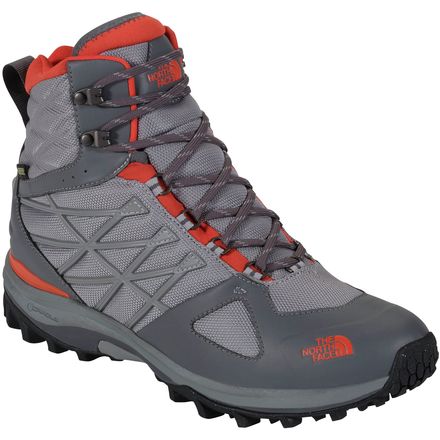
One thing is for certain, these boots definitely know how to make a first impression. Taking them out of the box for the first time, I was struck with just how lightweight they are, but was a little dubious about how well they would perform as a result. The boots look great too, and feature TNF's signature high quality build construction.
Last week I took these boots with me to Utah for a little pre-Outdoor Retailer adventure in the mountains near Park City. With plenty of snow on the ground I figured that would make a great test for this lightweight winter boot. I discovered that they performed better than I expected in most areas, particularly when taking part in winter activities such as snowshoeing and fat bike riding.
The boots feature a Gore-Tex liner that provides not only warmth and insulation, but a layer of waterproofing as well. My winter camping trip began with an evening of outdoor cooking and dinner shared with other writers and media folks, which ended up with most of staying out in the cold for more than four hours. Throughout that time, my feet stayed warm and dry, although by the time we were ready to call it quits for the night, my toes were starting to get a little frosty. But that is to be someone expected when you're standing around in cold weather conditions for extended periods of time. The next day when I set out on the trail for some snowshoeing, my feed remained plenty warm throughout the hike. Better yet, they also stayed dry, despite the fact the snow was quite deep.
Because these boots are so lightweight, they are also incredibly comfortable to wear, even on active excursions. Prior to setting out for Utah, I had only taken them out of the box and worn them around the house for a bit, but that was enough to tell me they wouldn't take long to break in. That turned out to be true, as after only wearing them for an hour or two, they were pretty much ready to go once I reached my destination. By the time I strapped on my snowshoes they already felt completely natural on my feet.
To give the Ultra Extreme II GTX boots plenty of grip on a variety of surfaces, The North Face uses a Vibram Icetrek outsole. This helps the shoes to stay stable in a variety of conditions, ranging from completely dry, to soaking wet, to frozen solid. Hiking in these boots on snow and ice, even without snowshoes, was a breeze, and I never once felt like they weren't up to the task. If anything, the grippy nature of the soles provided more confidence when tackling those conditions.
One of the the things that I like most about these boots is that they don't actually feel like you're wearing boots. The fit and comfort levels are more akin to an athletic shoe, albeit one with lots of ankle support. In fact, the UE II GTX's felt so good on my feet that I didn't bother to take them off for hours after we had left our snowy campground. Because they felt so great on my feet, and provided a nice level of warmth, there was simply no need, even after I had returned to Salt Lake City for the start of the convention.
If you're in the market for a lightweight hiking boot for active winter sports, these boots are more than up to the task, and with a price tag of $150, they are also quite a bargain in my opinion. Winter boots aren't cheap, and a good pair will generally set you back more than what The North Face is asking here. But as comfortable as these are on your feet, and as lightweight as they are in your pack, it is easy to recommend them for anyone who enjoys winter outdoor activities.
That said however, the Ultra Extreme II GTX is probably a bit too lightweight for extremely cold conditions. I used them in temperatures hovering around 20ºF (-6ºC) and had absolutely no problems, particularly when I was on the move. But if the temperatures dropped below 10ºF (-12ºC) I would have definitely wanted warmer socks at the bare minimum, and possibly warmer boots all around. Aside from that however, they performed exceptionally well, and I found myself truly falling in love with them. This is a great boot not just for winter sports, but cooler weather hikes as well, and I have a feeling I'll be getting a lot of use out of them in the weeks to come.
Gear Closet: Polarmax PMX Hoodie Base Layers

One of the best ways to stay warm during the winter is to invest in a good layering system When you mix a good base layer with fleece and an outer shell, you have a versatile set of clothing that will protect you from even the most inclement weather. For me, the best layering systems always start with good base layers, which are tasked with keeping us comfortable by wicking moisture away from the skin. These layers come in a variety of weights that are designed to get heavier as the temperature drops.
Some of my favorite base layers come from Polarmax, a company whose vary name implies that that their gear is designed for cold weather adventrues. I've written about some of their base layers in the past and came away very impressed with their performance. In fact, I carried them with me on a winter trip to Yellowstone National Park a few years back and even though temperatures dropped to as cold as -15ºF/-26ºC, they kept me warm and dry for the entire trip.
Recently I added the Polarmax PMX Hoodie to my closet and it has only increased my already high opinion of the company's gear. Made from Polarmax's warmest fabrics, the hoodie is lined with super-soft fleece on the inside and tech material on the out. It performs flawlessly in cold weather keeping you warm and dry even when you're taking part in some of the most aerobic activities possible, such as cross country skiing or snowshoeing. It even looks great when worn on its own, which isn't always the case with heavier base layers.
I particularly appreciate the athletic cut on this garment, which is designed to be form fitting without restricting movement. Cold weather runners will love how the PMX Hoodie feels on those long workouts and skiers and snowboarders will enjoy its comfort as much as they'll like its good looks when hanging out at the lodge. Warm, yet still lightweight, this is the kind of high performance base layer that you'll want with you while climbing, trekking or backpacking in cold climes.
As you can probably guess from the name, and photo above, this base layer comes with a built in hood. This helps add an extra dimension to the warmth that it provides and while running in cool, rainy and windy conditions, I've been happy to have it. But while it is made of the same stretchy material has the rest of the shirt, it doesn't quite fit well over all helmets. That could lessen its usefulness for some activities, but for the most part, it is nice to have the hood.
Durable and affordable, the PMX Hoodie cost just $69.95, this is a base layer that is built to be used. With the with the winter looming ahead, I'm sure I'll find plenty of excuses to break it out on a regular basis and if you have one in your gear closet, I suspect you will too.
Winter Adventures on Michigan's Upper Peninsula

For those unfamiliar with the Upper Peninsula, or U.P. as it is called, it is the northernmost landmass that makes up the state of Michigan. The region is sparsely populated and heavily wooded, making it a surprisingly remote wilderness for those who have never visited the place before. In fact, the U.P. features more than 300 miles of wilderness, giving outdoor enthusiasts something to love in every season.
Visiting the Upper Peninsula during the winter generally means plenty of cold and snow, but like much of the U.S., Michigan is also having a mild winter. In this case that means they've only received 75 inches of snow thus far this year, which sounds like a lot but is well below the 200+ inches of powder they region gets during an average winter. Still, I found there was plenty of snow for cross country skiing, snowshoeing, and snowmobiling, some of the activities I was most looking forward to while I was there.
My U.P. adventure began in Sault Ste Marie, a charming little town that falls just across the St. Mary's River from Canada. The biggest summer draw to the town are the Soo Locks, which annually see more cargo pass through their gates than the Panama and Suez Canals combined. During the winter months however, Sault Ste Marie is the gateway to the winter playground that is the U.P. and not long after arriving I was off to Tahquamenon Falls State Park for a little snowshoeing.
 The trail to the falls is a short one and an easy hike, even in winter, but the payoff is well worth it in any season. The Upper Tahquamenon is the largest falls east of the Mississippi River, stretching 200 feet across the river which gives it its name. They have a height of 50 feet and in the springtime the snow-melt swells the river so that more than 50,000 gallons drop over the edge each and every second. The falls remind open, even in the winter, when the snow and ice make the entire setting feel incredibly serene. On the day of my visit, a gentle snowfall only added to the experience.
The U.P. happens to be one of the premiere snowmobiling destinations in the entire U.S., and many travelers visit the area on an annual basis just to enjoy that activity alone. The state and national forests that cover the area feature more than 3000 miles of groomed trails just waiting to be explored. Flying along those trails at over 50 mph on the back of a powerful sled is a lot of fun and a great way to enjoy the backcountry. There are plenty of trails a short drive from Sault Ste Marie, but no matter where you go on the Upper Peninsula, you'll discover plenty of places to ride. I spent the better part of a day on, and off, some of those trails and had a great time chasing friends through the scenic woods.

After spending a few days playing in the snow, I moved on to the WISSA event that I told you about last week, which was a completely different experience altogether. But my U.P. visit was incredibly fun and I would love to go back to explore the region more fully. In the warmer months, all those miles of snow covered trails turn into hiking and mountain biking routes and the rivers and lakes, including the Great Lakes, would make for excellent paddling. The forests that dominate the area should be fantastic for backpacking and camping, and there is even quality climbing options as well. The adventure activities abound, no matter the season, and outdoor enthusiasts shouldn't overlook this amazing wilderness that has so much to offer.
For more information on the Upper Peninsula and other outdoor activities in Michigan, visit Michigan.org.
Upper Peninsula Bound!
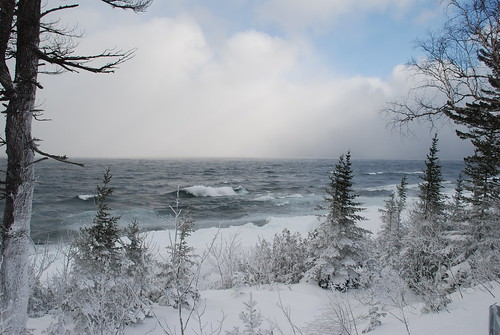
For those unfamiliar with the Upper Peninsula, it is a fantastic wilderness destination that offers a lot to the outdoor enthusiast all year round. In the summer, it is great place to hike and camp, and since it falls on Lake Superior, paddlers will find plenty to do as well. The UP is one of those remote places that few people visit and many don't even know exists, but it is truly one of the great outdoor locations in the entire U.S.
Of course, I'll share more about the trip when I get back, and updates will likely be sporadic the rest of the week. Hope everyone is having their own adventures while I'm away.