


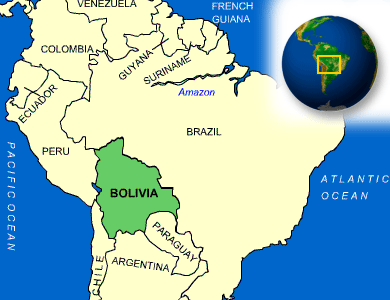
Bolivia is one of those few countries (like Benin that we did earlier) that has two capitals. The administrative capital is La Paz, the second largest city in Bolivia (after Santa Cruz de la Sierra). There are actually more government offices and departments in La Paz than in the official capital of Sucre. So, you’ll find that some sources call La Paz a “de facto capital city,” and among de facto capital cities, La Paz is the highest in the world. (FYI: Quito, Ecuador is the highest official capital city.) The odd thing is that water boils at 190F instead of 212F in La Paz because of the altitude. The city of Sucre is named after an important marshal in the Battle of Ayacucho of 1824, Don Antonio José de Sucre. One of the things about Sucre that makes it desirable is that it is situated in a subtropical highland climate. The temperatures throughout the year are fairly constant: average highs are in the upper 60s, average lows in the upper 40s. There are definitely months where it rains more than others, but otherwise it sounds perfect.

The official language is Spanish, although indigenous languages Quechua and Aymara are also listed as official languages as well. Bolivia takes pride in its many ethnic groups that comprises its population, even though it has been the cause of problems and unrest in the past. The dominant religion by far is Roman Catholic – some sources show as many as 95% claim to be followers – followed by a small percentage of Protestants. Outside of the urban areas, clean water and sanitation services are diminished, leading to a high risk of diseases such as bacterial diarrhea, typhoid fever, malaria, and yellow fever. Like most other Andean cultures, the most common identifier with the culture is the brightly colored clothes, blankets, hats, etc.
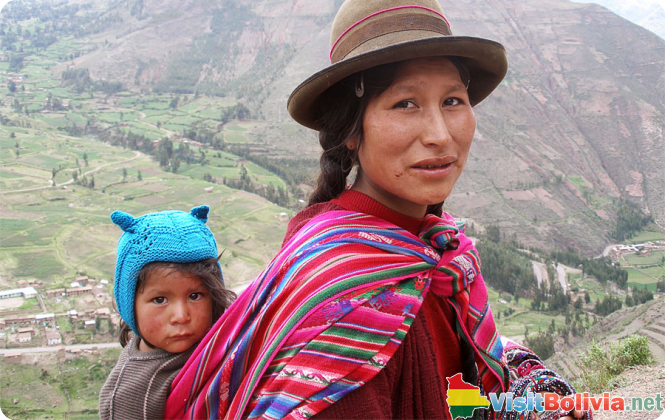
Despite the economic and social problems that Bolivia has struggled to get out from under, there are a lot of redeeming qualities Bolivia holds. I’m already hungry reviewing the recipes that I have lined up, spending my time listening to panflute music, and looking at pictures of the incredible views of the Andean landscape.

Up next: Holidays and Celebrations