


Population : 16 741 519 habitants (est. 2002)
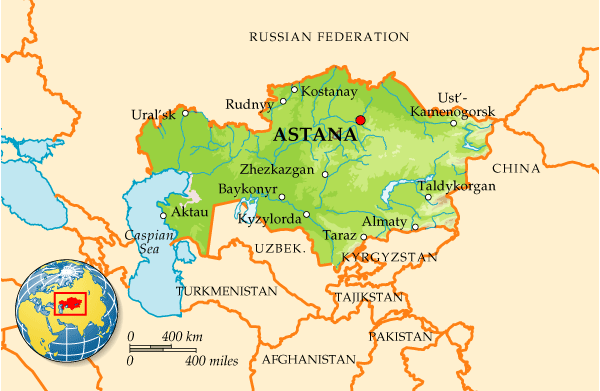
Pays voisins : Russie, Chine, Kirghizstan, Ouzbekistan, Turkmenistan
Densité : 6.16 hab./km²
Superficie : 2 717 300 km²
Capitale : Astana
Principales villes : Alma Ata, Karaganda, Chimkent, Semipalatinsk, Pavlodar, Dzhambul, Ust-Kamenogorsk, Tselinograd, Aktyubinsk, Petropavlovsk, Kustanay, Ural'sk, Shevshenko
Point culminant : Zhengis Shingy 7 439 m.
Langue(s) parlée(s) : Russe, Kazakh
Langue(s) officielle(s) : Kazakh
Monnaie : Tengué
Fête nationale : 25 octobre
Statut : République
Imperative!
Maintenance of the "Directory" blog labor intensive
Please follow our blog to your application to this community!
thank you
Pays voisins : Russie, Chine, Kirghizstan, Ouzbekistan, Turkmenistan
Densité : 6.16 hab./km²
Superficie : 2 717 300 km²
Capitale : Astana
Principales villes : Alma Ata, Karaganda, Chimkent, Semipalatinsk, Pavlodar, Dzhambul, Ust-Kamenogorsk, Tselinograd, Aktyubinsk, Petropavlovsk, Kustanay, Ural'sk, Shevshenko
Point culminant : Zhengis Shingy 7 439 m.
Langue(s) parlée(s) : Russe, Kazakh
Langue(s) officielle(s) : Kazakh
Monnaie : Tengué
Fête nationale : 25 octobre
Statut : République
Imperative!
Maintenance of the "Directory" blog labor intensive
Please follow our blog to your application to this community!
thank you
 2
2 ПАРФИРЬЕВЪ http://parfiryev.blogspot.com/3I like to create stamps http://iliketocreatestamps.blogspot.com/4Aknaz patkenova http://aknazpatkenova.blogspot.com/5Все секреты современного бизнеса http://bookmpm.blogspot.com/6Веселый путешественник http://mytoptravel.blogspot.com/7Бизнес - это вы сможете! http://topbisnessforce.blogspot.com/8Мои Творилки))))) http://mycreations111.blogspot.com/9про мебель + http://promebelplus-lika7.blogspot.com/10the apple city girl http://theapplecitygirl.blogspot.com/11KairjanAsemgul http://kairjankaora-koka.blogspot.com/12little things http://thingiewingie.blogspot.com/13Весенние зарисовки... http://vesna13.blogspot.com/14oceania. http://oceania1466.blogspot.com/15Светлые игрушки http://svetocheklutik.blogspot.com/16Поскрапушки от Sweat http://scrapsweat.blogspot.com/17Marina Love http://marinafucklove.blogspot.com/18dianadebbz http://dianadebbz.blogspot.com/19Путешествие в Страну знаний http://gmgklass.blogspot.com/20Ксения Ушанова Feodosia http://ushanovaksenia.blogspot.com/21avisa http://avisa-m.blogspot.com/22It is my world http://saashaosipova.blogspot.com/23o_Ooolyalya http://dg2711.blogspot.com/24...Жажда Творчества... http://zhazhda-tvorchestva.blogspot.com/25Silk Passion http://silkpassion.blogspot.com/26Sveta & idées http://svetonik.blogspot.com/27Мир рукоделия http://katerina04071983.blogspot.com/28Путь к себе. Блог Натальи Буряковой http://nburyakova.blogspot.com/29Секреты здоровья от Людмилы Гончаровой http://lyudgoncharova.blogspot.com/30ДӘМДІ ӘЛЕМ... http://damdialem.blogspot.com/31Fashion' n 'Pasion http://sashashut.blogspot.com/32SHMAKOVKA В СОЦИАЛЬНЫХ СЕТЯХ http://pridizarabotai.blogspot.com/33Записки искательницы приключений http://the-curious-traveller.blogspot.com/34Scrap by Nadejda Boyko http://nadejdaboiko.blogspot.com/35Anastassiya RomaNova http://a-romanova.blogspot.com/36МираДом http://natalya-solokhina.blogspot.com/37Маленькие истории http://pilgrimka.blogspot.com/38Секреты успеха от Татьяны Сягловой http://tatyanasyaglova.blogspot.com/39saintshapelart http://saintshapelart.com/40Маргошина гостиная http://margoshin.blogspot.com/41Лукошко Элси http://lukoshko2013.blogspot.com/42Божья коровка http://mykysheva.blogspot.com/43Творения моей души http://alena26.blogspot.com/44МечталкИ-РаЗмыШлизмы http://ndmj.blogspot.com/45Gulchathaii http://gulchathaii.blogspot.com/46Кто не творит, тот хуже растения, дающего кислород. http://letchica.blogspot.com/47Счастливые минуты вязания http://zarema1.blogspot.com/48Dana Danone http://danonedana.blogspot.com/49КРЮЧКОmaniya http://antonova-li.blogspot.com/50Непутёвые заметки http://basmasya.blogspot.com/51Круговые танцы народов мира http://helga-circle-dance.blogspot.com/52Жизнь без боли до 100 лет http://irinazorina59.blogspot.com/53Восхождение от "Чайника" до Интернет http://zorinaiw.blogspot.com/54Записки дикой хозяйки http://jantuschewska.blogspot.com/55Trends Control by Lia Igam http://www.trendscontrol.com/56Уголок моей души http://agata-68.blogspot.com/57Feruza Fashion http://feruzafashionkz.blogspot.com/58There is something about... http://newbyinlove.blogspot.com/59Irina Senina http://irinasenina.blogspot.com/60
 Aibinas Blog http://www.aibinasblog.com/61Счастливые минуты вязания http://zarema1.blogspot.com/

Kazakhstan (, Qazaqstan, قازاقستان, pronounced ; ), officially the Republic of Kazakhstan, is a country in Central Asia and Europe. The ninth largest country in the world by land area, it is also the world's largest landlocked country; its territory of is larger than Western Europe. It is neighbored clockwise from the north by Russia, China, Kyrgyzstan, Uzbekistan, Turkmenistan, and also borders on a significant part of the Caspian Sea. Although Kazakhstan does not share a border with Mongolia, its most easterly point is only from Mongolia's western tip. The terrain of Kazakhstan ranges from flatlands, steppes, taigas, rock-canyons, hills, deltas, and snow-capped mountains to deserts. With 16.6 million people (2011 estimate) Kazakhstan has the 62nd largest population in the world, though its population density is less than 6 people per square kilometre (15 per sq. mi.). The capital was moved in 1998 from Almaty, Kazakhstan's largest city, to Astana.

Kazakhstan is one of the Turkic states.
For most of its history, the territory of modern-day Kazakhstan has been inhabited by nomadic tribes. By the 16th century, the Kazakhs emerged as a distinct group, divided into three Jüz. The Russians began advancing into the Kazakh steppe in the 18th century, and by the mid-19th century all of Kazakhstan was part of the Russian Empire. Following the 1917 Russian Revolution, and subsequent civil war, the territory of Kazakhstan was reorganized several times before becoming the Kazakh Soviet Socialist Republic in 1936, a part of the USSR.
Kazakhstan declared itself an independent country on December 16, 1991, the last Soviet republic to do so. Its communist-era leader, Nursultan Nazarbayev, became the country's first president, a position he retains today. President Nazarbayev maintains strict control over the country's politics. Since independence, Kazakhstan has pursued a balanced foreign policy and worked to develop its economy, especially its hydrocarbon industry. The post-Soviet era has also been characterized by increased involvement with many international organizations, including the United Nations, the Euro-Atlantic Partnership Council, the Commonwealth of Independent States, and the Shanghai Cooperation Organisation. Kazakhstan is also one of six post-Soviet states who have implemented an Individual Partnership Action Plan with NATO.
Kazakhstan is ethnically and culturally diverse, in part due to mass deportations of many ethnic groups to the country during Joseph Stalin's rule. Kazakhstan has a population of 16.6 million, with 131 ethnicities, including Kazakh, Russian, Ukrainian, German, Uzbek, Tatar, and Uyghur. Around 63% of the population are Kazakhs. Kazakhstan allows freedom of religion, and many different beliefs are represented in the country. It is a very tolerant country to religions like Islam, Christianity, Judaism and Buddhism. Islam is the religion of about 70.2% while Christianity is practiced by 26.2% of the population. The Kazakh language is the state language, while Russian is also officially used as an equal language to Kazakh in Kazakhstan's public institutions. Under the leadership of Nursultan Nazarbayev, the Republic of Kazakhstan has enacted some degrees of multiculturalism in order to retain and attract talents from diverse ethnic groups among its citizenry, and even from nations that are developing ties of cooperation with the country, in order to coordinate human resources onto the state-guided path of global market economic participation. This principle of the Kazakh leadership has earned it the name "Singapore of the Steppes", referring to the authoritarian capitalist guiding principle initiated by Lee Kuan Yew