


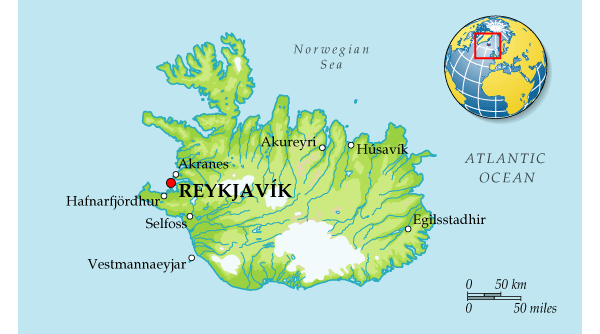
Population : 279 384 habitants (est. 2002)
Densité : 2.72 hab./km²
Superficie : 102 845 km²
Capitale : Reykjavík
Principales villes : Kópavogur, Hafnarfjörður, Akureyri, Keflavík, Akranes, Isafjörður, Húsavík, Neskaupstaður, Siglufjörður
Point culminant : Hvannadalshnúkur 2 119 m.
Langue(s) parlée(s) : Islandais
Langue(s) officielle(s) : Islandais
Monnaie : Couronne islandaise
Fête nationale : 17 juin

Densité : 2.72 hab./km²
Superficie : 102 845 km²
Capitale : Reykjavík
Principales villes : Kópavogur, Hafnarfjörður, Akureyri, Keflavík, Akranes, Isafjörður, Húsavík, Neskaupstaður, Siglufjörður
Point culminant : Hvannadalshnúkur 2 119 m.
Langue(s) parlée(s) : Islandais
Langue(s) officielle(s) : Islandais
Monnaie : Couronne islandaise
Fête nationale : 17 juin
 1
1 bebeautiful-you www.bebeautiful-you.blogspot.com/2Shades of Style http://www.shades-of-style.com/3Viking Mode http://vikingmode.blogspot.com/4Fríða http://handavinnufrida.blogspot.com/5When I think of angels I think of you - my art http://siggadisart.blogspot.com/6Where the wild rose grows http://eddarosskula.blogspot.com/7Dream - Believe - Achieve http://www.hhafsteins.com/8Björk Guðmundsdóttir http://gudmundsdottirbjork.blogspot.com/9Silja skrifar http://siljag.blogspot.com/10the belly rules the mind http://janajons.blogspot.com/11Kreatywne Wibracje Indii http://kreatywnewibracjeindii.blogspot.com/12Hugrenningar Guðnýjar http://gudnypalina.blogspot.com/13Lost in a daydream... http://mluthersdottir.blogspot.com/14Föndrari af lífi og sál http://fondrari.blogspot.com/15Blúndur og blóm http://blundurogblom.blogspot.com/16Heima http://adda-heima.blogspot.com/17Living In The Country http://asborgir.blogspot.com/18Roser og Patina http://roserogpatina.blogspot.com/19ANTÍ http://antiphotographer.blogspot.com/20Mani & More http://maniandmore.blogspot.com/21S&S http://solliljas.blogspot.com/22HH http://hharaldsdottir.blogspot.com/23Sara Björg Pétursdóttir http://sarapeturs.blogspot.com/24Kristín Hrund http://kh-handcrafts.blogspot.com/25Maria Guðjohnsen http://mariahelga.blogspot.com/26The Jolly Giantess: Tales from across the Whale-Road http://jolly-giantess.blogspot.com/27madebymarta http://martasdesigns.blogspot.com/28Viking Mode http://vikingmode.blogspot.com/


According to Landnámabók, the settlement of Iceland began in AD 874 when the chieftain Ingólfur Arnarson became the first permanent Norse settler on the island. while maintaining a Nordic welfare system that provides universal health care and tertiary education for its citizens. In recent years, Iceland has become one of the wealthiest and most developed nations in the world. In 2011, it was ranked as the 14th most developed country in the world by the United Nations' Human Development Index, and the fourth most productive country per capita. In 2008, the nation's entire banking system systemically failed, resulting in substantial political unrest. Iceland ranks high in economic and political stability, though it is still in the process of recovering from the crisis.
Icelandic culture is founded upon the nation's Norse heritage. Most Icelanders are descendants of Norse and Gaelic settlers. Icelandic, a North Germanic language, is descended from Old Norse and is closely related to Faroese and some West Norwegian dialects. The country's cultural heritage includes traditional Icelandic cuisine, poetry, and the medieval Icelanders' sagas. Among NATO members, Iceland has the smallest population and is the only one with no standing army.