


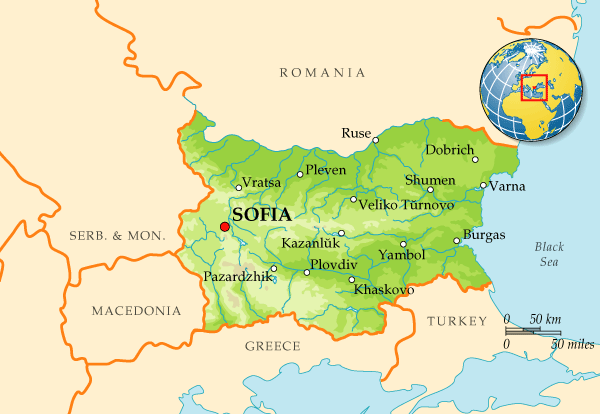
Population : 7 621 337 habitants (est. 2002)
Pays voisins : Serbie et Monténégro, Macédoine, Turquie, Roumanie, Grèce
Densité : 68.72 hab./km²
Superficie : 110 912 km²
Capitale : Sofia
Principales villes : Plovdiv, Varna, Burgas, Ruse, Stara Zagora, Pleven, Tolbukhin, Sliven, Shumen
Point culminant : Musala 2 925 m..
Langue(s) parlée(s) : Bulgare, Turc
Langue(s) officielle(s) : Bulgare
Monnaie :
Fête nationale : 3 mars

Registration for the "Directory" blog, are free.
Imperative to follow our blog to validate your registration.
Thank you for your understanding
Pays voisins : Serbie et Monténégro, Macédoine, Turquie, Roumanie, Grèce
Densité : 68.72 hab./km²
Superficie : 110 912 km²
Capitale : Sofia
Principales villes : Plovdiv, Varna, Burgas, Ruse, Stara Zagora, Pleven, Tolbukhin, Sliven, Shumen
Point culminant : Musala 2 925 m..
Langue(s) parlée(s) : Bulgare, Turc
Langue(s) officielle(s) : Bulgare
Monnaie :
Fête nationale : 3 mars
Registration for the "Directory" blog, are free.
Imperative to follow our blog to validate your registration.
Thank you for your understanding
 1
1 Tinkerbell http://tinkerbell1972.blogspot.com/2K.I.S.S. http://keepitstylishandsexy.blogspot.com/3Marina Biskvittka http://biskvittka.blogspot.com/4Mademoiselle S http://mademoiselle-s-blog.blogspot.com/5vili48 Dreams - Vili48 http://vili48.blogspot.com/6Big Pufana's Creations http://bigpufanascreations.blogspot.com/7M. My Beauty Zone http://beautyzone1.blogspot.com/8Eli MaquiLab http://maquilab.blogspot.com/9Vorpax Blood Red Beauty http://bloodredbeauty.blogspot.com/10Калинки в тревата... http://ladybugsonthegrass.blogspot.com/11Христина Попова - професионален гримьор http://hrismakeup.blogspot.com/12Ally My fashion and beauty blog :) http://allysfashionandbeautyblog.blogspot.com/13Marta's Fashion Diary http://www.martasfashiondiary.com/14Polly`s Boudoir http://pollysboudoir.blogspot.com/15Preslava Tsacheva Games of Fashion http://gamesoffashion.blogspot.com/16anette never grow old http://nevergrowolder.blogspot.com/17A peek inside my makeup bag ♥ http://inside-mymakeupbag.blogspot.com/18Tochica http://toni-tochica.blogspot.com/19Къщичка http://kakichka.blogspot.com/20Картичките на Вили:) http://gift-cards-villi.blogspot.com/21Nelly's handmade http://nellyshandmade.blogspot.com/22The Crazy Challenge http://crazychallenge.blogspot.com/23Двете елши http://2elshi.blogspot.com/24pod navesa - bejko http://podnavesa-bejko.blogspot.com/25Card Mania http://cardmaniachallenges.blogspot.com/26Handmade by Miss Emerald http://missemerald-handmade.blogspot.com/27Red polish or bad polish? http://redpolishorbadpolish.blogspot.com/28Don't worry, be happy http://mi6el.blogspot.com/29SM Handmade Jewellery/Polyme... Clay Creations http://smhandmadejewellery.blogspot.com/30Girl's temptations http://girlstemptation.blogspot.com/31TrueDreamcatcher http://truedreamcatcher.blogspot.com/32
 Cuki-work http://cuki-work.blogspot.com/33The Girl Who Invented The Romance http://mykaleidoscopeeyes.blogspot.com/34Dilly Beauty Blog http://dillybeauty.blogspot.com/35Професионален грим http://elektramakeup.blogspot.com/36Coeur d'or http://victoria-coeurdor.blogspot.com/37GERI NAILS http://gerinails.blogspot.com/38TONINA GEMS http://toninagems.blogspot.com/39Pretty Staggering Things http://prettystaggeringthings.blogspot.com/40Fashion mama http://bdavidkova.blogspot.com/41Даниела Михайлова http://danielamihaylova.blogspot.com/42Градината на слънцето http://avocett.blogspot.com/42Fashion Thrill BG http://fashionthrillbg.blogspot.com/44Modni idei (FI) http://modniidei.blogspot.com/45Sunshine Fantasy http://sunshinefantasy.blogspot.com/46(Pti)rinha :) - коктейл за ценители и избрани http://ptirinha.blogspot.com/47Община Ракитово http://obshtinarakitovo.blogspot.com/48NastiaDi Handmade http://nastiadihandmade.blogspot.com/49Nastia Di. http://nastiadi.blogspot.com/50It`s all about nails http://radi-d.blogspot.com/51ZorniZZa PiZZa http://zornitsapizza.blogspot.com/52cdg.papazqn.sliven http://dgpapazqnsliven.blogspot.com/53*My Sweet Escape* http://xmysweetescapex.blogspot.com/54Ariadna http://dariadna.blogspot.com/55Пътеводител на галактическия кулинар http://biri-miri.blogspot.com/56Кухня-мухня http://denigotvi.blogspot.com/57Just Don't Hold Your Breath http://just-dont-hold-your-breath.blogspot.com/58DreaMe http://dreame-quillingwithlove.blogspot.com/59Импулс http://yoterkata.blogspot.com/60mellkamell http://mellkamell.blogspot.com/61Vili's Art http://vilisart.blogspot.com/62Angel-Nel http://angel-nel.blogspot.com/63Шаренко http://streakytulipa.blogspot.com/64Само за гладни http://samozagladni.blogspot.com/65Fashion mama http://bdavidkova.blogspot.com/66beautiful world http://beautifulworld-m.blogspot.com/67Мър-Мяу http://zabavlqtelstvo.blogspot.com/68Красивые вещи http://tilli-milli.blogspot.com/69svetlanabeauty http://svetlanabeauty.blogspot.com/70Hello Vixi http://hellovixi.blogspot.com/71Блог за книги, травъл, история, фотография... http://dredybg.blogspot.com/72Nomatterwhat... - http://nomatterwhatbeauty.blogspot.com/73Beautiful Sin http://beautifullsin.blogspot.com/74eelliess http://eelliess.blogspot.com/75hotskimlatte http://hotskimlatte.blogspot.com/76Козметичната кутия http://cosmeticboxblog.blogspot.com/77~`Bbrillliantt's Makeup Collection`~ http://bbrillliantt.blogspot.com/78Little Red Bloodsucker http://blackheartedd.blogspot.com/79A love story.. ♥ http://www.ai-no-storia.com/80The Beauty Blog http://thebeautyblog2.blogspot.com/81Beautiful Lady Blog http://beautifulladyfm.blogspot.com/82mannierox http://mannierox.blogspot.com/83DB photologs http://dbphotologs.blogspot.com/84Murfeishun.. http://murfeishun.blogspot.com/85Fashion & Beauty http://makeupbyjoanna909.blogspot.com/86Kali's inspiration board http://kalisinspirationboard.blogspot.com/87SmallFantasy http://smallfantasy99.blogspot.com/88Martinel http://martinel-art.blogspot.com/89Iris D. http://irisshades.blogspot.com/90Love`s GreeN KitcheN http://the-loves-green-kitchen.blogspot.com/91Вкусното ми Хоби със Страст и Любов http://tanya-www.blogspot.com/92Вкуснотека http://www.vkusnoteka.bg/93Храна за мойте канибали http://pep-4o.blogspot.com/94Тетрадката с рецепти... http://mycookinnotes.blogspot.com/95Добър апетит с Peych! http://ipeychev9.blogspot.com/96В кулинарния свят на tillia http://da-gotvim-s-tillia.blogspot.com/97Под Гъбката http://undermushroom9.blogspot.com/98От тука до Калисто и обратно http://do-kalisto.blogspot.com/99Даровете на Гея http://ve-gea.blogspot.com/100Румянтика в кухнята http://rumqntikavkuhnqta.blogspot.com/101Вкусно с Бети http://vkusnosbety.blogspot.com/102Мус от краски и мечти... http://mousseofcoloursanddreams.blogspot.com/103Супичка - пътеводител на новака в кухнята http://www.supichka.com/104Когато готвенето стане страст http://passionscooking.blogspot.com/105Ароматно в кулата на вещицата http://towerwitch.blogspot.com/106Sundries http://pavlety-sundries.blogspot.com/107Кулинарен еликсир http://kulinarenelixir.blogspot.com/108Животът може да e вкусен http://jivotatmojedaevkusen.blogspot.com/109Мед и Мляко http://ghost13honeyandmilk.blogspot.com/110Ginger Cookies http://thegingercookies.blogspot.com/111ЧЕРПАК С МЕРАК http://zi4e57.blogspot.com/113Кулинарно приключение http://lety-culinaryadventure.blogspot.com/114Coffee break http://coffeebreak-daeneris.blogspot.com/115Кулинарен блог на Маги http://magi-bg.blogspot.com/116Вкусно с Йоли http://yoli-www.blogspot.com/117И накрая...щипка сол... http://zelanka.blogspot.com/118
 EL's Kitchen http://cookingtwentyfourseven.blogspot.com/119Harmony in the kitchen . . . http://www-vkusnotiq.blogspot.com/120В моята кухня с мен Ваня Джорджевич http://svanya.blogspot.com/121Директно от Кухнята на Емо http://directlyfromemilskitchen.blogspot.com/122Домашни вкусотии http://tedytitova.blogspot.com/123За хората и пиците http://zahorataipizite.blogspot.com/124Кулинарна авантюра http://kulinarnaavantura.blogspot.com/125ОТ ТЕФТЕРИТЕ НА МАРГИ... http://ottefteritenamargi.blogspot.com/126Кулинарни изкушения с Нели http://neliyonevakitchen.blogspot.com/127cake cupcake and cookie http://cakecupcakeandcookie.blogspot.com/128La Fleur http://mycandykitchen.blogspot.com/129Sundries http://pavlety-sundries.blogspot.com/130Lyusitseki http://lyusitseki.blogspot.com/131Pjey Pearl ViSion - S&F http://visionpj.blogspot.com/132Dreamland http://dreamlands.ek.la/133Идеи и истории http://ideiistorii.blogspot.bg/


Cultures began developing in the area during the Neolithic period, and ancient history saw the presence of the Thracians, Greeks, and Romans. The First Bulgarian Empire was established in 681, and dominated most of the Balkans in the 9th-10th centuries and functioned as a Slavic cultural hub. After a short period of Byzantine rule, the Second Bulgarian Empire emerged and lasted until 1396, when its territories came under Ottoman control. The Russo-Turkish War of 1877–1878 created the Third Bulgarian State, which became independent in 1908. The following years saw several conflicts with its neighbours, which prompted Bulgaria to align with Germany in both World Wars. In 1946 it became a Communist republic with a single-party system. In until 1989 the Communist Party allowed multi-party elections, following which Bulgaria transitioned to democracy and a market-based economy.
The population of 7.36 million people is predominantly urban and mainly concentrated in the administrative centres of its 28 provinces. Most commercial and cultural activities are concentrated in the capital Sofia. The strongest sectors of the economy are heavy industry, power engineering and agriculture, all relying on local natural resources.
The current political structure dates to the adoption of a democratic constitution in 1991. Bulgaria is a unitary parliamentary republic with a high degree of political, administrative and economic centralisation. It is a member of the European Union, NATO and the Council of Europe, a founding state of the Organization for Security and Co-operation in Europe (OSCE), and has taken a seat at the UN Security Council three times.