


One of the most abiding mysteries of the Bible concerns a people known only as the Philistines. They are mentioned many times in the Bible, and almost always as the Hebrews' enemies. In fact the word Philistine refers, not to one people, but to at least two.
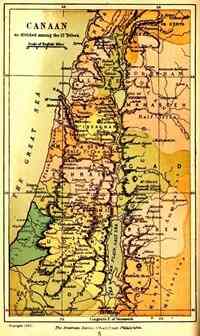 The name Philistine comes from the Hebrew philisth, which means "invasion" or "inroad" or "intrusion." Thus the name is not actually a correct native name for a people, but a descriptive name. Quite simply, the Hebrews called the inhabitants of the modern Gaza Strip by a name that would translate as "The Invaders," or, less harsh, "The Immigrants."
Shem, author of the Table of Nations, stated that the first of these "Immigrants" were an offshoot of the family of Mizraim (the progenitor of ancient Egypt) and specifically, the "Casluhim." (Genesis 10:14) Moses (Deuteronomy 2:23) later gave these people another name: the Avvites (in Hebrew, Avim). Isaac records two treaties that the Hebrew people made with these people, and their king, called Abimelech (which might have been a title, like "Pharaoh," rather than a personal name). Abraham made one of these treaties, and Isaac made another. The central issue of these treaties (actually, non-agression pacts) was water rights, and specifically the rights to a series of wells. The ancient settlement of Beer-Sheba (literally, "House of Seven") dates from this period and is named for the seven female lambs that Abraham gave to the first Abimelech as a peace guarantee.
Moses then stated, in his valedictory (which is what the Book of Deuteronomy, or "The Second Law," mostly consists of), that another people called the Caphthorim invaded that same region, displaced and destroyed the Avvites, and settled in the same land. These are the people who became such bitter enemies of the Israelites for most of their history, especially during the era of the Judges.
Nothing remains today (so far) of the original Avvites. But the Caphthorite Philistines left many traces. They built five major cities (Ashdod, Ashkelon, Ekron, Gath, and Gaza), each governed by a seran, or lord--hence "Lords of the Five Cities." Excavations at the first four of these cities reveals links to the Mycenaean kingdom (one of the two major powers in the Achaean League that fought the Trojan War). Moses records (Exodus 13) that the Israelites took a roundabout route to their promised land in Canaan in order to avoid the Philistines at a time when the Israelites were not ready to fight a major war--implying that these Caphthorites had already occupied the Gaza Strip as far back as 1491 BC, the likely date of the Exodus.
The Philistines were brought to their weakest by King David, but once again became a threat to the Kingdoms of Israel and Judah after Jeroboam's mutiny against King Rehoboam, which divided the kingdoms. Even the Egyptians record warfare with them, which likely occurred during the XVIIIth Dynasty and again during the XXth. Nebuchadnezzar II is said to have conquered the Five Cities, and after the fifth century BC, they are mentioned no more.
In 135 AD, the Romen Emperor Hadrian, after putting down the rebellion of Simon bar-Chochva, deported all the Jews en masse from the region (the Diaspora) and renamed it Palaestina, a Latinized version of the Hebrew philistim.
Source: Examiner