


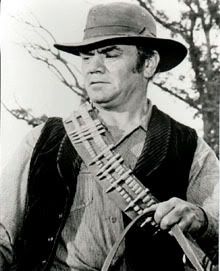
 Sam Peckinpah's The Wild Bunch is usually considered a eulogy to the Western, or a critique of the Vietnam War's orgiastic violence. The movie portrays a gang of outlaws as they struggle to make their way in an increasingly modernized world. Hunted by bounty hunters, they begin working for the Mexican army, but the relationship is short-lived.
When I watched it recently, I was struck by an interpretation all the "experts" have ignored: The Wild Bunch is an allegory for the Western Sahara! I don't have my thesis ready yet, so here are the five most obvious ways The Wild Bunch is a paean to Sahrawi struggle.
- The heroes are outnumbered-Whether they're fighting Mexicans, the U.S. Army, or the bounty hunters, the outlaws are always much fewer than their opponents. In the Western Sahara, the ratio of Sahrawis to Moroccans is something like 1 to 5. Parallels!
- Their enemies are backed by powerful Europeans-The bounty hunters are bankrolled by a wealthy railroad man, and the Mexican army has German advisers. German isn't too far from French, and Morocco was thick with French support during the war in Western Sahara.
- The heroes do bad stuff-This is tautological considering they're outlaws, but I think using old women for human shields deserves a special shout-out for badness. And as for you, Polisario: having read the France Liberte report on the treatment of Moroccan POWs, I'm sad to say the POW situation was much worse than I realized. But like the (anti) heroes in The Wild Bunch, just because Polisario does bad things doesn't mean their goals aren't fundamentally good.
- The outlaws are hunted by a man who used to be their friend-The bounty hunters who hound the gang are led by Deke Thornton, who formerly worked with the gang. Just like Khellihenna Ould Errachid, the head of CORCAS.
- The gang's leader is aging-Pike Bishop, the head of the robbers, is grizzled and looking for one last score. His leadership is questioned by the younger Gorch brothers. When you think of Mohammed Abdelaziz as Pike and Khat Achahid as the Gorch brothers, it's only too clear.