


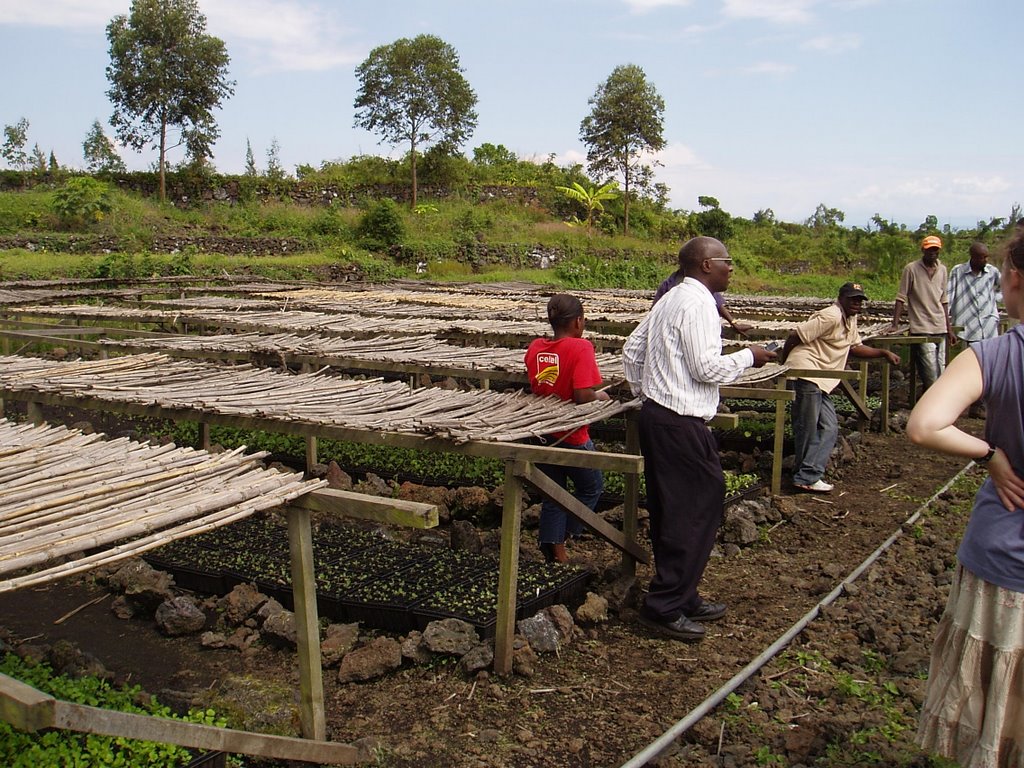
 Mawe Hai is a subsidiary of DOCS that deals with agricultural development. They distribute seeds in Goma town for people who still have land (not rocks) in their gardens, and their agronomists run a demonstration farm about 15 miles outside of Goma on the edge of the lake. They use the plot to test different methods of farming and irrigation, to try out new seed varieties, and to teach widows, rape victims who've been treated at DOCS, and others sustainable farming techniques specifically geared to dealing with the rocky volcanic soil around Goma. "Mawe Hai" means "Living Stones" in Kiswahili, which is such a wonderful name for an organization that is bringing life out of the rocks. When people learn how to effectively farm the land, they return to their communities, share their knowledge, and food production improves for entire villages.
 Mawe Hai is the organization that will help the pygmy families for whom we are purchasing land near Sake. They will teach the families basic techniques for farming the terrain in Sake, which is very different from their home in the mountainous forests. Because of this connection, I've wanted to visit the farm for a long time, and was glad to have the chance to go with the Minnesota students.
Mawe Hai is so neat. They have a nursery, which the director explained doesn't require a greenhouse since Goma gets so much natural sunlight. They have an incredible irrigation system to bring water up from the lake in the dry season.
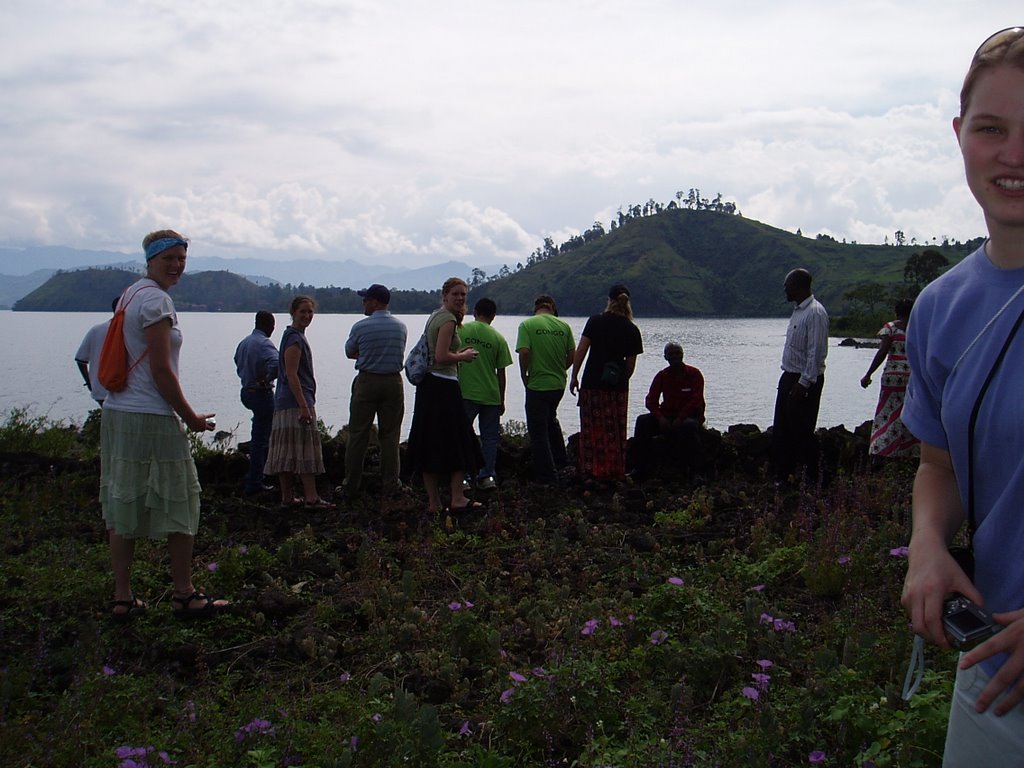 They also experiment with foods that aren't traditionally grown in eastern Congo, like the papayas here, which were grown with seeds from Taiwan. (It turns out that Taiwan and eastern Congo have very similar climates, so Mawe Hai gets lots of seeds from there.) One of their goals is to increase nutritional variety in the local diet so that people get more vitamins and minerals, so they're always growing new vegetables. We saw cabbages, eggplant, hot peppers, and all sorts of other plants.
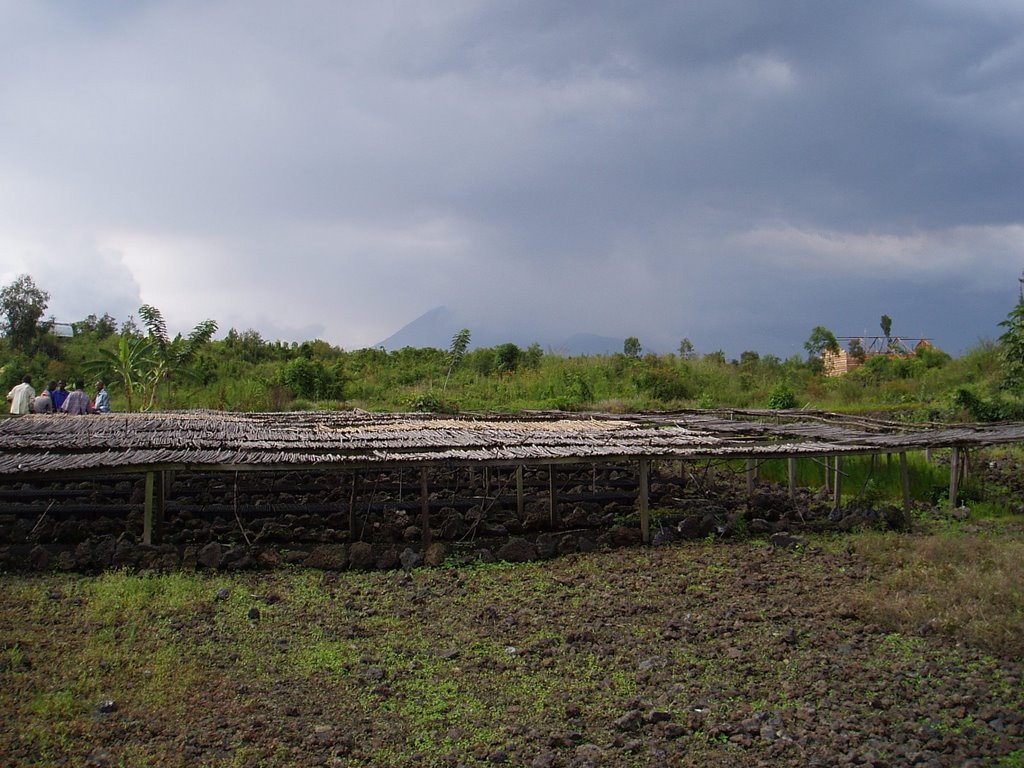 Mawe Hai reminded me so much of the World Hunger Relief Farm outside Waco, where I volunteered in college (by "volunteered," here, I mean, cleaned out the goat pens way too many times. I only got to feed the bunnies once.). WHRF is focused on sustainability and was very different (eg, there are straw bale houses, goats, and a lot more land), but the mission was the same: a belief that people's lives can be better if they know how to effectively work the land around them. WHRF brings people from all over the world to Waco to learn sustainable farming techniques.
Mawe Hai offers tangible hope. It gives jobs to agricultural experts, and gives people who have been neglected, attacked, and who have starved the chance to feed their families, teach their communities, and rebuild their lives. I am thankful that they will help the Sake families do the same.